








Over eight decades, Bollywood’s freedom-struggle films have therefore moved from coded resistance to patriotic celebration, from heroic biographies to political reinterpretation and psychological examination
Our Bureau
Mumbai
For generations of Indians, the story of the freedom struggle has not been confined to history books. It has lived on the screen — in patriotic songs, revolutionary heroes, village rebellions and stories of ordinary people confronting colonial power. Bollywood’s portrayal of India’s independence movement has evolved considerably over the decades, reflecting not only changing cinematic styles but also the country’s changing understanding of its own past.
Even before independence, Hindi cinema found ways to challenge colonial authority. The most striking example was Kismet, released in 1943, when the British Raj was still in existence. The film featured the unforgettable patriotic song “Door Hato A Duniya Walon, Hindustan Hamara Hai.” Though carefully framed to evade colonial censorship, its message was unmistakable. The song became a popular expression of defiance and demonstrated the political power of popular cinema.
After 1947, cinema initially became a vehicle for remembering sacrifice and constructing a new national identity. Shaheed (1948), made soon after independence, turned the martyrdom of Bhagat Singh into a cinematic story for a country still coming to terms with freedom. The 1965 Shaheed, starring Manoj Kumar, went further. His portrayal of Bhagat Singh became one of the defining images of patriotic cinema and helped establish the revolutionary as a cultural icon for generations.
The cinema of the 1960s and 1970s increasingly linked the freedom struggle with the responsibilities of independent India. Manoj Kumar’s Upkar (1967), although not a freedom-struggle film in the conventional sense, captured the national mood through its celebration of the soldier and farmer — reflected in the slogan “Jai Jawan, Jai Kisan.” The message was that independence was not simply an event in 1947 but a continuing national project.
By the 1980s, filmmakers began attempting larger and more complex historical narratives. Kranti (1981), starring Dilip Kumar, presented the resistance to British rule as a sweeping historical action drama. Around the same period, Richard Attenborough’s Gandhi (1982), though not a Bollywood film, starring Ben Kingsley, brought the Indian independence movement to a global audience. The film presented Mahatma Gandhi’s philosophy of non-violence and his confrontation with British imperialism on an epic scale. It also demonstrated how the Indian freedom struggle had become a subject of international cinema.
The 1990s and early 2000s brought another shift. Instead of treating history only as a collection of heroic episodes, filmmakers began experimenting with fictional narratives and alternative perspectives. Lagaan (2001) was ostensibly a story about cricket, but beneath its sporting drama lay a familiar colonial conflict. Villagers challenge an oppressive British tax system by accepting an extraordinary cricket match. The film transformed resistance into entertainment while making the larger point that colonialism operated through economic as well as political domination.
The same period witnessed a revival of serious biographical cinema. The Legend of Bhagat Singh (2002), directed by Rajkumar Santoshi, explored Bhagat Singh not merely as a martyr but as an intellectual and revolutionary shaped by socialist ideas. Netaji Subhas Chandra Bose: The Forgotten Hero (2004), directed by Shyam Benegal, examined Bose’s political journey and the formation of the Indian National Army. Mangal Pandey: The Rising (2005) went further back, portraying the sepoy whose revolt became part of the larger uprising of 1857.
Perhaps the most interesting transformation came with Rang De Basanti (2006). Rather than simply recreating the past, the film connected the revolutionary generation with disillusioned contemporary Indian youth. Bhagat Singh, Chandrashekhar Azad and their comrades became mirrors through which young Indians questioned corruption, political apathy and their own responsibilities as citizens. History was no longer presented as something finished; it became a language for discussing the present.
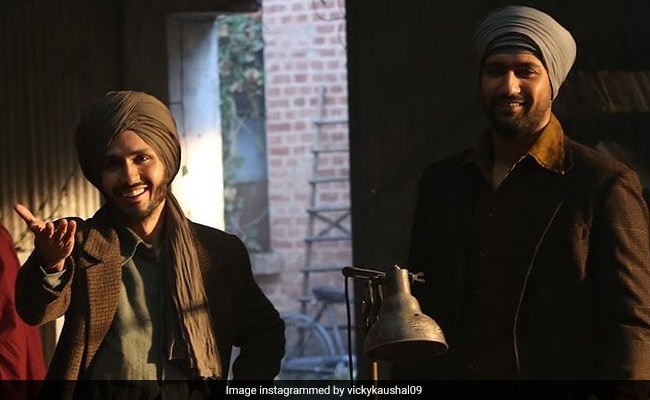
Recent cinema has continued this process of revisiting forgotten or less prominently remembered figures. Sardar Udham (2021) offered a sombre portrayal of Udham Singh and his response to the Jallianwala Bagh massacre. Unlike the more celebratory nationalism of earlier films, it dwelt on trauma, grief and the psychological consequences of colonial violence.
Over eight decades, Bollywood’s freedom-struggle films have therefore moved from coded resistance to patriotic celebration, from heroic biographies to political reinterpretation and psychological examination. The British have often remained the principal antagonist, but the meaning of freedom has changed with each generation.
That may be Bollywood’s greatest contribution to the memory of independence. It has not merely reproduced history. It has repeatedly reinterpreted it — asking new generations what freedom meant, who fought for it, whose sacrifices were remembered and, perhaps most importantly, what Indians have done with the freedom they inherited.