








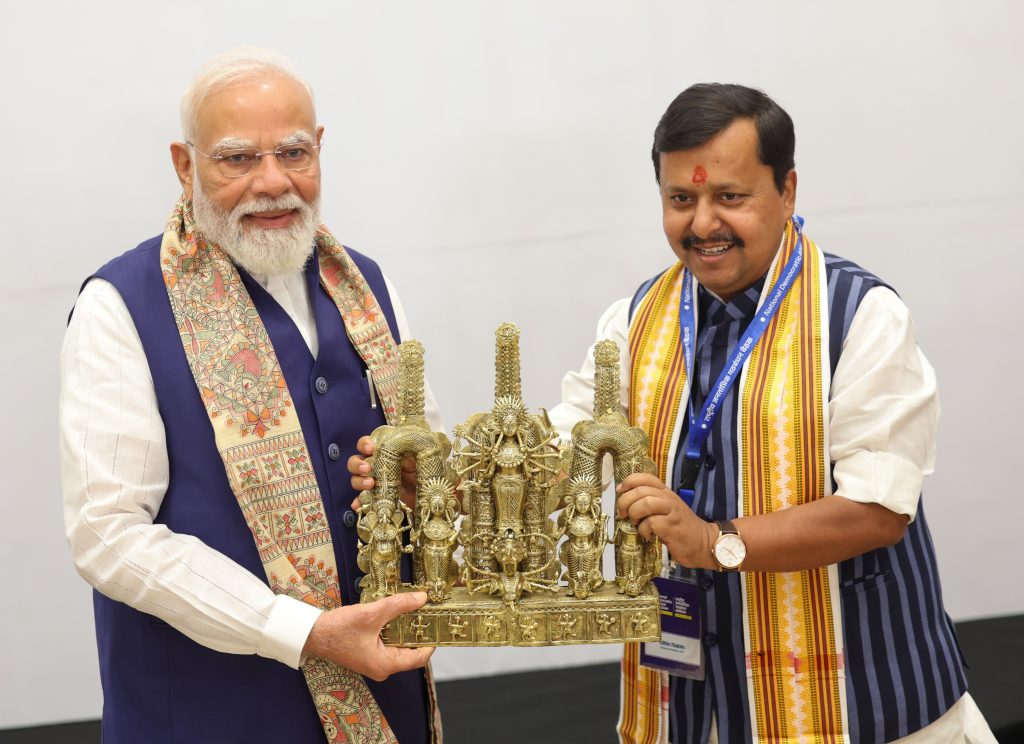
As Narendra Modi became India’s longest-serving continuously elected Prime Minister, supporters hailed his leadership as transformative while critics questioned both the record and the government’s performance
Our Bureau
New Delhi /
Prime Minister Narendra Modi completed 4,399 days in office on June 10, surpassing the tenure record previously held by India’s first Prime Minister, Jawaharlal Nehru, in terms of continuous service after winning general elections. The milestone has triggered celebrations within the ruling National Democratic Alliance (NDA), congratulations from international leaders, and renewed political debate over Modi’s legacy after more than twelve years in power.
The achievement is significant because it symbolizes the durability of Modi’s political dominance since 2014. It also comes at a moment when the Bharatiya Janata Party (BJP) is seeking to project continuity, stability and long-term governance as central features of its political narrative. At the same time, opposition leaders have challenged both the interpretation of the record and the broader claims of success associated with Modi’s tenure.
The contrasting reactions reveal the complex nature of Modi’s position in contemporary India. To supporters, he represents a transformational leader who has expanded India’s global influence and accelerated development. To critics, the celebration reflects an attempt to shape historical narratives while diverting attention from unresolved economic and social concerns.
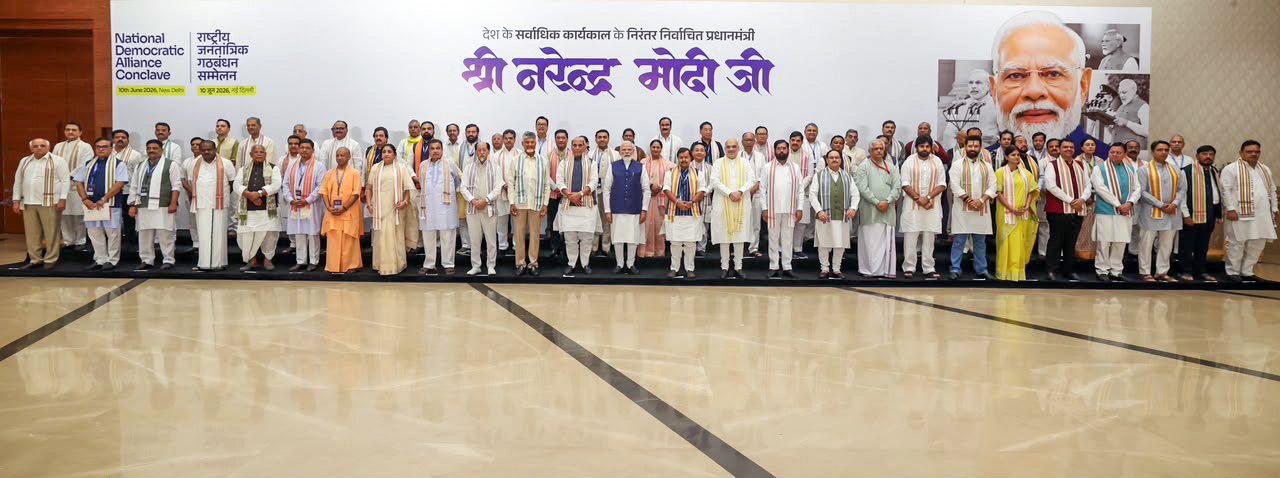
At a meeting of NDA leaders in New Delhi, the coalition formally celebrated the occasion and adopted a resolution praising Modi’s twelve years in office. Leaders described his tenure as a combination of “people-centric development, participative democracy and performance-oriented governance.”
The NDA’s messaging focused on continuity and governance. According to the Prime Minister’s Office, Modi’s administration has been characterized by “stability, transparency, and a resolute commitment to the nation’s progress.” Such language reflects the BJP’s long-standing effort to distinguish its governance model from previous coalition governments that often struggled with political instability.
Several senior leaders used the occasion to underline what they regard as the government’s developmental achievements. Goa Chief Minister Pramod Sawant argued that Modi had brought development “from Kanyakumari to Kashmir,” claiming that such progress had not been witnessed in the preceding six decades. The statement echoed a recurring BJP theme that India’s development trajectory accelerated significantly after 2014.
Union Minister Ramdas Athawale similarly linked Modi’s tenure to inclusive development. He argued that the government had worked to ensure justice for “Dalits, tribals, women, and the youth,” presenting the administration as one that sought to extend the benefits of growth across social groups.
Another coalition partner, Union Minister Anupriya Patel, emphasized that the significance of the milestone lay not merely in the duration of Modi’s tenure but in what had been achieved during that period. She argued that Modi had demonstrated how cooperation between government and citizens could contribute to nation-building. Her remarks highlighted a central element of the BJP’s political messaging: the portrayal of development as a collective national project rather than simply a governmental programme.
The strongest endorsement came from Union Petroleum Minister Hardeep Singh Puri, who suggested that the achievements of the last twelve years would be “written in golden letters” in history. Puri went further, arguing that the next twelve years under Modi’s leadership could create the foundation for a developed and self-reliant India. Such statements indicate how the BJP increasingly frames Modi not only as a successful incumbent but also as the leader of a long-term national transformation extending well into the future.
Union Minister Piyush Goyal similarly connected Modi’s tenure with India’s growing international stature. According to Goyal, India is reaching “new heights” globally while simultaneously strengthening its cultural heritage. He described Modi as a leader who enjoys exceptional levels of trust both domestically and internationally.
The government’s emphasis on international recognition was reinforced by the stream of congratulatory messages Modi received from foreign leaders and former heads of government. Modi publicly thanked Swedish Prime Minister Ulf Kristersson, former British Prime Minister Rishi Sunak, former Canadian Prime Minister Stephen Harper, Israeli Prime Minister Benjamin Netanyahu, South Korean President Lee Jae-myung and Danish Prime Minister Mette Frederiksen, among others.
The significance of these exchanges extends beyond protocol. The Modi government has consistently highlighted India’s expanding diplomatic profile and strategic partnerships as evidence of its success. By publicizing messages from foreign leaders, the government sought to reinforce the image of India as a more influential global actor under Modi’s leadership.
In his responses, Modi repeatedly stressed India’s commitment to strengthening bilateral ties and advancing strategic partnerships. He also stated that he remained committed to working with “even greater dedication” to realize the vision of a “Viksit Bharat” or developed India. This phrase has become one of the defining goals of the government’s long-term agenda.
The celebration of Modi’s record tenure also reflects a broader shift in Indian politics. For much of the post-independence period, political longevity was associated with leaders such as Jawaharlal Nehru and Indira Gandhi. Modi’s crossing of the 4,399-day threshold therefore carries symbolic weight because it places him among the most enduring figures in independent India’s political history.
However, the occasion has also revived a debate over how such records should be interpreted.
Congress leader P. Chidambaram acknowledged that Modi’s completion of 4,399 days in office was “an achievement worthy of praise.” Yet he rejected the argument that Modi had surpassed Nehru in an absolute sense. Chidambaram pointed out that Nehru served as Prime Minister from 1947 until the first general election in 1951-52 and then continued in office until 1964.
According to Chidambaram, excluding the years between independence and the first election creates a misleading comparison. He argued that there was no need to diminish Nehru’s legacy while recognizing Modi’s achievement. His intervention reflected the Congress Party’s broader effort to defend the historical role of India’s first Prime Minister against what it sees as attempts by the BJP to rewrite political history.
Chidambaram’s comments also highlighted a deeper political struggle over historical memory. The BJP has often sought to challenge the dominance of Congress-era narratives in Indian politics, while Congress leaders have accused the ruling party of selectively interpreting history to enhance its own legitimacy.
Congress president Mallikarjun Kharge took a more direct approach. He argued that Nehru remained India’s longest-serving Prime Minister and also held the record for the longest continuous tenure. Kharge accused the BJP of inventing “a new and ridiculous category” to establish Modi’s claim as the longest continuously serving Prime Minister after general elections.
The dispute may appear technical, but it carries substantial political significance. In democratic politics, historical milestones often become symbols of legitimacy and leadership. By emphasizing Modi’s record, the BJP seeks to present him as the defining political figure of contemporary India. By contesting the interpretation, Congress attempts to protect the historical standing of Nehru and challenge what it sees as partisan historical revisionism.
Kharge also used the occasion to broaden his criticism of the government. He argued that the past twelve years had been marked by “sloganeering” and “manufactured narratives.” According to him, the government had failed to fulfill promises related to employment, inflation, farmers’ welfare and economic growth.
These criticisms represent some of the central themes of the opposition’s political strategy. While the BJP focuses on governance, infrastructure, welfare delivery and India’s international standing, opposition parties frequently point to economic challenges and unmet expectations. The anniversary therefore became another arena in which competing narratives about India’s recent trajectory were contested.
The political polarization surrounding the milestone was evident in the reaction from BJP leaders. West Bengal minister Dilip Ghosh dismissed Congress criticism and argued that ordinary citizens were satisfied with Modi’s leadership. According to Ghosh, the public recognizes that “change has come in the country” and remains supportive of the Prime Minister.
His comments reflected a key reality of Indian politics: Modi remains the central figure around whom national political debate revolves. Supporters regard him as the architect of a transformed India, while opponents argue that the government’s narrative often overshadows unresolved policy challenges.
The celebration of 4,399 days in office therefore goes beyond a numerical record. It highlights the remarkable durability of Modi’s political appeal, the BJP’s confidence in presenting him as the face of India’s future, and the continuing contest over how India’s recent political history should be understood.
For the NDA, the milestone is proof of stable leadership, developmental governance and growing international influence. For Congress and other critics, it is an opportunity to remind the public of Nehru’s historical role and to question whether the government’s claims match the realities of employment, inflation and economic performance.
As Modi enters the next phase of his tenure, the debate over his legacy is likely to intensify. The record itself is undisputed in the specific category cited by the government. What remains contested is the larger question of how history will ultimately judge the twelve years that brought him to this milestone.