








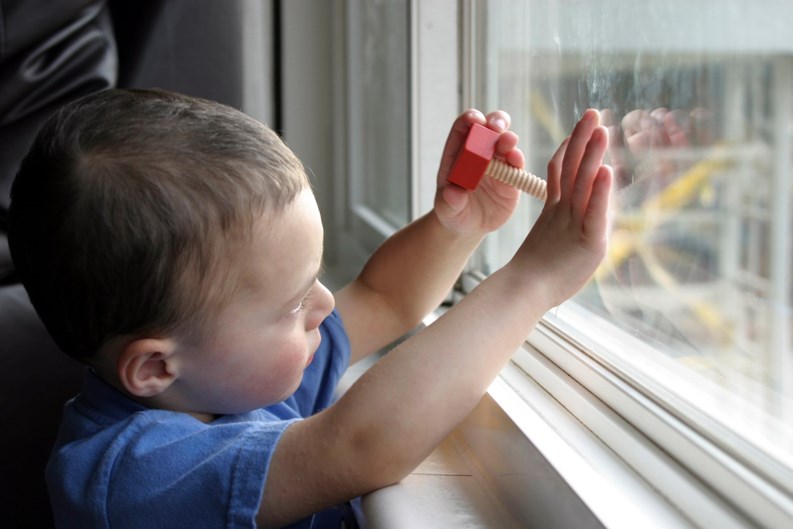
As Weather Gets Warmer and Windows Begin to Open, New York City is Continuing to Raise Awareness About How to Protect Our Littlest New Yorkers from Falls
Our Bureau
New York, NY
Fifty years ago, New York City introduced a law that would quietly transform child safety in urban housing. By requiring window guards in apartments where children under 10 live, the city became the first in the United States to adopt such a measure—one that has since proven remarkably effective in preventing fatal accidents.
Before the law’s introduction in 1976, the scale of the problem was stark. Hundreds of children fell from apartment windows each year, with 24 deaths recorded in that year alone. Within less than three years of implementation, falls dropped by more than 50 percent across the city. The long-term impact has been even more striking: in 2025, only four falls were reported, none of them fatal.
This dramatic shift has been attributed not just to legislation, but to sustained awareness and enforcement. Agencies including the NYC Health Department, the Department of Housing Preservation and Development (HPD), and the Administration for Children’s Services (ACS) have continued to educate families about the importance of window guards. Most recently, ACS launched a campaign titled “Tiny Moments, Big Safety,” spreading awareness across subways, bus shelters, and online platforms.
Mayor Zohran Kwame Mamdani described the law as a foundational element of urban safety. “Every New Yorker has the right to a safe home, but adequate maintenance is especially critical for the safety of our youngest neighbors,” he said. “For 50 years, New York’s window guard law has quietly saved countless lives.” He urged residents to take responsibility, adding, “If you need window guards, or if something in your apartment doesn’t feel safe, reach out to your landlord—or call 311.”
Officials emphasize that the success of the law lies in its simplicity. Deputy Mayor for Health and Human Services Dr. Helen Arteaga noted that “sensible policy and operational solutions that address everyday issues… can have major impacts on the lives of New Yorkers.” She highlighted that the law reduced fatal falls among children by 50 percent within three years and pointed out that “last year… there were zero fatal falls.” Reflecting on the milestone, she added that it demonstrates how “large-scale change starts by believing no task is too small.”
Deputy Mayor for Housing and Planning Leila Bozorg echoed this sentiment, calling the law “a particularly tangible example of how building safety measures can protect New Yorkers’ health.” She described the past five decades as a “quiet but transformational change,” underscoring the role of housing policy in safeguarding public health.
Public health officials also stress how dramatically the situation has improved. NYC Health Commissioner Alister Martin said, “Hundreds of New Yorkers are alive today thanks to 50 years of requiring building owners to install window guards.” He noted that while it may seem routine today, “there was once a time when hundreds of children fell… and many, unfortunately, died.” The decline to just four non-fatal falls in 2025, he said, reflects “the quiet, often invisible, ways that public health keeps us safe.”
Despite this progress, risks remain, often tied to non-compliance. Of the four falls reported in 2025, two were due to improperly installed devices and two occurred where no window guards were present. In the current year, two falls have already been reported under similar circumstances, though neither resulted in serious injury. These incidents highlight the continued importance of proper installation and enforcement.
Under the law, building owners of properties with three or more residential units must install approved window guards or limiting devices in any apartment where a child aged 10 or younger resides. These devices prevent windows from opening more than 4.5 inches and must be installed on all windows except those designated as emergency exits. Property owners are also required to install guards upon tenant request, even if no children live in the apartment.
The responsibility extends beyond individual units. If a building houses at least one child under 10, window guards must also be installed in all public area windows. Tenants, in turn, are expected to cooperate by allowing access for installation and ensuring that guards are not removed or tampered with.
Enforcement is carried out primarily by HPD, which responds to complaints and conducts inspections. Between July 2024 and June 2025, the agency received 2,663 complaints related to window guards and issued more than 7,045 violations requiring installation or repair. When property owners fail to act, HPD’s Emergency Repair Program steps in to ensure compliance and protect residents.