

Early glimpse of the epic sparks excitement as producers closely track feedback ahead of its grand release
Our Bureau
Mumbai / Los Angeles
The first glimpse of Ramayana has set off a wave of excitement across audiences, with the makers now carefully assessing fan reactions as they shape one of Indian cinema’s most ambitious projects.
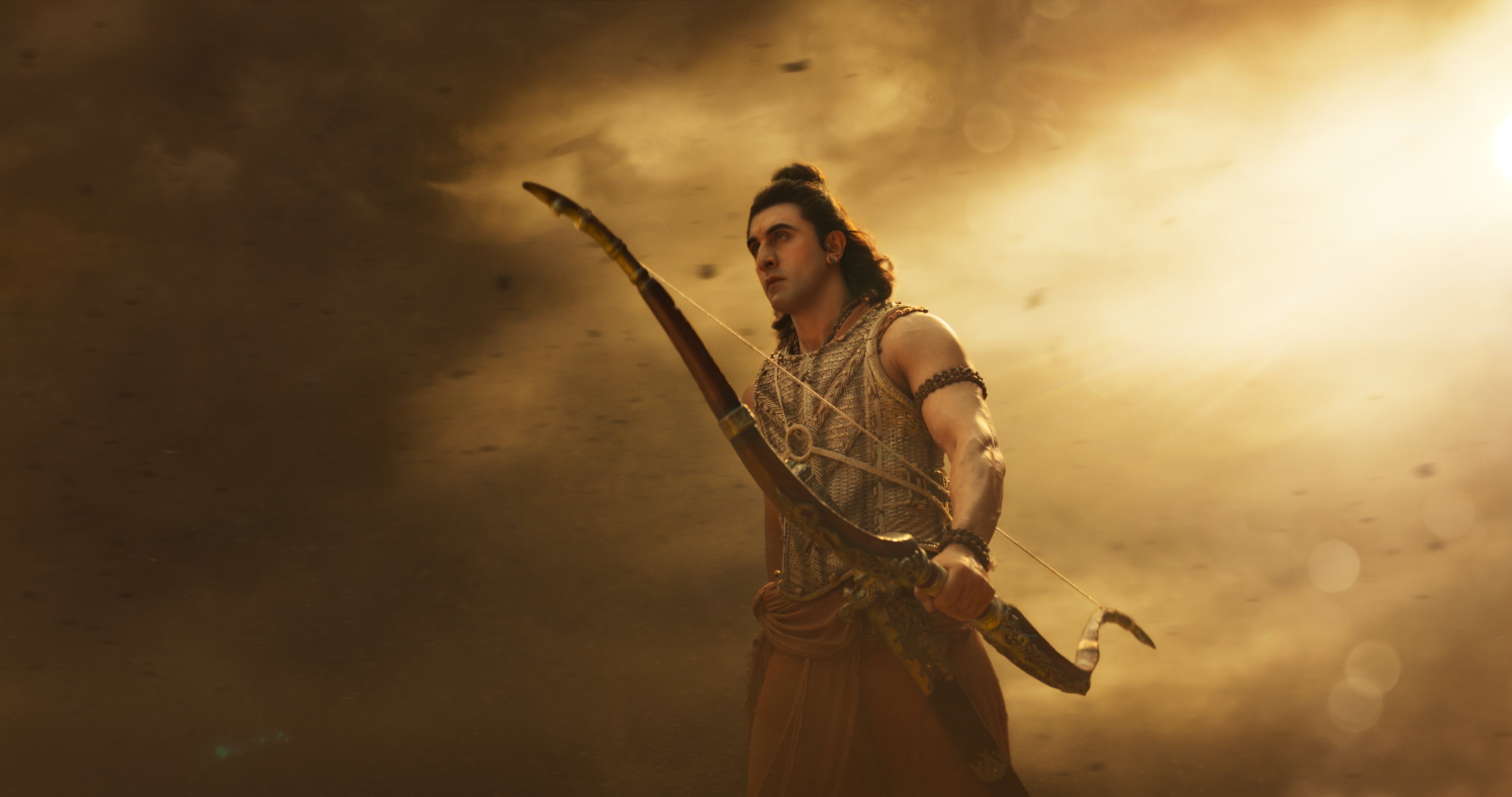
After months of anticipation, the teaser — titled Ramayana: The Introduction — finally unveiled Ranbir Kapoor as Lord Rama, offering a visually rich and emotionally charged preview that has quickly captured public imagination. The video, which focuses on the journey and adventures of Rama, stands out for its grand scale and cinematic appeal, while offering only fleeting glimpses of other key characters.
Fans responded almost instantly. Social media platforms were flooded with reactions, many expressing awe and anticipation. “Incredible! Gave me goosebumps. much-awaited,” wrote one viewer. Another called it “out of the world,” while a third simply declared, “This is iconic.” The language of fandom — breathless, emphatic, celebratory — reflected the scale of expectation surrounding the film.
For Kapoor, stepping into the role of Rama has been less about performance and more about introspection. “I don’t think I’m here to represent Rama. I’m here to learn from him. There is a simplicity and purity to him that is very rare, and trying to understand and imbibe that has been a deeply humbling experience,” he said, describing the role as a personal journey as much as a professional milestone.
Directed by Nitesh Tiwari and produced by Namit Malhotra, Ramayana is envisioned as a two-part cinematic saga — a scale that mirrors the epic it seeks to adapt. Rooted in the ancient Indian epic, the story follows Rama, believed to be an avatar of Lord Vishnu, tracing his life as the prince of Ayodhya, his exile, and his eventual battle with Ravana.
The teaser’s restrained reveal — with Sai Pallavi, Ravi Dubey and glimpses of Ravana’s kingdom appearing only briefly — has added to the intrigue, holding back key elements while amplifying curiosity. The casting itself reflects the film’s scale, with Yash set to play Ravana and Sunny Deol taking on the role of Hanuman.
Behind the sweeping visuals lies a creative collaboration that bridges global and Indian musical sensibilities. The score, composed by Hans Zimmer and A. R. Rahman, signals the film’s ambition to resonate with audiences far beyond national boundaries.
Yet, beyond the spectacle and star power, what has emerged in the days following the teaser release is a more nuanced dynamic — one of active listening. Producer Namit Malhotra has acknowledged the scale of the response, describing it as “overwhelming, inspiring, and humbling.”
“The response over the past few days has truly been overwhelming, inspiring, and humbling. Seeing how our Rama continues to touch so many hearts across the world fills me with deep humility and joy. I cherish all of the conversations, the excitement, and feedback. This is a story etched in the souls of billions and deserves our utmost care,” Malhotra said.
His words underline the weight of expectation attached to the project. Unlike conventional films, Ramayana carries cultural, spiritual and emotional resonance for millions, if not billions. That reality, Malhotra suggested, is shaping the way the team approaches the film’s development.
“The many thousands of artists and collaborators who have been working away passionately are enthusiastic and energised to get out there and continue to deliver the absolute best in every department,” he added, pointing to the scale of the effort behind the scenes.
Crucially, the makers are not treating audience reactions as mere applause but as input. “We’re listening closely, working diligently, and pouring every effort possible into honouring it with the reverence it holds,” Malhotra said, signalling a feedback-driven approach rarely articulated so openly in big-budget filmmaking.
“This is our Ramayana. It belongs to us all, and that shared emotion and massive responsibility to make every Indian proud is what drives me forward every single day,” he added, framing the project as a collective cultural endeavour rather than a singular creative vision.
The emphasis on feedback comes at a time when audience expectations are evolving rapidly, shaped by global content exposure and heightened sensitivity to storytelling authenticity. For a project of this scale, early audience sentiment can play a crucial role in fine-tuning elements ranging from visual design to narrative tone.
The first part of Ramayana is scheduled to hit theatres during Diwali 2026, with the second instalment expected in Diwali 2027. The festive release window underscores the film’s positioning as a cultural event as much as a cinematic one.