

High-level engagements in New Delhi signal a deliberate push to stabilise and expand ties across sectors in a shifting geopolitical landscape
Our Bureau
New Delhi
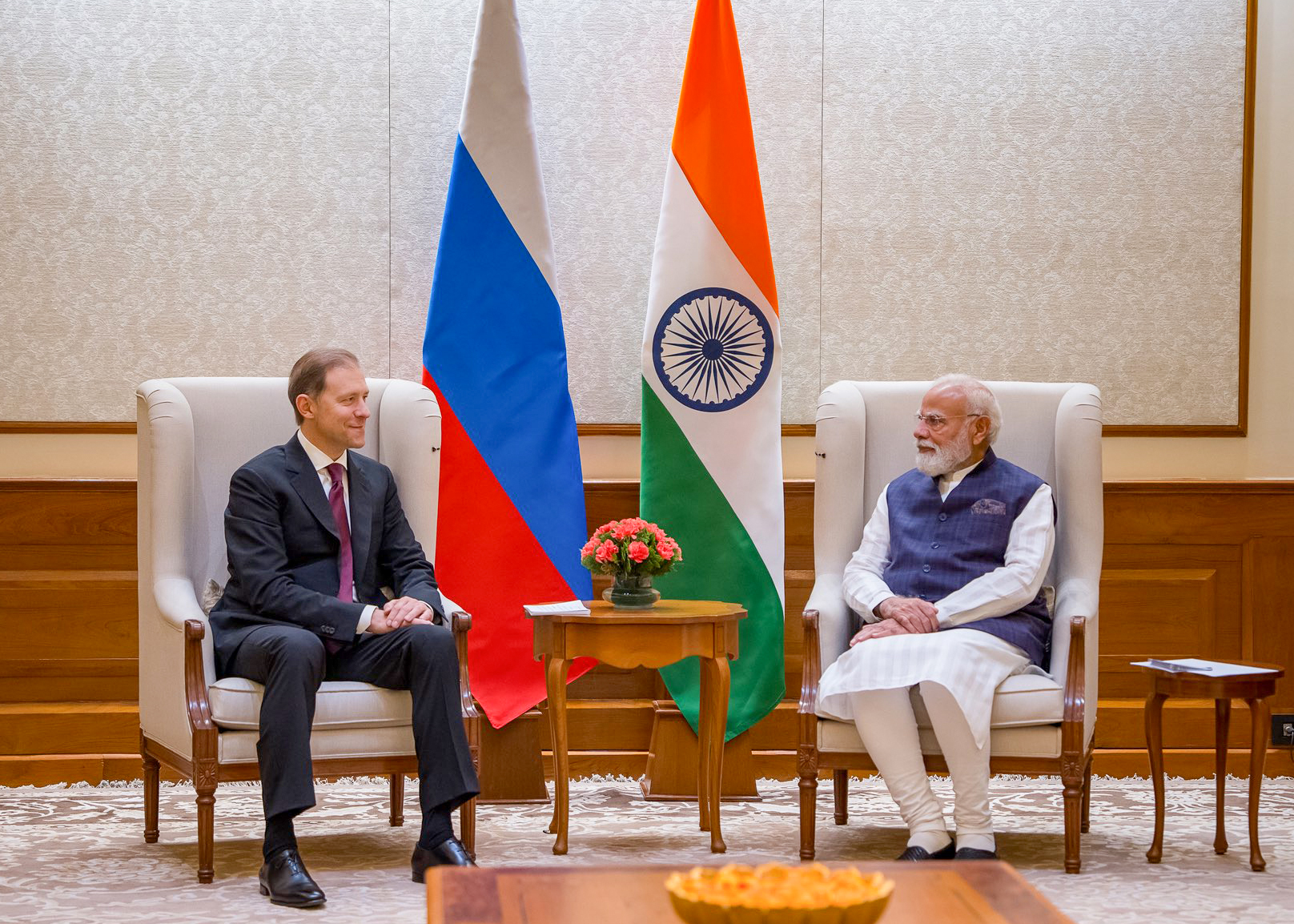
As global fault lines sharpen and conflicts reshape international alignments, India and Russia are signalling continuity and intent in their long-standing partnership. A series of high-level meetings in New Delhi between Indian leaders and Russia’s First Deputy Prime Minister Denis Manturov underline how both countries are seeking to reinforce ties across traditional and emerging domains while navigating an uncertain world.
At the centre of these engagements was Prime Minister Narendra Modi, who framed the relationship in terms of continuity and mutual benefit. Following his meeting with Manturov, Modi said, “Pleased to meet Russia’s First Deputy PM Denis Manturov. We discussed our mutually beneficial cooperation in trade, fertilisers, connectivity, and people-to-people ties.” He added that both sides “welcomed the sustained efforts… to implement the outcomes of the 23rd India-Russia Annual Summit.”
This emphasis on implementation is significant. Rather than announcing new frameworks, both sides appear focused on consolidating decisions taken during the 23rd India-Russia Annual Summit held in December 2025 during President Vladimir Putin’s visit to India. The Russian Embassy noted that “particular attention was paid to further strengthening the Russia-India Special and Privileged Strategic Partnership,” signalling that the relationship retains its institutional depth even amid global churn.
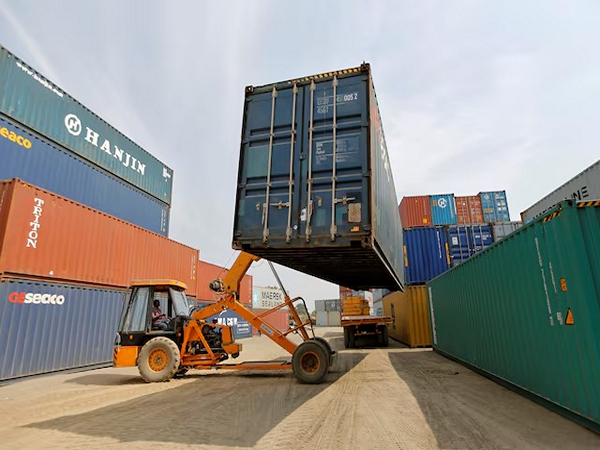
The scope of cooperation discussed reflects both continuity and expansion. Talks centred on core sectors such as trade, investment, energy and industrial cooperation—areas that have historically anchored the partnership. At the same time, the discussions indicate a widening agenda, with new areas being brought into focus as both economies adapt to shifting global priorities.
External Affairs Minister S. Jaishankar described his meeting with Manturov as an “in-depth conversation on our bilateral cooperation,” spanning “trade, industry, energy, fertilisers, connectivity, and mobility.” The breadth of this list underscores how the relationship is no longer confined to legacy sectors like defence, but increasingly encompasses economic and infrastructure linkages.
More notably, Jaishankar pointed to forward-looking areas of collaboration, saying the two sides explored “new opportunities in technology, innovation, and critical minerals.” This suggests an attempt to future-proof the partnership by aligning it with emerging global supply chains and technological shifts, particularly at a time when access to critical resources and innovation ecosystems is becoming strategically vital.
The conversations were not limited to bilateral issues. Jaishankar noted that both sides “exchanged views on regional and global developments, including the conflict in West Asia,” indicating that India and Russia continue to engage on broader geopolitical questions. This dimension reinforces the idea that their partnership operates not just as an economic or bilateral arrangement, but as a platform for strategic dialogue in a fragmented international order.
Economic engagement formed another key pillar of the discussions. Union Finance Minister Nirmala Sitharaman also met Manturov, with the Ministry of Finance stating that the two leaders “exchanged views on strengthening trade and investment ties and discussed issues of mutual interest.” This parallel track of economic diplomacy highlights a coordinated effort across ministries to deepen commercial linkages.
The repeated focus on trade and investment reflects a shared recognition of the need to expand economic ties to match the political and strategic closeness between the two countries. By emphasising “mutually beneficial cooperation,” both sides are signalling that economic pragmatism remains central to the partnership, particularly in a global environment marked by disruptions in supply chains and shifting trade patterns.
At the same time, the partnership continues to rest on a broad foundation that includes science and technology, nuclear energy, defence and space collaboration. These sectors, long seen as pillars of India-Russia ties, provide continuity and stability even as newer areas are added to the agenda. The ongoing engagement across such a wide spectrum suggests that the relationship is being actively maintained rather than allowed to drift.
The timing of these meetings is also notable. With global tensions persisting—from conflicts in West Asia to broader geopolitical rivalries—the reaffirmation of India-Russia ties reflects a strategic choice to maintain diversified partnerships. By engaging at multiple levels and across sectors, both countries appear to be insulating their relationship from external pressures while adapting it to contemporary realities.
In this context, the language used by both sides—“mutually beneficial cooperation,” “in-depth conversation,” and “strengthening… partnership”—points to a deliberate effort to project stability and continuity. Rather than dramatic announcements, the focus is on steady engagement, incremental progress and the execution of existing commitments.
Taken together, these developments suggest that India and Russia are not merely preserving a legacy relationship but actively recalibrating it for a changing world. By combining traditional strengths with new areas of cooperation and sustained diplomatic engagement, both sides are asserting that their partnership remains relevant—even as the global order becomes more uncertain.