


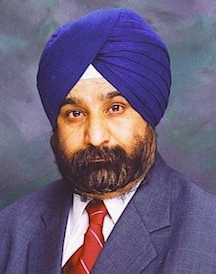
H S Panaser
“AI must serve humanity, strengthen democracy, and create opportunities for every nation, not just a privileged few.” – Narendra Modi
From February 16–20, 2026, at Bharat Mandapam, New Delhi became the epicenter of the global artificial intelligence movement. The India AI Impact Summit 2026, inaugurated by the Prime Minister of India, brought together more than 3,200 participants from over 30 countries—uniting heads of state, global technology pioneers, AI researchers, industry leaders, investors, and policymakers under one ambitious theme: AI for All.
The five-day summit was not merely a technology gathering. It was a strategic convergence of geopolitical leadership, frontier science, economic ambition, and ethical responsibility. With over 40 global CEOs, 20 heads of state, and more than 300 exhibitors participating, the event positioned India as a decisive force in shaping the next phase of the global AI revolution. This world’s biggest event is expected to cross 250000 visitors. Day 2 has 70000 visitors
AI is expected to contribute up to $20 trillion to the global economy by 2030, making it one of the largest economic transformations since the industrial revolution.
AI Safety, Governance, and the Global South
One of the summit’s defining pillars was the focus on AI governance and safety. With generative AI models rapidly reshaping information ecosystems, discussions centered on transparency, algorithmic accountability, data sovereignty, and age-appropriate design frameworks.
India positioned itself as a bridge between advanced AI economies and developing nations. The summit highlighted frameworks for equitable AI access, ensuring that emerging economies are not left behind in the AI revolution. The Global South partnership agenda emphasized affordable compute infrastructure, localized language models, and knowledge-sharing initiatives.
“India is one of the most important AI markets in the world—not only because of its scale, but because of its talent and entrepreneurial energy.”- Sundar Pichai
In multiple sessions, leaders called for a “shared roadmap for global AI governance,” advocating collaborative regulatory standards rather than fragmented national policies.
Sectoral Transformation: From Classrooms to Command Centers
One of the most compelling themes emerging from the India AI Impact Summit 2026 was the practical, cross-sector transformation that artificial intelligence is already driving. The discussions made it clear that AI is no longer confined to research labs or experimental applications. It is moving rapidly into classrooms, clinics, command centers, factories, farms, and financial institutions—reshaping how nations educate, defend, produce, heal, and govern.
“Artificial intelligence must be guided by democratic values, global cooperation, and a shared commitment to human progress.”- Emmanuel Macron
India’s approach, as presented at the summit, is particularly distinctive. Rather than treating AI as a purely commercial technology, the country is positioning it as a nation-building tool—integrated across public infrastructure, industry, and social systems. This sectoral transformation reflects a shift from theoretical innovation to real-world impact.
Education: Building the World’s Largest AI-Ready Workforce
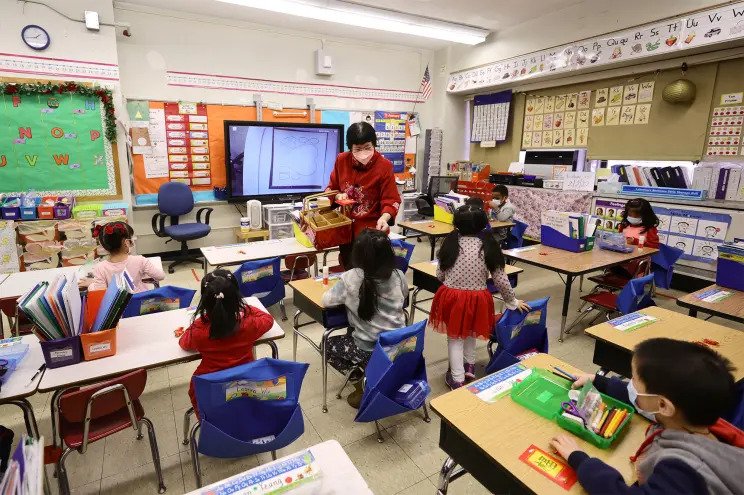
India’s education system, serving hundreds of millions of students, stands at the forefront of AI-driven transformation. Leaders at the summit emphasized that AI will redefine both how knowledge is delivered and what skills are taught.
AI-powered learning platforms can analyze each student’s pace, strengths, and weaknesses, enabling personalized education at scale. This is particularly important in a country with diverse languages and varied levels of access to quality schooling.
Key developments highlighted include:
- AI tutors capable of teaching in multiple Indian languages
- Real-time translation tools to bridge linguistic divides
- Adaptive learning platforms for rural and underserved areas
- Skill-based education aligned with emerging AI-driven industries
- Youth innovation initiatives to encourage early AI exposure
The long-term goal is not only to improve learning outcomes, but to create the world’s largest AI-capable workforce, positioning India as a global talent hub.
Healthcare and Pharma: Accelerating the Future of Medicine
Artificial intelligence is poised to transform healthcare delivery, drug discovery, and patient management. With its vast population and diverse health challenges, India presents one of the most complex and impactful testing grounds for AI-driven medical solutions. AI could reduce drug discovery timelines by 30–50%. The global AI healthcare market is projected to exceed $180 billion by 2030.
At the summit, experts discussed how AI can:
- Accelerate drug discovery timelines from years to months
- Improve early disease detection through predictive diagnostics
- Enable personalized treatment plans based on patient data
- Support telemedicine and remote healthcare in rural areas
- Optimize hospital workflows and medical supply chains
For the pharmaceutical sector, AI offers a pathway to faster clinical trials, better molecule design, and reduced development costs—strengthening India’s position as a global pharmaceutical powerhouse.
AI-Driven Public Health Platforms: SAHI and BODH
A major highlight of the summit was the launch of two flagship AI-enabled public health initiatives—SAHI and BODH—by India’s Union Health Minister J. P. Nadda. These platforms are designed to harness artificial intelligence for smarter healthcare delivery, disease surveillance, medical training, and data-driven policy decisions.
SAHI is expected to strengthen real-time health intelligence, enabling early detection of disease outbreaks, predictive analytics for public health risks, and more efficient resource allocation across India’s vast healthcare network. BODH, on the other hand, focuses on AI-powered knowledge systems for medical education, clinical decision support, and capacity building for healthcare professionals.
With India managing one of the world’s largest public health ecosystems—serving over 1.4 billion people—the deployment of AI-powered platforms such as SAHI and BODH represents a major step toward predictive, preventive, and personalized healthcare at national scale.
Defense and National Security: Smarter, Faster, More Resilient Systems
AI is rapidly becoming central to modern defense strategy. Military planners at the summit emphasized that future conflicts will be defined as much by algorithms and data as by traditional weapon systems.
AI applications in defense include:
- Autonomous surveillance and reconnaissance platforms
- AI-driven cybersecurity and threat detection
- Real-time battlefield analytics and decision support
- Predictive maintenance for military equipment
- Advanced simulation environments for training and strategy
By integrating AI into command-and-control systems, defense forces can make faster, more informed decisions. The result is a more agile, technologically advanced military capable of addressing both conventional and asymmetric threats.
IT and Enterprise: From Software Services to AI-Native Economies
India’s globally recognized IT services sector is undergoing a profound transformation as artificial intelligence becomes embedded into every layer of enterprise operations.
At the summit, industry leaders emphasized the shift from traditional software outsourcing to AI-native solutions and autonomous systems. The rise of AI agents capable of handling workflows, customer interactions, coding tasks, and decision-making processes represents a fundamental change in the enterprise landscape. Analysts estimate that AI could contribute up to $500 billion to India’s GDP over the next decade, transforming the country’s services-led economy into an innovation-driven one
Key trends include:
- AI-powered productivity tools across industries
- Growth of AI-first startups and deep-tech ventures
- Expansion of data centers and cloud infrastructure
- Integration of AI into financial services, retail, and logistics
- Emergence of India as a global hub for AI development and deployment
This transition positions India to move beyond its reputation as a services exporter and become a creator of AI platforms, products, and intellectual property.
Semiconductor and Compute Infrastructure: The Strategic Backbone
No AI strategy is complete without access to high-performance computing power. The summit placed strong emphasis on building a sovereign AI infrastructure supported by advanced semiconductor ecosystems.
Discussions focused on:
- Establishing AI-focused data center clusters
- Expanding GPU and high-performance compute capacity
- Encouraging domestic semiconductor manufacturing
- Forming strategic partnerships with global chip companies
- Developing AI-ready urban clusters and “compute cities’
The logic is straightforward: nations that control compute infrastructure will control the pace of AI innovation. By investing in chips, data centers, and cloud infrastructure, India aims to secure its technological sovereignty and economic resilience.
Agriculture, Governance, and Social Development: AI for Inclusive Growth
Beyond high-tech sectors, the summit showcased how AI can transform everyday life for millions, especially in rural and underserved communities.
Key applications include:
- AI-driven crop monitoring and yield prediction
- Climate and water resource analytics
- Smart subsidy and welfare distribution systems
- Fraud detection in public programs
- Voice-based AI interfaces for low-literacy populations
India’s digital public infrastructure allows these solutions to scale nationally. This creates a model where AI is not just a commercial tool, but a public good—improving governance, reducing inefficiencies, and enhancing transparency.
From Concept to Command: A Structural Shift
What emerged clearly from the summit is that AI is no longer a single industry or technology sector. It is becoming the operating system of modern economies.
- In classrooms, it personalizes learning.
- In hospitals, it predicts disease.
- In command centers, it analyzes threats.
- In factories, it optimizes production.
- In farms, it forecasts yields.
- In government, it improves service delivery.
This integrated, cross-sector adoption represents a structural shift—one that could redefine productivity, security, and quality of life across nations.
A New Development Paradigm
India’s sectoral AI strategy is built on scale, affordability, and inclusivity. By embedding AI into public systems—identity, payments, healthcare, education, and agriculture—the country is attempting to create a new development paradigm.
If successful, this model could serve as a blueprint for other emerging economies, demonstrating how artificial intelligence can accelerate growth while remaining accessible and equitable.
Expo, Innovation, and Youth Engagement
Spread across 70,000 square meters, the AI Impact Expo featured over 300 exhibitors showcasing real-world applications in governance, agriculture, climate modeling, financial services, robotics, and agent-based automation.
The Research Symposium brought interdisciplinary scholars together to explore frontier AI questions, while youth platforms showcased innovations from students aged 13–21, reinforcing the summit’s commitment to intergenerational participation.
India’s Strategic Moment
According to global competitiveness indices, India now ranks among the top three AI ecosystems worldwide, behind only the United States and China. The India AI Impact Summit 2026 signaled that the global AI race is no longer bipolar.
“AI governance is one of the defining challenges of our time. It demands global dialogue, shared rules, and inclusive innovation.”- Antonio Guterres
Instead, a multipolar AI world is emerging—one where India seeks to combine scale, affordability, innovation, and ethical governance.
By integrating AI with its digital identity architecture, payment rails, healthcare systems, and education networks, India is attempting something unprecedented: compressing decades of development into years through intelligent automation.
Conclusion: Beyond a Summit
The India AI Impact Summit 2026 is more than a conference. It was a strategic statement of intent. With the presence of global heads of state, technology pioneers, and India’s foremost business leaders, the event marked a pivotal chapter in the global AI narrative. It demonstrated that artificial intelligence is not merely a technological frontier—it is an economic, geopolitical, and societal transformation engine.
H S Panaser: Chairman, Global Indian Trade and Cultural Council, USA l Business Development Consultant in Pharmaceuticals, IT and AI I EDP I Advisor in merger and acquisitions I GSK I Ex Chair, USINPAC I President at Global Indian Diaspora Alliance l Associated with Prof. Harkishan Singh Foundation I Social Activist I Columnist