

As 2026 begins, India faces simultaneous tests on the global stage, in its economic trajectory, and within its domestic politics—yet under Narendra Modi, the country is preparing to convert uncertainty into strategic opportunity.
Our Bureau
New Delhi
India enters 2026 with a paradoxical inheritance from the year gone by. On the surface, the country looks stronger than ever: the world’s fourth-largest economy, among the fastest-growing major nations, with inflation at historic lows and a leadership confident of its global standing. Beneath that confidence, however, lie three intertwined challenges—an unsettled foreign policy environment, an economy facing new headwinds despite stellar growth, and a domestic political landscape that demands calm even as electoral competition intensifies.
What makes this moment consequential is not merely the scale of the challenges, but their simultaneity. Few countries today confront geopolitical uncertainty, economic realignment, and domestic churn all at once. India does—and under Prime Minister Narendra Modi, it is attempting to respond with a mix of strategic autonomy abroad, reform continuity at home, and political mobilization that seeks stability rather than drift.
Strategic Autonomy Under Stress
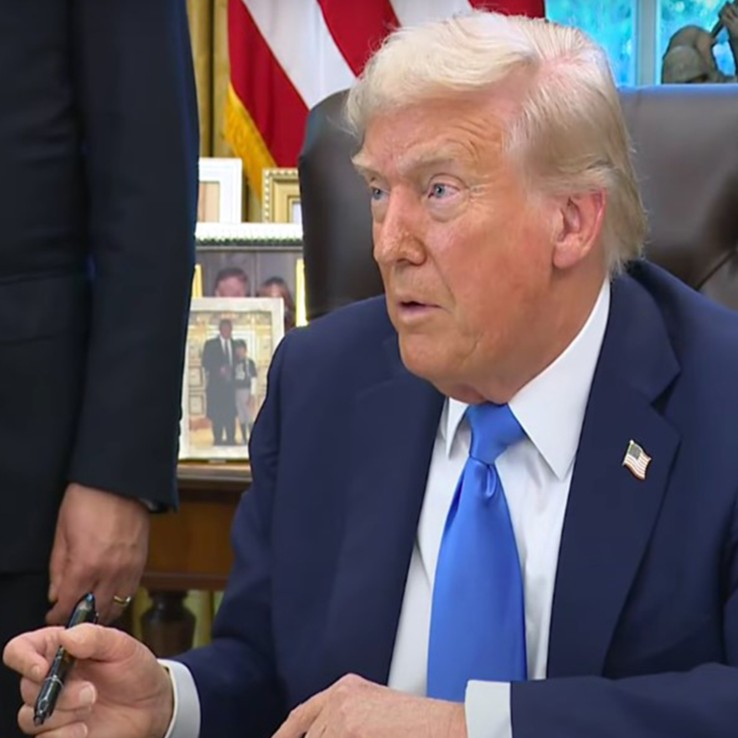
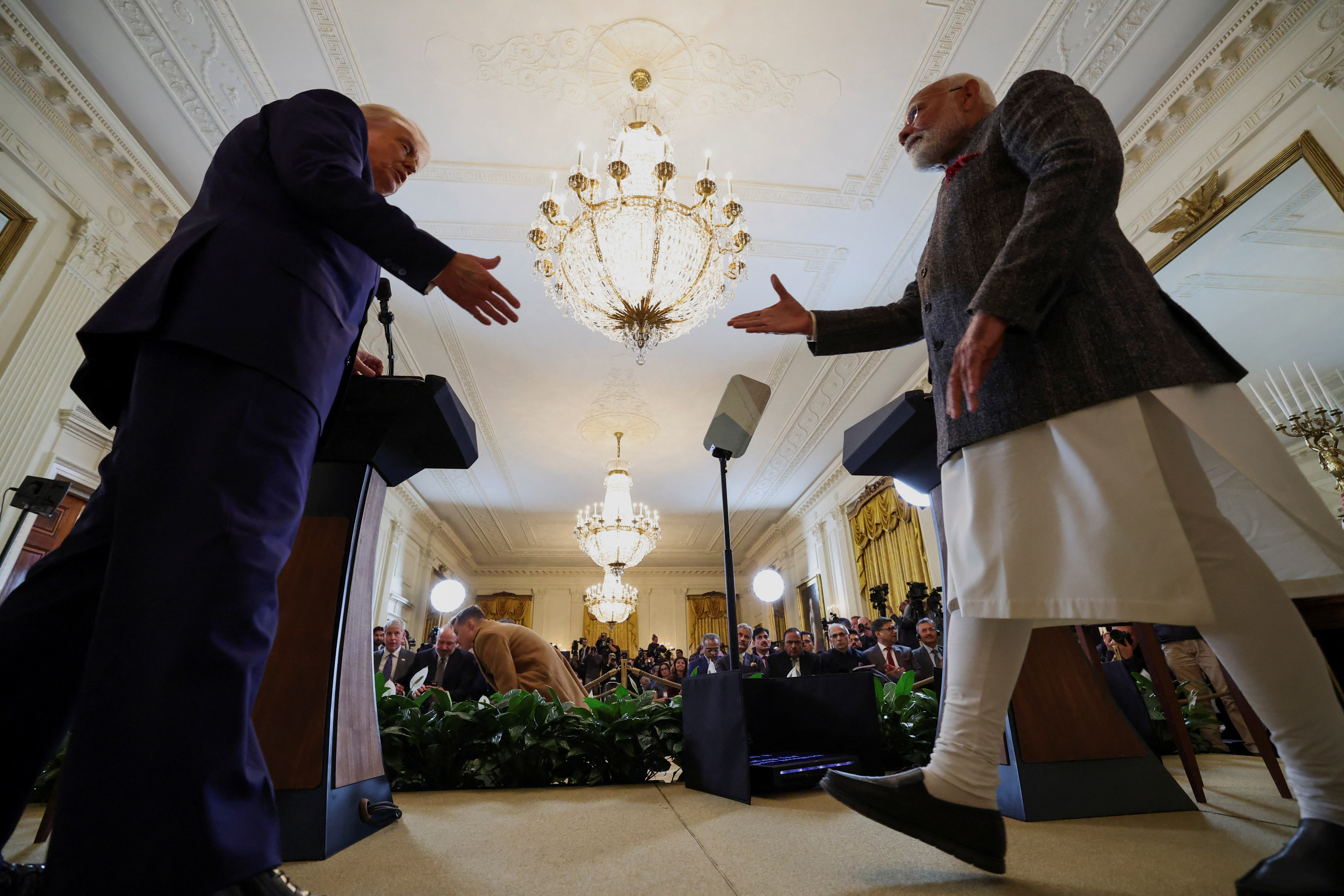
The biggest foreign policy surprise of 2025 was India’s cooling equation with the United States. After months of negotiations, a long-anticipated trade deal failed to materialize. As 2026 opened, President Donald Trump signaled the possibility of higher tariffs on India, citing New Delhi’s continued imports of Russian oil. The message was unmistakable: Trump 2.0 would be transactional, impatient, and unencumbered by the diplomatic courtesies of the past.
For India, the setback went beyond trade. The fraying of India–U.S. ties challenged assumptions that had shaped New Delhi’s Indo-Pacific strategy, the future relevance of the Quad, and India’s positioning vis-à-vis China. Speculation mounted that Washington’s recalibration—its renewed engagement with Pakistan and a possible consolidation of a U.S.-China “G2”—could obstruct India’s natural rise.
Yet India’s response has been characteristically measured. Calls between Modi and Trump have continued. Russian oil imports have slowed modestly. Tensions with Pakistan have receded after the brief flare-up of 2025. But New Delhi has resisted the temptation to appear pliant. For Modi’s government, repairing ties with Washington is no longer about clinching a trade agreement alone; it is about reshaping strategic perceptions.
South Block’s challenge in 2026 is twofold. First, to persuade the U.S. establishment that India’s strategic, technological and economic complementarities make it indispensable—regardless of oil imports or tactical disagreements. Second, to prepare a credible Plan B. If U.S.-China ties deepen at India’s expense, New Delhi must be ready to widen its strategic canvas.
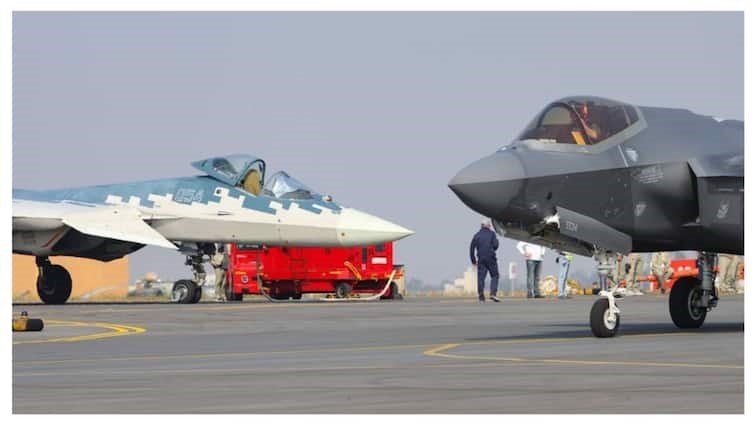
That diversification is already underway. India’s partnership with Russia is being deepened with a renewed emphasis on delivery—energy security, connectivity, trade expansion and defense cooperation. Europe, long under-prioritized, is emerging as a strategic hedge. The visit of the European Union’s top leadership to Delhi in January, and the possibility of concluding the long-pending India–EU free trade agreement, offer India a chance to anchor itself more firmly in a multipolar West.
Within the Indo-Pacific, India continues to work closely with Japan and Australia while strengthening ties with Southeast Asian states wary of China’s assertiveness—Vietnam, Indonesia and the Philippines among them. Africa, too, is being reimagined not merely as a theatre of Global South rhetoric but as a zone for selective, tangible partnerships, particularly through regional economic communities.
Closer home, Modi’s foreign policy faces its most delicate tests. Pakistan remains the hardest problem. The lessons of “Op Sindoor” have reinforced the reality that two nuclear neighbors cannot afford perpetual silence. A calibrated revision of Pakistan policy—without illusions, but with communication channels intact—may be unavoidable. Bangladesh, meanwhile, demands pragmatism over nostalgia, as India works to preserve stability after the long “golden chapter” of Sheikh Hasina.
In West Asia, where Israel has emerged as the dominant military power with U.S. backing, India is focused on resilience—protecting its diaspora, energy interests and strategic partnerships with players ranging from Saudi Arabia and the UAE to Iran and Qatar.
India’s BRICS presidency in 2026 adds another layer of complexity. Disenchanted with old-style multilateralism, New Delhi has invested in plurilateral platforms. But the dilution of the Global South consensus during the G20 years has underscored a lesson: solidarity must be real, not rhetorical. How India steers BRICS amid shifting global power equations will test its diplomatic finesse.
Economy: Strength with Vulnerabilities
If geopolitics surprised India in 2025, the economy confounded even optimists. Growth surged to 7.3 per cent, prompting the Reserve Bank of India to repeatedly upgrade its forecasts. Private estimates were even higher. Inflation, remarkably, fell to around 2 per cent, creating what RBI Governor Sanjay Malhotra called a “Goldilocks” economy—neither too hot nor too cold.

India also crossed a symbolic milestone, overtaking Japan to become the world’s fourth-largest economy. While formal IMF confirmation is awaited, the ranking underscored India’s growing weight in the global system.
Yet 2026 will test whether this performance can be sustained. Economists expect a return to more “normal” conditions. Growth is projected to moderate to around 6.8–7 per cent, while inflation could rise toward the RBI’s 4 per cent target. Paradoxically, this mean reversion may help India by boosting nominal growth, tax collections and corporate revenues that were hurt by ultra-low inflation.
The bigger puzzle lies in financial markets. Despite robust growth, Indian equities had their worst relative performance against emerging markets since 1994. Foreign investors sold record amounts of Indian shares, chasing returns elsewhere and wary of frosty India–U.S. relations. The rupee, too, suffered its sharpest annual fall in three years, driven less by trade weakness than by capital outflows.
For 2026, the outlook is cautiously optimistic. Investment banks see scope for a rebound if earnings surprise positively, reforms continue, and geopolitical uncertainty eases. But risks persist: a weakening currency, persistent selling by existing investors, and the lagged effects of global trade disruptions.
Beyond markets, structural challenges loom large. Gold prices, up nearly 65 per cent in 2025, have altered consumer behavior, pushing Indians toward coins and bars rather than jewellery. More worrying is the water crisis. India’s dominance in global rice exports has come at the cost of depleting groundwater, hurting agriculture, industry and urban consumers alike. Managing growth sustainably—especially in water-intensive sectors—will be one of Modi’s toughest economic tests.
Domestic Politics: Stability as Strategy
At home, India’s political challenge in 2026 is not instability but intensity. With major elections on the horizon, competition is sharpening.
State elections will be a critical political test for Prime Minister Narendra Modi in the coming year because they serve as the earliest and most reliable barometer of national mood between general elections. While Modi’s authority at the Centre remains strong, state contests are shaped by local issues—prices, jobs, caste equations, agrarian distress, and governance fatigue—that can blunt the appeal of national leadership. A string of setbacks in key states would not threaten the government in Delhi, but it could dent the aura of electoral invincibility that has been central to Modi’s political capital.
These elections will also test the BJP’s organizational depth beyond Modi’s personal popularity. Regional parties, often written off in national narratives, remain formidable on their home turf and are increasingly willing to unite tactically against the BJP. For Modi, the challenge is to balance national messaging with credible local leadership, adapt campaign strategies to diverse state realities, and prevent state-level losses from snowballing into a broader political narrative of vulnerability.
Yet Modi’s approach suggests a preference for narrative control and institutional continuity rather than reactive politics.
Equally important is maintaining a calmer domestic environment to support foreign policy and economic decision-making. As India navigates global uncertainty, internal cohesion becomes a strategic asset.
A Test of Leadership
The road ahead is undeniably complex. A transactional United States, an assertive China, fragile multilateralism, volatile markets, and environmental stress form a dense web of risks. Yet India enters this phase better prepared than many peers—economically resilient, diplomatically diversified, and politically led by a Prime Minister who thrives in moments of flux.
The real test of 2026 will not be whether challenges arise—they will—but whether India can manage them simultaneously. Under Modi, the country is attempting exactly that: protecting its interests without retreating from the world, sustaining growth without ignoring vulnerabilities, and keeping domestic politics robust but stable.
In an age of global polycrisis, India’s bet is that strategic autonomy, economic momentum and political clarity can still deliver results. Whether that bet pays off will define not just the year ahead, but India’s place in the decade to come.