A routine electoral roll update has exploded into a national political flashpoint, with West Bengal Chief Minister Mamata Banerjee alleging deaths, discrimination and “detention camp” fears even as the BJP calls the outrage manufactured
Our Bureau
Murshidabad/Malda/New Delhi
What began as the Election Commission’s Special Intensive Revision (SIR) of electoral rolls — normally an administrative exercise — has transformed into one of the most polarising political issues of the winter session. As protests intensify across states, sharp allegations, counter-allegations and fears of disenfranchisement have pushed the SIR into the centre of India’s national discourse.
West Bengal Chief Minister Mamata Banerjee has launched the fiercest attack yet, claiming that the SIR exercise has created panic in the state and caused “40 deaths,” including cases of trauma and suicide. Speaking in Murshidabad, she accused the BJP of weaponising the process months before crucial Assembly elections.
“Just so the State government could not function, SIR was declared three months before the polls,” Mamata said. “Why is SIR happening only in states where BJP is not in power — Bengal, Tamil Nadu, Kerala? Why not in bordering states ruled by the BJP?”
She announced an ex-gratia of ₹2 lakh for families of the deceased and ₹1 lakh for those hospitalised due to alleged stress caused by SIR notices. She also urged people to attend hearings and fill out forms properly to avoid deletion from the rolls.
In a charged address, Mamata accused the BJP of trying to “drive out minorities, Matuas and Rajbanshis,” and warned that the SIR was being used to “establish detention camps” — a claim the BJP has dismissed as fear-mongering. “No detention camp will be established in Bengal. BJP must listen carefully,” she said.
Her rhetoric sharpened in Malda, where she reassured citizens: “No one is going to detention centres. I am your pehradar.” She accused the Centre of withholding funds from Bengal and targeting Bengali speakers by labelling them “Bangladeshi.” “You have no right to call those who speak Bangla Bangladeshis,” Mamata said.
The TMC chief argued that the BJP was “digging its own grave” in Bengal. “You won Bihar but you cannot win Bengal,” she declared.
The Election Commission, meanwhile, is conducting SIR across 12 states and UTs ahead of the 2026 Assembly elections. The exercise involves door-to-door verification to update voter lists, remove duplicates and ensure accuracy — a process the Commission insists is routine and necessary.
But opposition parties argue that the timing and scale of the SIR raise concerns about voter suppression.
In Uttar Pradesh, senior Samajwadi Party leader Ram Gopal Yadav called the SIR “unnecessary” and “a gimmick to stay in power.” He warned that coming to power through “gimmicks” could lead to consequences similar to those seen in Nepal and Bangladesh.
SP MP Awadhesh Prasad said SIR threatens the right to vote, a fundamental legacy of Dr B.R. Ambedkar. “The issue of SIR is burning. Through discussion and suggestions from the opposition, democracy will be saved,” he said.
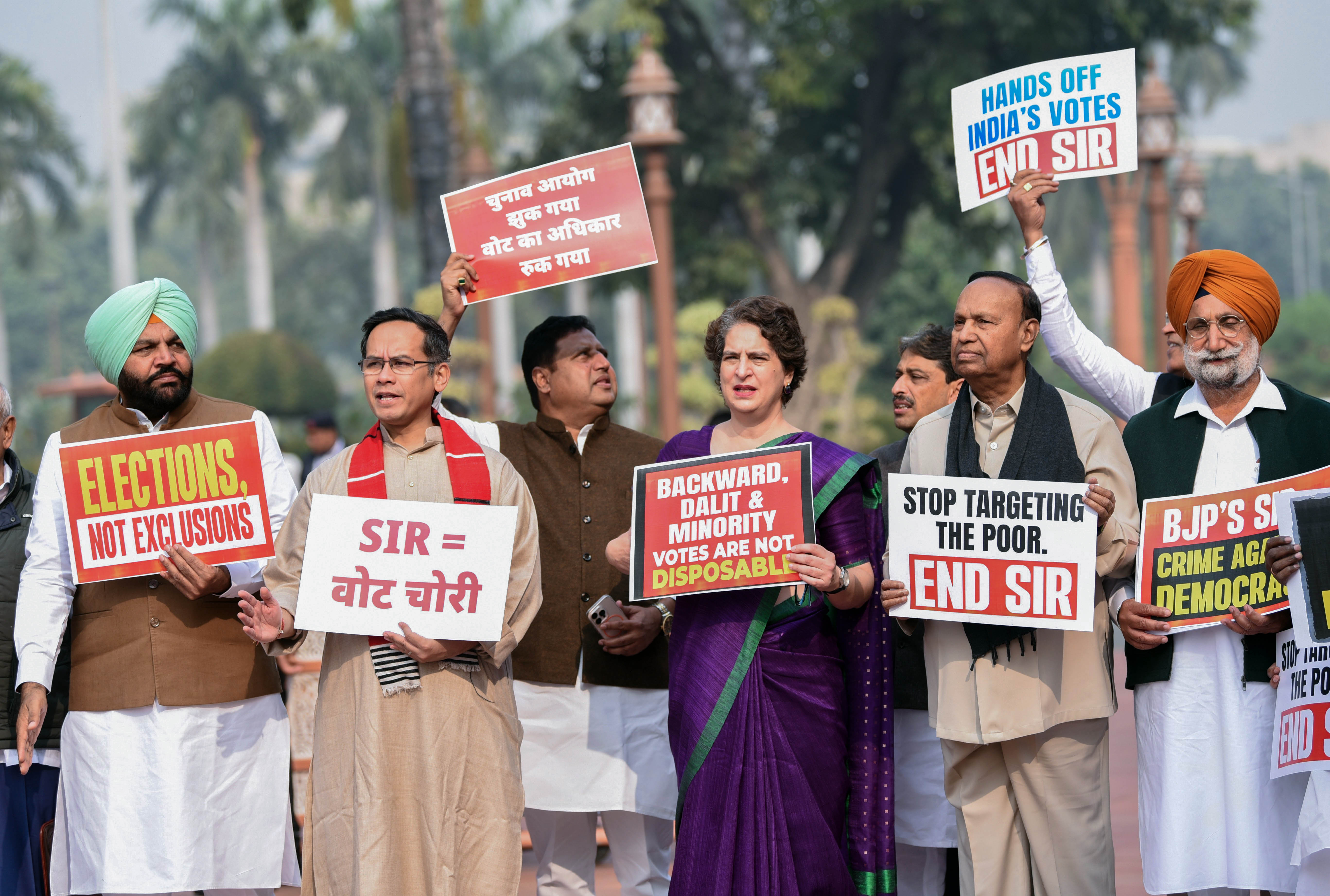
In Parliament, the INDIA bloc has staged daily protests since the winter session began, demanding a dedicated debate on SIR. Congress President Mallikarjun Kharge, Sonia Gandhi, Rahul Gandhi and Priyanka Gandhi joined demonstrations, arguing that SIR risks disenfranchising vulnerable communities.
The opposition claims SIR has created an atmosphere of fear among minorities and marginalised communities, with many residents unsure about required documents and concerned about possible deletions.
The BJP maintains that the SIR is a standard EC process and that the controversy is politically engineered. BJP MP Dinesh Sharma accused opposition parties of acting with an “unsettled mindset.”
“They protest about CAA, vote theft, Waqf and electoral reforms. Today they come with SIR. Tomorrow another issue,” Sharma said. “These misguided people should feel regret for their defeat in Bihar rather than creating noise in Parliament.”
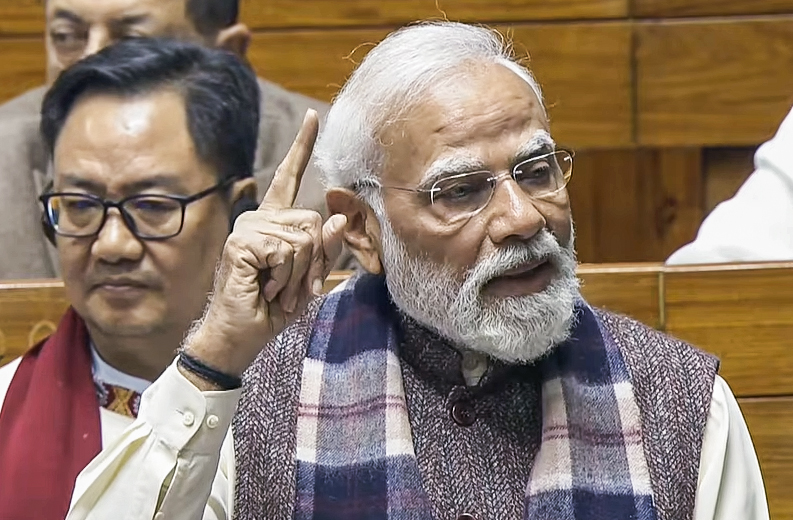
Union Parliamentary Affairs Minister Kiren Rijiju attempted to calm tensions, noting that the government has agreed to a parliamentary debate on December 9. However, he clarified that SIR is “an administrative matter of the Election Commission,” not a government-led initiative.
“If we discuss reforms, the scope must be wider. You cannot isolate a single administrative decision taken by the EC,” Rijiju said.
The SIR controversy comes at a politically sensitive moment, with high-stakes elections approaching in Bengal, Tamil Nadu and Kerala. For the opposition, the issue has become a rallying cry against alleged central overreach. For the BJP, it is a chance to accuse opponents of fear-mongering and obstructing electoral transparency.
As Parliament prepares for a full debate and political rhetoric intensifies, the Special Intensive Revision has become more than a bureaucratic update — it has ignited a wider fight over identity, citizenship, electoral fairness and the battle lines for 2026.