

From integrated strike capabilities to indigenous weapons and drone warfare, India’s armed forces are now better prepared than ever to deter and respond to any Pakistani misadventure.
Our Bureau
Jaisalmer / New Delhi
When Defence Minister Rajnath Singh told soldiers in Jaisalmer that “Pakistan will now think twice before attempting any misadventure,” his words reflected not mere bravado but the culmination of a decade-long military transformation. Operation Sindoor—India’s recent show of coordinated air and ground power—was more than a tactical success. It was a signal: India’s armed forces have evolved into a technologically advanced, self-reliant, and battle-ready force, capable of countering threats across both land and sea.
Speaking to troops during Barakhana in Jaisalmer, Rajnath Singh said the operation, though temporarily halted, had “given Pakistan a dose of caution.” His warning was unambiguous: any new provocation would invite an “even harsher response.”
Operation Sindoor demonstrated India’s ability to integrate its tri-services—air, land, and maritime—under one unified command structure. The operation’s rapid deployment and precise air support underscored a military that has learned from past conflicts and adapted to the demands of modern warfare. Singh’s visit to forward areas this week, along with senior Army commanders, symbolized a new confidence in the country’s readiness along the western frontier.
He also linked military strength with national ambition, stressing that a self-reliant defense ecosystem is central to India’s goal of becoming a developed power by 2047.
Transformation on the Ground: Bhairav Battalions and Drone Warfare
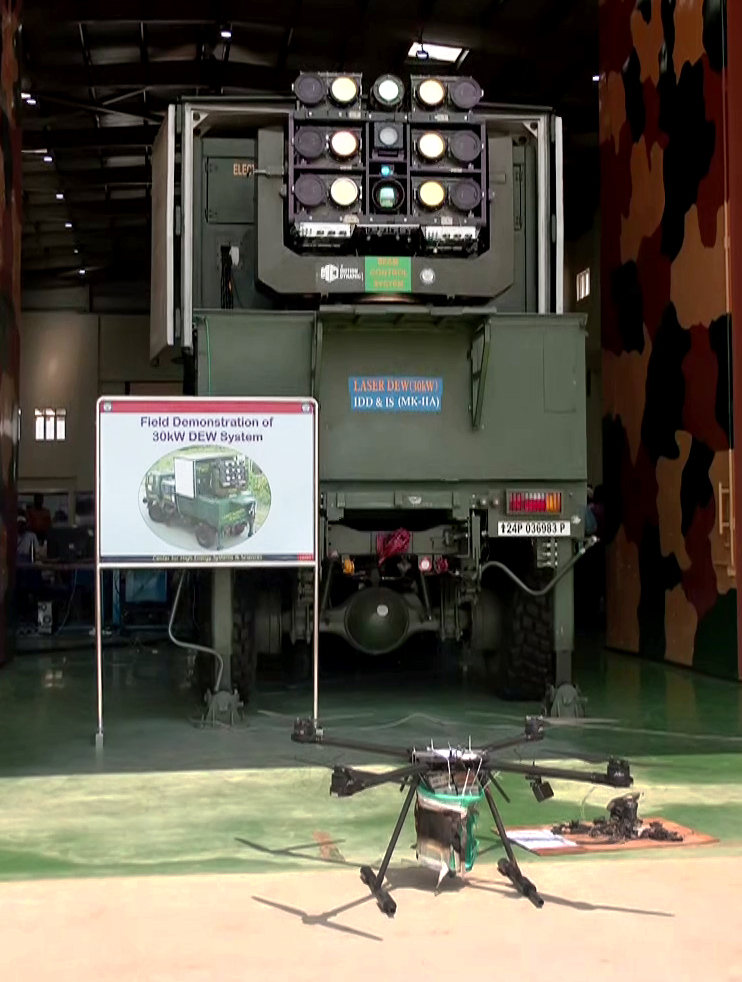
At the heart of India’s renewed confidence lies structural transformation. The Army’s creation of Bhairav battalions and Ashni drone platoons marks a paradigm shift from traditional warfare to hybrid, technology-enabled combat.
According to Lt Gen Ajay Kumar, Director General of Infantry, the first Bhairav battalion will be fully operational by November 1, with 25 more planned within six months. Each battalion—comprising 250 personnel from infantry, artillery, air defense, and signals—will act as a rapid-reaction strike unit, designed to hit hard and fast in sensitive border zones.
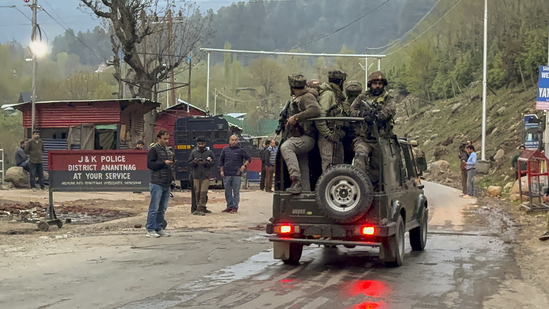
These hybrid battalions aim to bridge the gap between Special Forces and regular infantry. Their mobility and adaptability are crucial for operating across the deserts of Rajasthan and the mountainous terrains of Jammu and Kashmir, where any Pakistani provocation requires swift retaliation.
The Nag Mark 2, tested successfully in January at Pokhran, is a fire-and-forget missile system designed for quick deployment against armored threats. Combined with the Javelin missile systems being procured under emergency purchase, India’s anti-tank capabilities are now among the most formidable in the region.
Beyond the battlefield, these developments reflect India’s success under the Aatmanirbhar Bharat (self-reliance) initiative, aimed at reducing dependence on foreign suppliers and promoting indigenous production.
While the Army tightens its grip on the land border, the Indian Navy and Air Force are expanding India’s strategic depth across the Arabian Sea and the Indian Ocean Region.
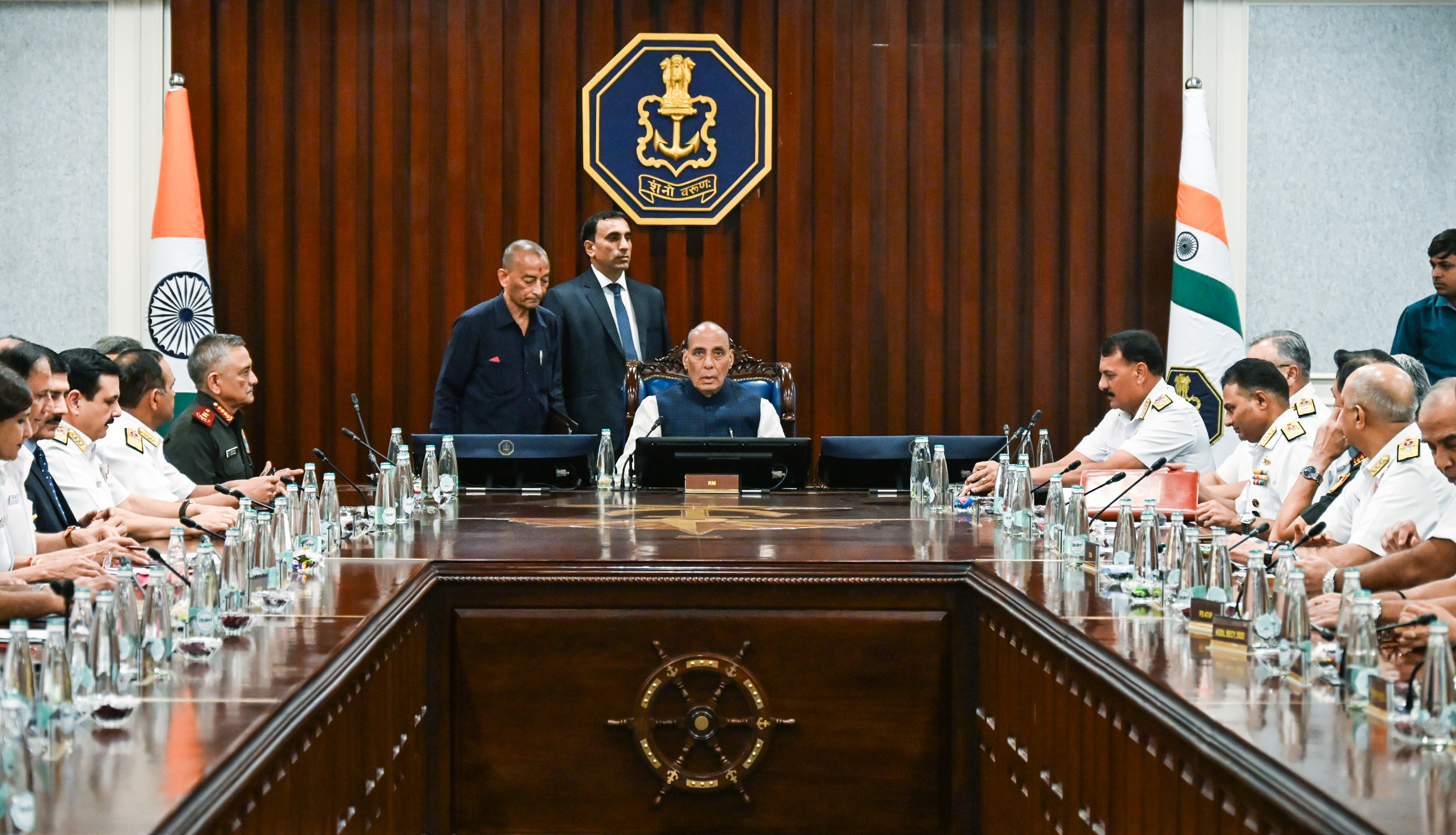
At the Navy Commanders’ Conference 2025, Chief of Naval Staff Admiral Dinesh Tripathi reaffirmed that the Navy remains “combat-ready, credible, and cohesive.” The force, which played a decisive role in Operation Sindoor, continues to modernize with new surface combatants, submarines, and maritime surveillance systems.
The Navy’s MAHASAGAR initiative—focused on securing sea lanes and projecting power across the Indian Ocean—directly enhances deterrence against Pakistan’s limited naval capabilities. With aircraft carriers INS Vikrant and Vikramaditya operational, India now maintains a two-carrier presence, ensuring continuous air-sea dominance in the region.
Meanwhile, the Indian Air Force (IAF) is fine-tuning its network-centric warfare capabilities. Recent integration of indigenous Tejas Mk-1A fighters, Rafales, and long-range strike drones has strengthened India’s reach and readiness. Operation Sindoor showcased these assets in live coordination, reinforcing the idea that future wars will be won by information, integration, and precision—not numbers alone.
Complementing India’s firepower is rapid infrastructure development along the western and northern borders. The Border Roads Organisation (BRO) has accelerated the construction of all-weather roads, tunnels, and bridges, ensuring quick troop mobility. Rajnath Singh has repeatedly emphasized that border development is now “a strategic necessity, not an afterthought.”
New logistics nodes in Rajasthan, Punjab, and Jammu are designed for sustained operations, allowing India to mobilize quickly while maintaining defensive depth. The combination of modernized infrastructure, real-time satellite intelligence, and high mobility gives India a decisive operational edge over Pakistan.
India’s evolving military doctrine represents a shift from reactive defense to proactive deterrence. Pakistan’s long-standing reliance on asymmetric warfare and proxy tactics is being met with precision technology, surveillance dominance, and political resolve.
As Rajnath Singh put it in Jaisalmer, “Our soldiers are not only the protectors of borders but also pioneers of nation-building. This century is ours.”
Indeed, with an integrated tri-service command, advanced indigenous weaponry, and a strategic focus on technology, India today stands more prepared than ever—not to start a war, but to ensure one never begins.