

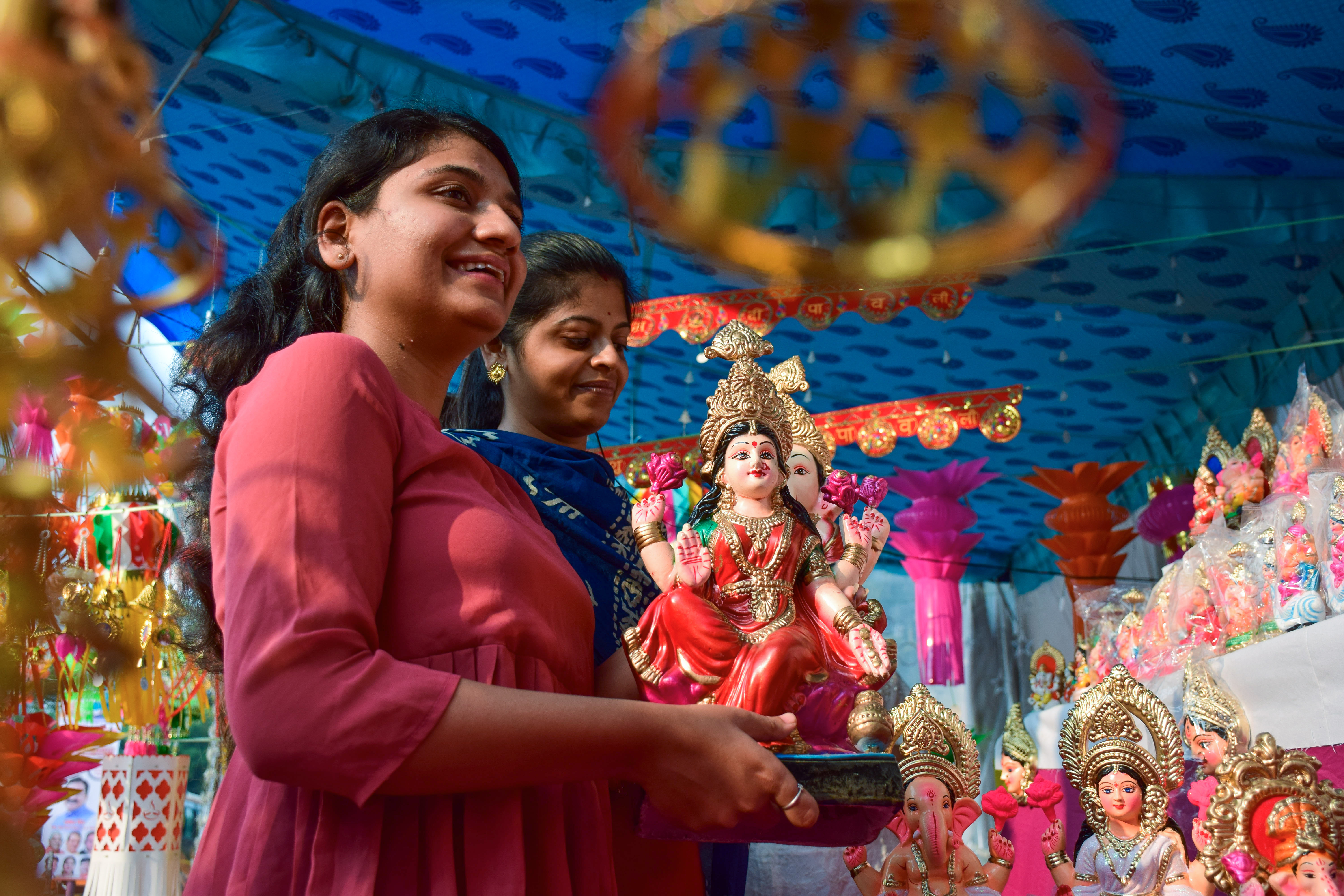
From Ayodhya to Aligarh, the message is clear — this year’s festival of lights is about Indian-made goods, clay diyas, and the pride of supporting local hands.
Our Bureau
Kolkata / Ayodhya / Jammu
As the glow of Diwali spreads across India, a common refrain echoes from potters’ colonies, temple towns, and bustling bazaars — “Buy Swadeshi.” This year, the festival of lights has turned into a nationwide celebration of local craftsmanship and self-reliance, aligning with Prime Minister Narendra Modi’s call for a “Vocal for Local” Diwali.
From the diyas of Bengal to the clay lamps of Ayodhya and the self-help groups in Jammu, the spirit of Swadeshi is illuminating homes and livelihoods alike.
At Ultadanga Dakshindari in North 24 Parganas, West Bengal, the soft glow of thousands of earthen lamps reflects both tradition and economic survival. For potters like Madan Prajapati, this is the season that decides the year. His family and team of workers have crafted nearly 50,000 clay diyas, braving erratic monsoon rains that threatened to wash away their months of labour.
“We start four to five months before Diwali because it takes days to make a single diya — one day to shape, one to dry, another to paint, and the last to fire it,” Prajapati explained.
“This year, the rain made drying very hard, but we managed. I only ask that people buy Indian-made clay lamps. Like our government says, be vocal for local — so that families like ours can keep the tradition alive.”
The sight of rows of diyas drying under the autumn sun has become a symbol of resilience. Shoppers at the market echo his appeal, with many consciously choosing earthen lamps over imported or plastic alternatives.
Saints Lead Swadeshi Call
In Ayodhya, where preparations are in full swing for what promises to be one of the grandest Diwalis since Lord Ram’s return to his city, the message of Swadeshi has taken on a spiritual dimension. Saints and seers have joined hands to encourage people to adopt locally made goods — especially earthen lamps and handmade decorations.
Mahamandaleshwar Vishnu Das Ji Maharaj described how devotees began the festival rituals with traditional lamps and prayers.
“We placed lamps for Lord Ram, the Saryu River, Hanuman Ji, Mata Sita, and the entire Ram Darbar. This marks the beginning of lamp-laying along the Saryu’s banks, heralding a historic Diwali in Ayodhya,” he said.
Meanwhile, Saint Diwakaracharya Ji Maharaj urged people to turn the festival into an act of service to the nation.
“I request everyone to adopt Swadeshi this Diwali. Use clay lamps made locally and light them at home. This will bring prosperity to your family and support the families who keep the festival alive,” he told a news agency.
With the Ram Temple finally standing tall after 500 years, Ayodhya’s Diwali carries deep emotional weight this year. The lamps being lit across the city are not just for celebration but also as an offering to self-reliance — symbolising the victory of Indian craftsmanship over mass-produced imports.
Far from the banks of the Saryu, in Jammu, the call to buy Swadeshi has been institutionalised. At the J-K Police’s Diwali Mela, Lieutenant Governor Manoj Sinha urged citizens to make this Diwali a festival of empowerment by buying local products.
“Let us boost our local economy, empower entrepreneurs, increase employment, and strengthen Jammu and Kashmir’s economy,” Sinha said at the inauguration of the event. “On Diwali, ‘Vocal for Local’ should be our mission. Every family should buy handicrafts, handloom, and traditional products. This will instil patriotism and support small businesses.”
The mela, organised in collaboration with the Police Wives Welfare Association, showcased self-help groups and artisans selling handmade textiles, pottery, and festive decorations.
In Aligarh, known for its bustling firecracker markets, shopkeepers too are catching on to the local-first sentiment. Sellers have introduced uniquely Indian-themed products, such as crackers named after Operation Sindoor — a tribute to India’s recent counter-terror operation — and Rinku Singh, the Indian cricketer whose explosive IPL sixes have become part of cricketing folklore.
“These new Indian-themed firecrackers are a hit,” said shopkeeper Devendra Gupta. “People are excited to buy crackers that celebrate our heroes. It adds an Indian identity to the festival.”
The shift toward homegrown branding reflects not only patriotism but also changing consumer tastes — where pride in national icons blends with the festive spirit.
A Festival That Shines from Within
This Diwali, from the clay-streaked hands of Bengal’s potters to the chants along the Saryu, the idea of “Swadeshi Diwali” is more than just a slogan — it’s a movement. The festival, once defined by imported lights and mass-produced gifts, is steadily returning to its roots: local art, handmade lamps, and community-driven celebration.
As millions prepare to light their diyas on October 20, the flickering flames will represent more than the victory of light over darkness. They will also symbolise India’s growing confidence in its own artisans, its own markets, and its own people.
In every corner of the country, Diwali 2025 is being celebrated not just as a festival of lights — but as a festival of Swadeshi pride.