








As the leading candidate positions himself as the first Indian-American for NYC Mayor, Zohran Mamdani seeks to appeal to all communities as some of his past remarks still shadow his campaign
Our Bureau
New York, NY
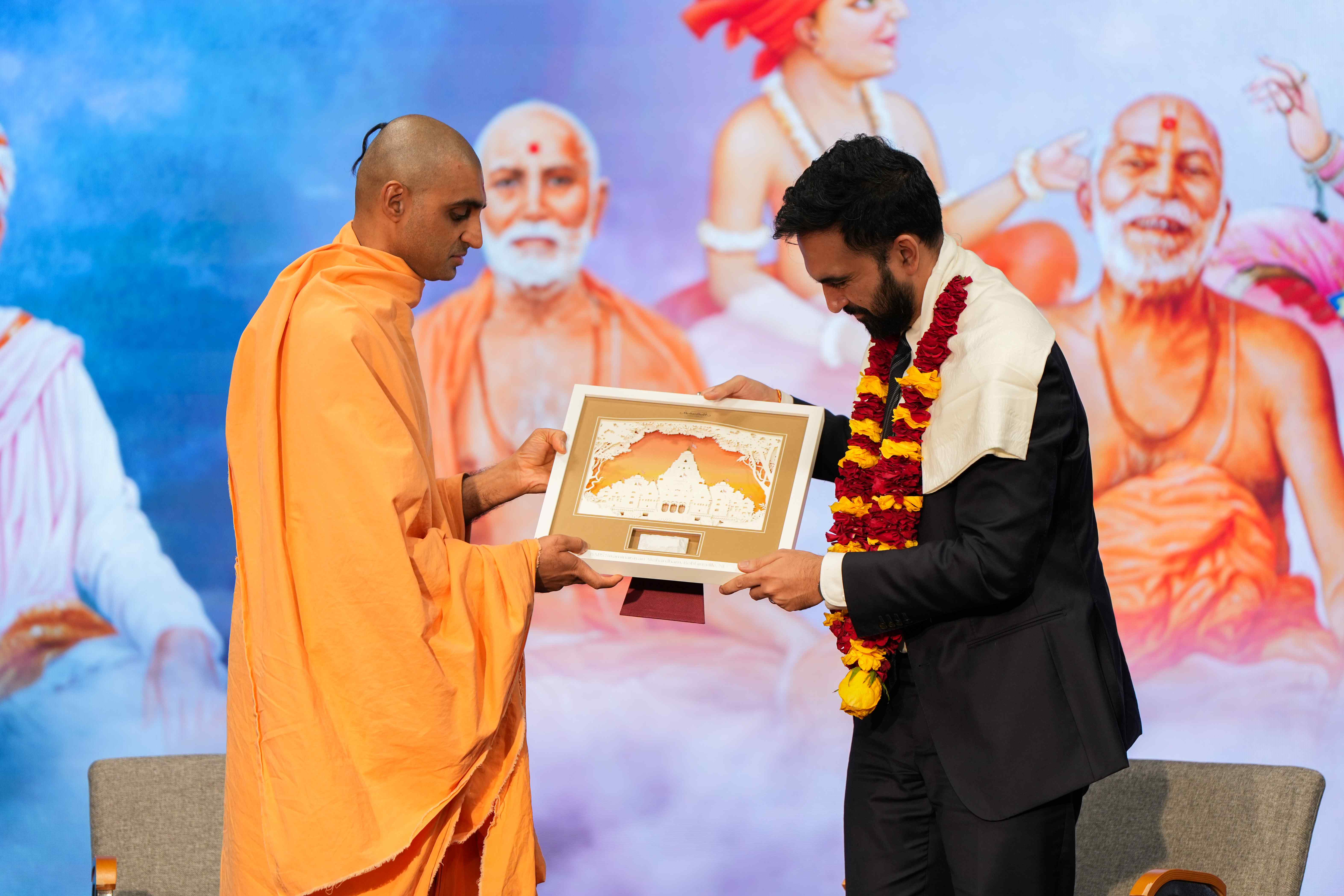
In a striking display of outreach, New York City Mayoral frontrunner Zohran Mamdani this week visited two of the city’s oldest Hindu temples in Flushing, Queens—an effort widely seen as a move to build bridges with New York’s sizable Hindu community. The visits on October 5, just a month before the election, signal Mamdani’s attempt to soften old tensions and present himself as a unifying figure—an Indian-American rooted in both Hindu and Muslim traditions.
If elected, Mamdani would become the first Indian-American Mayor of New York City, a milestone that underscores both his personal story and the political growth of the South Asian immigrant communities. With endorsements from former Vice President Kamala Harris and New York Governor Kathy Hochul, Mamdani now leads a crowded field that includes former Governor Andrew Cuomo and Republican Curtis Sliwa, following current Mayor Eric Adams’ withdrawal from the race.
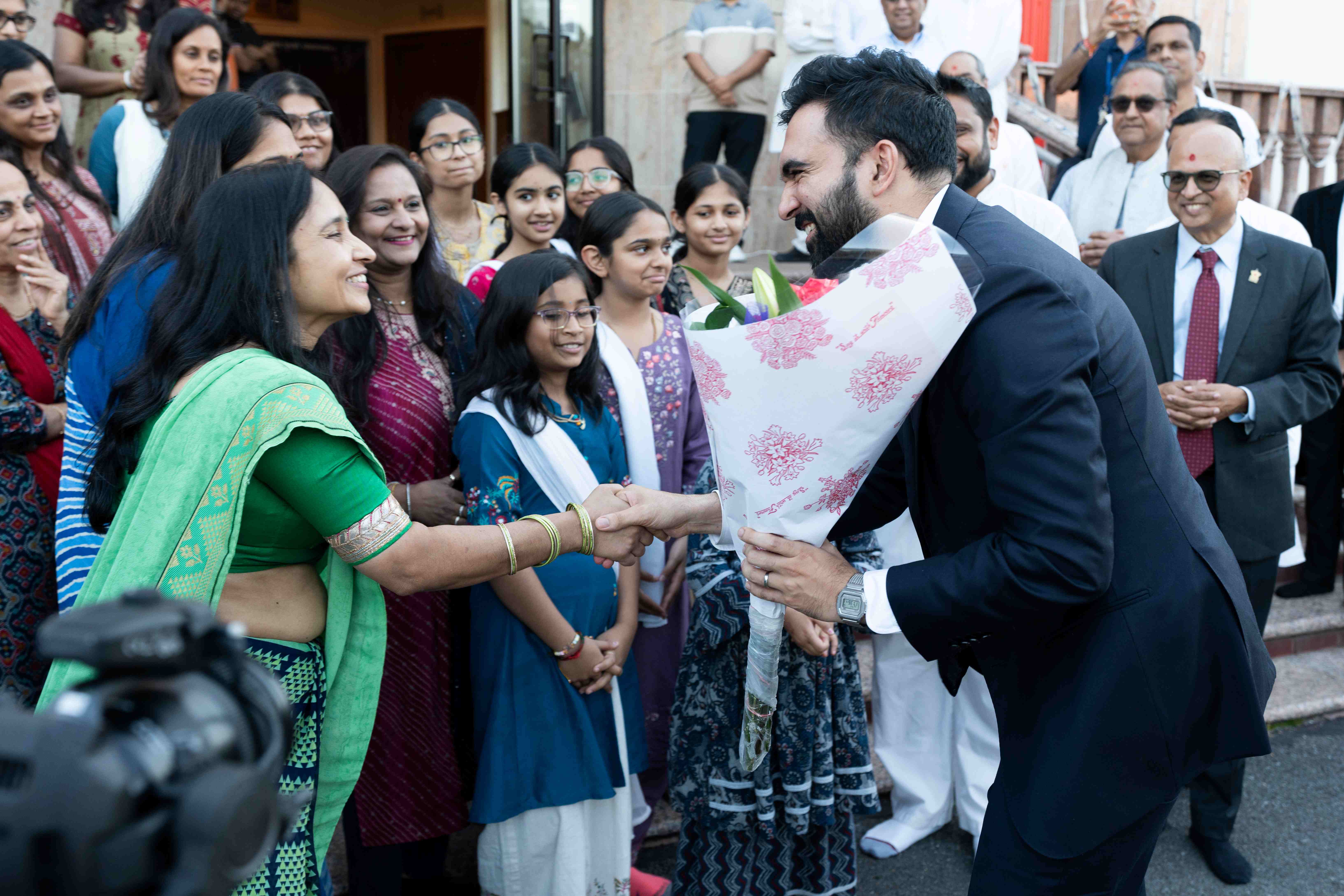
Mamdani, visited BAPS Swaminarayan Temple and Sri Maha Vallabha Ganapati Devasthanam, also known as Ganesh Temple in Queens, NY, which is home to hundreds of thousands of Indian immigrants and settlers. At the temples, Mamdani struck a deeply personal note. “I am proud that my mother’s family is Hindu,” he told Sunil Hali, recalling how festivals like Raksha Bandhan, Diwali, and Holi shaped his upbringing. Speaking at the BAPS temple, Mamdani said, “I come here this evening to honor the hard work of so many here that have paved the way for decades, both in this Mandir and for the larger Hindu community and the Indian community across the five boroughs of New York City.”
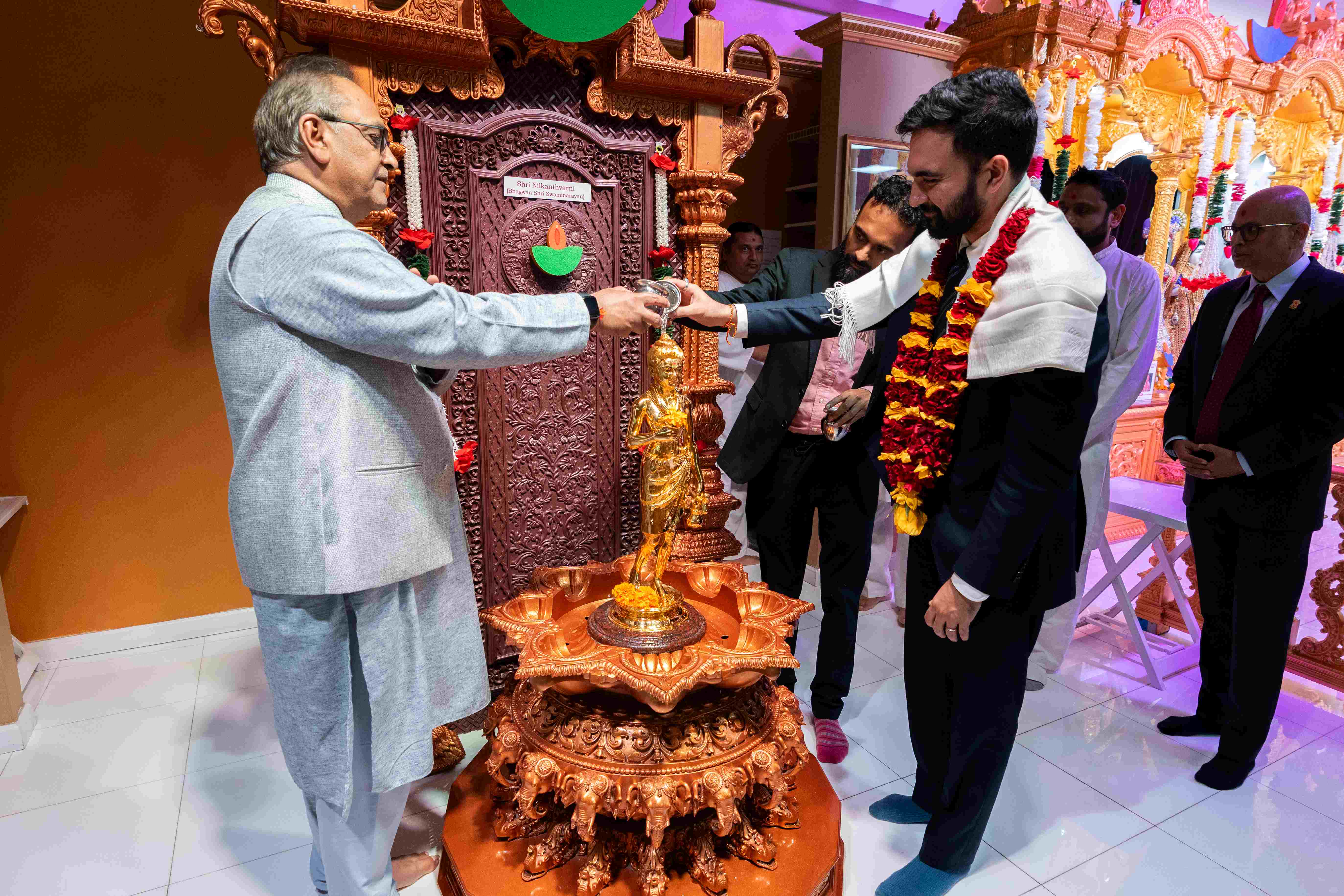
Mamdani’s Indian-American identity has become central to his campaign. In a city where nearly 300,000 Indian-Americans live—many concentrated in Queens, the Bronx, and Long Island—his outreach has symbolic and strategic significance. By visiting temples and highlighting his maternal heritage, Mamdani seeks to present himself as a bridge between faiths and communities, embodying a pluralistic vision of New York.
Still, older and more conservative sections of the diaspora remain skeptical, seeing him as too aligned with the city’s left-wing progressives. Yet, political analysts believe that Mamdani’s authenticity and his ability to speak the language of shared values—seva (service), equality, and pluralism—could help him turn that skepticism into cautious support.
His outreach also aligns with his broader effort to connect with the larger Indian-American diaspora in the city—attending cultural events, engaging with business associations, and speaking about shared immigrant struggles. Progressive Indian-Americans, especially younger voters, have responded positively, praising his “inclusive Indian identity” and his focus on social justice and housing reform.
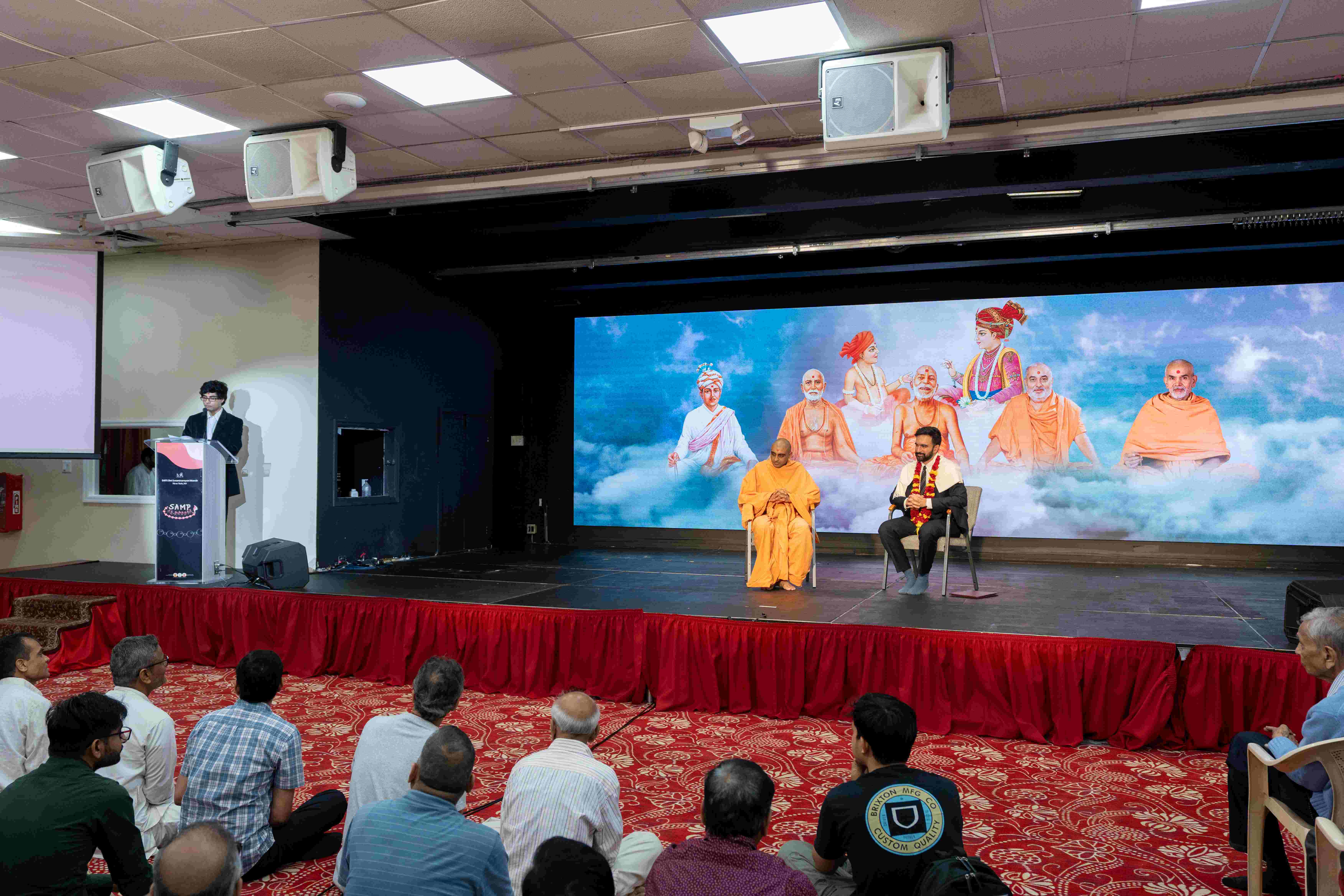
For many Indian-Americans in New York, this gesture represents a moment of cultural resonance. Mamdani’s mixed heritage—his father is Ugandan-born and Muslim from Gujarat, his mother Hindu from Delhi, world-famous filmmaker Mira Nair-gives him a unique vantage point in one of the most multicultural cities in the world. “My mother’s family is from Punjab, and I grew up with a sense keenly that my own identity was tied to the stories and the memories of the family that I was from, and it was my mother’s family and my mother who introduced me to Hinduism,” Mamdani said, addressing the gathering at the BAPS temple.
“To be here with you, it is so special to me because when I meet the members of this Mandir, I hear the names of my own family. When I’m meeting the members of this mandir, I hear the stories of my own family. I hear the sounds of my own family. And to be able to be here with you to show that while we are all from different parts of the city, in many ways, it is one larger story that we are all part of together,” he added.
His effort to embrace his Hindu roots is being read by some observers as a move to repair his strained relationship with some parts of the Indian community because of some of his statements in the past.
His effort to embrace his Hindu roots is being read by some observers as a move to repair his strained relationship with some parts of the Indian community because of some of his statements in the past.
Before his mayoral bid, Mamdani drew backlash for a social media post condemning the opening of the Ram Temple in Ayodhya. Some of his remarks have left sections of New York’s Hindu diaspora wary of his candidacy. There is a considerable concern – and anger – among the diaspora about Mamdani’s statements about Indian Prime Minister Narendra Modi. At a public event when he was asked about Modi, he had said: “Narendra Modi helped to orchestrate what was a mass slaughter of Muslims in Gujarat to the extent that we don’t even believe there are Gujarati Muslims anymore. And when I tell someone that I am, it’s a shock to them that that is even the case. And this is someone who we should view in the same manner that we do Benjamin Netanyahu. This is a war criminal.” The statement is seen as deeply offensive by a large section of Indian diaspora in New York.
Some members of the Indian-American community are also upset with Mamdani for participating in a protest against the construction of Ram Mandir at Ayodhya. At the same protest he allegedly used a derogatory word for Hindus. But a video of the event clearly shows that the abusive language was used by another protester. Said Dr. Deepak Nandi, “He should at least condemn the remark attributed to a demonstrator. A leader has to select his associates carefully. New York has diaspora from 270 countries and leaders should try to integrate them.”
Reacting to the charges, Dr Nirmal Mattoo said, “It is an utter lie what he said about Muslims in Gujarat. He should check before making such statements. We have a huge Muslim population in Gujarat living life peacefully”.
Mamdani’s alleged comments on NYC lawmaker Jennifer Rajkumar and introduction of a caste bill in New York State Assembly has not gone down well with a section of the community, which expects him to come clean with his position on these important issues.
Mamdani, however, has stood firm, arguing that his criticism was directed not at Hinduism but at the politicization of religion. “For Gujaratis, Punjabis, for Indians across the city and the world, I would not be here were it not for the family that raised me and the ideals they taught me,” he said. “Those are values that make me proud to be an Indian-American.”
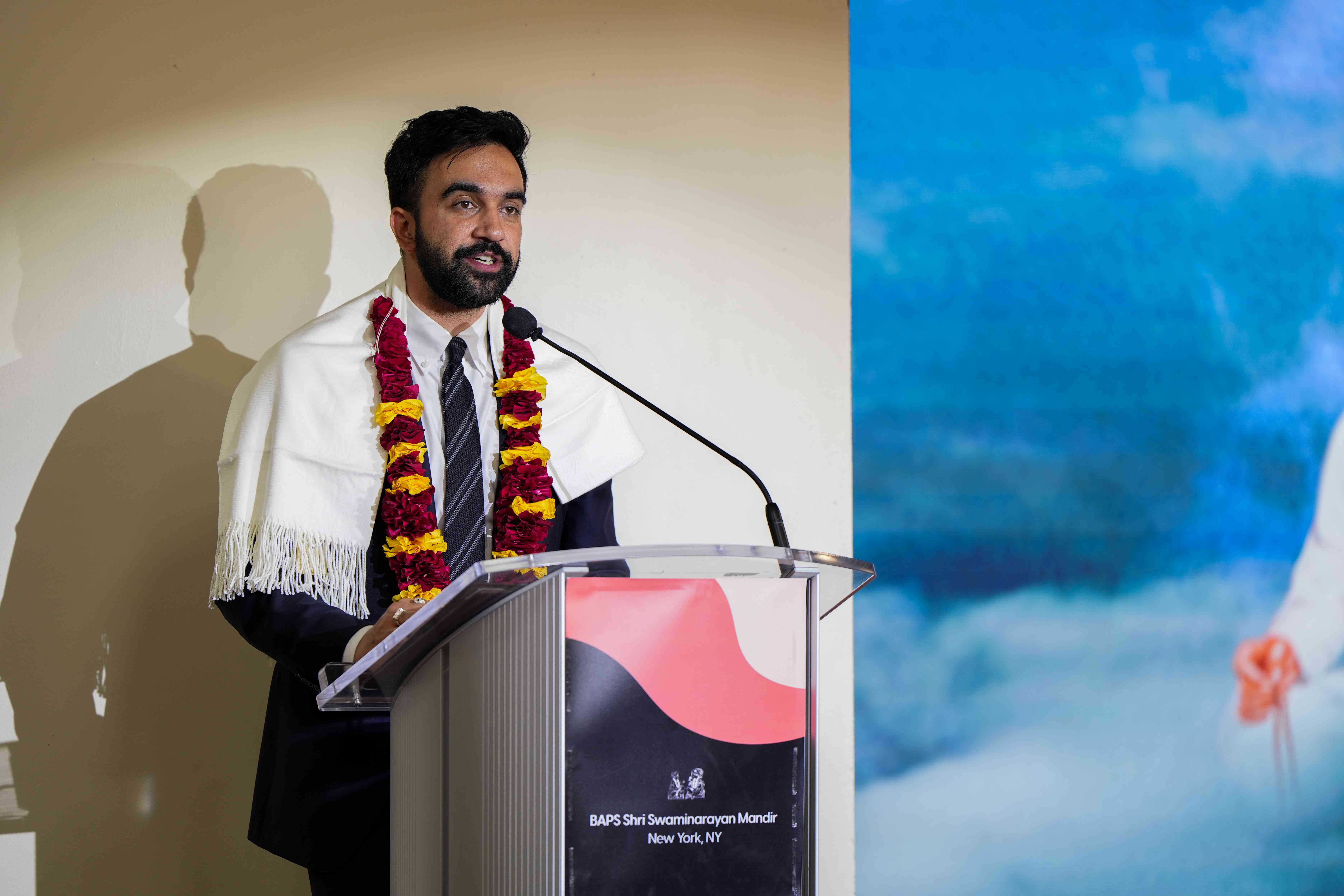
For the first time, a candidate of Indian descent stands on the cusp of leading America’s largest city. Mamdani’s campaign is more than a political bid—it’s a reflection of the Indian-American community’s growing visibility and internal diversity. “I’m proud to have been the first Indian-American elected to the New York State Assembly, and I’m proud to say that in 30 days, we have the opportunity to elect myself as the first Indian-American mayor in the history of your city,” Mamdani said in his address at the BAPS temple.
Whether his temple visits mark genuine reconciliation or tactical positioning, they have already reframed the narrative around his candidacy. In a city built on overlapping identities, Zohran Mamdani’s words—“I’m proud of my Hindu heritage”—might just be the first – but a major — step toward reconnecting with the Indian Americans who identify themselves as Hindus.



He’s a fake phony fraud, a beginner who knows nothing about being a mayor, and people are starting to recognize that his lofty ideas won’t work. NYC needs a diverse population, including the rich, middle class, and lower class, to distribute money and to keep things moving. He’s proposing free public transportation, a rent freeze, and something about food stores. Are you willing to line up at stores to follow a controlled process, like if you want 4 cans of peas and you’re only allowed one? We have a city of handouts, but I think my freedom will be taken away if I can’t buy what I want, or my environment will change and become like the starving people of third-world countries. As far as the freebies he’s proposing, who will pay for them? To me, taxes will triple, the rich will be gone, and the out-of-work middle class won’t be able to handle the problems to help the lower class. I think you’re all nutty non-thinkers and only concerned about your present status and not looking at the whole ball of wax.