

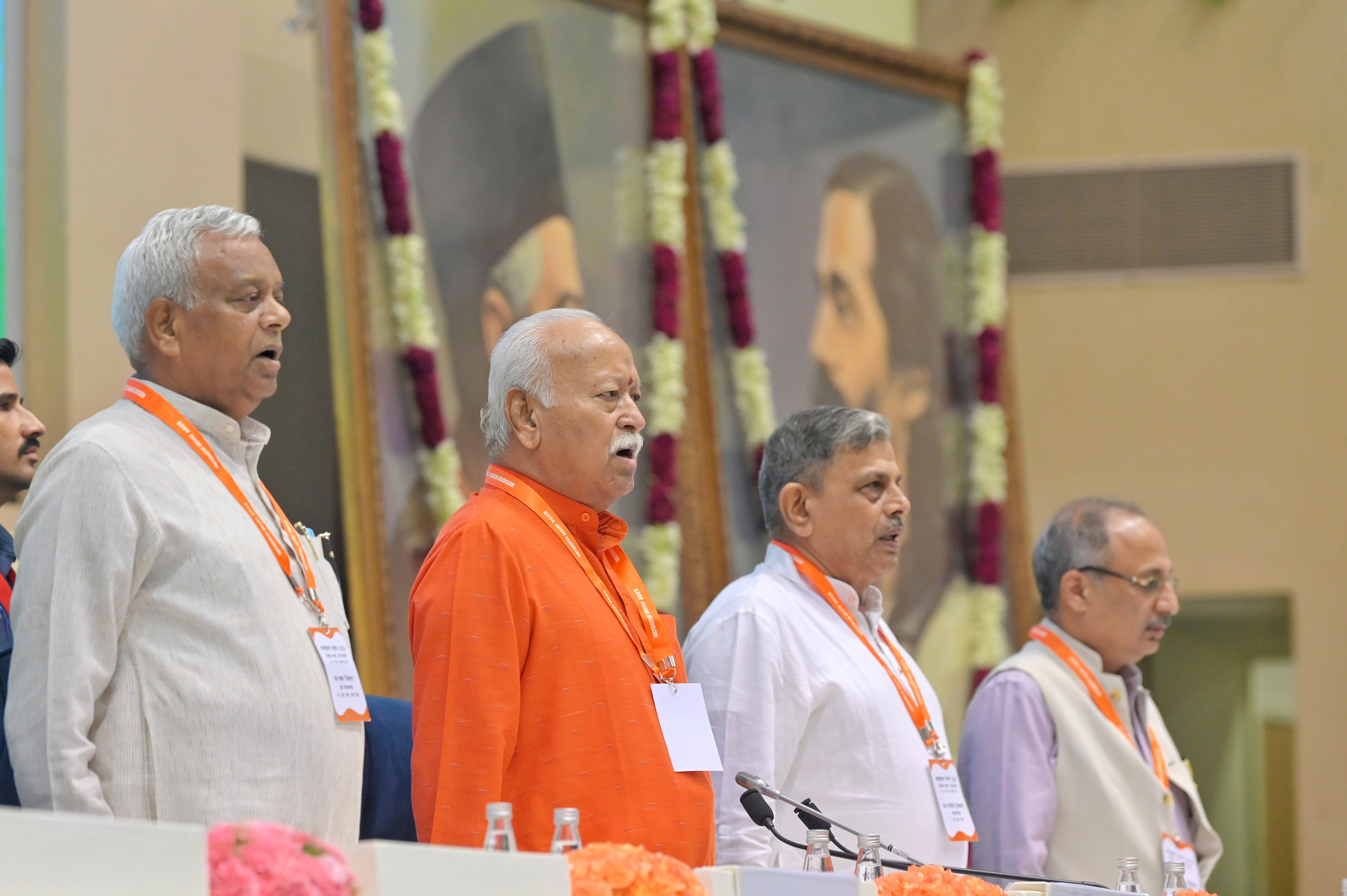
At the RSS centenary celebrations, Bhagwat stressed unity, transparency, and independence of decisions, dismissing claims of Sangh interference in BJP leadership choices.
Our Bureau
New Delhi
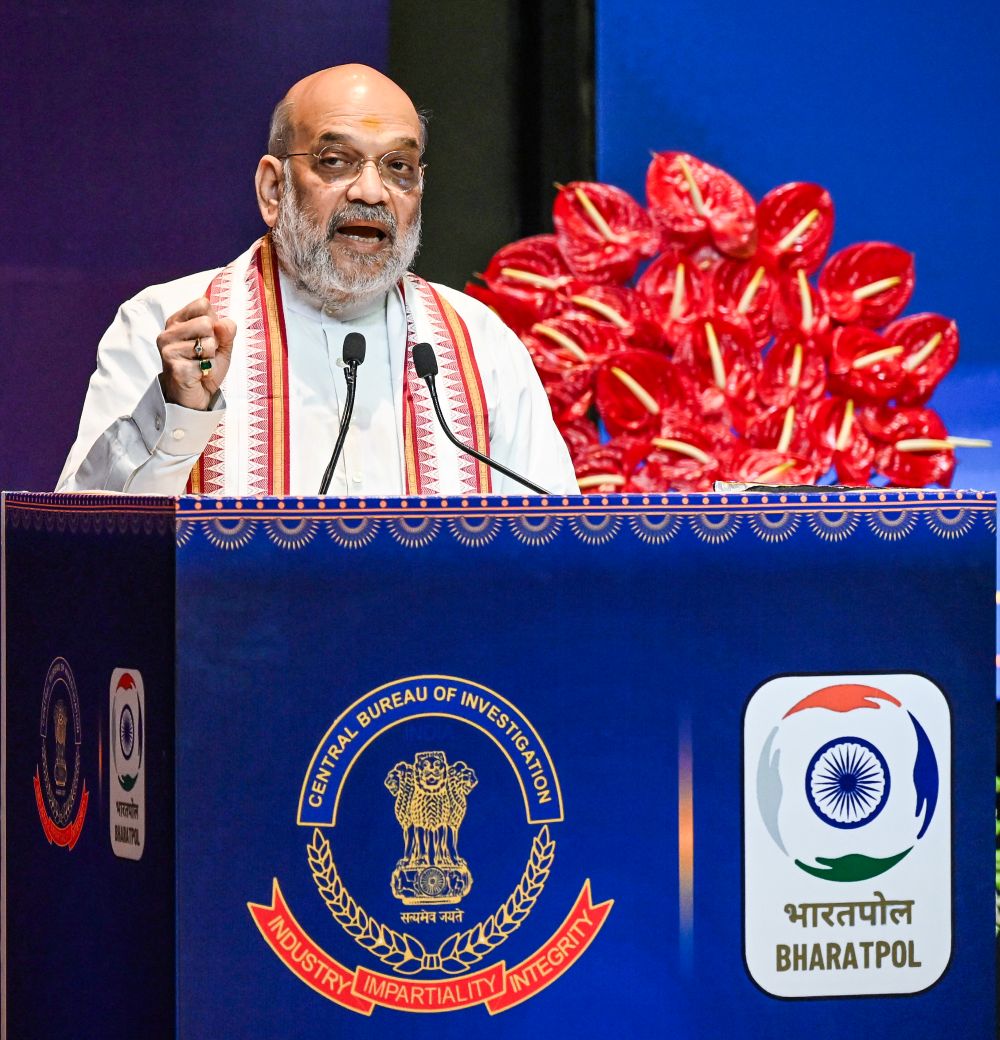
At a moment when speculation over tensions between the Rashtriya Swayamsevak Sangh (RSS) and the Bharatiya Janata Party (BJP) had become a matter of political chatter, RSS chief Mohan Bhagwat on Thursday firmly put all doubts to rest. Speaking on the third day of the RSS centenary celebrations in Delhi, Bhagwat dismissed suggestions that the Sangh dictates the BJP’s leadership decisions, including the party president’s post and retirement norms for leaders.
“It is absolutely wrong to say that the RSS decides everything. We can give advice, but decisions are made in that field itself. If we were deciding, would it take so long? Take your time,” Bhagwat said in an unambiguous response to repeated questions about whether the Sangh plays a role in deciding the BJP president.
The remarks come against the backdrop of speculation about the BJP’s internal discussions on succession, including the oft-quoted but never officially codified “75-year retirement rule” that political observers believed could apply to Prime Minister Narendra Modi, who is 74. Bhagwat’s words signaled that the RSS has no such prescriptions for BJP leaders, undercutting opposition claims that Modi’s leadership may face pressure from within.
“We may have differences of opinion, but not differences of hearts,” Bhagwat said, underscoring the alignment of vision between the BJP and its ideological parent. By drawing a clear distinction between dialogue and diktat, Bhagwat attempted to clarify the Sangh’s advisory role and end speculation that its hand extends deep into BJP’s organizational matters.
Bhagwat also reminded the audience that opposition to the RSS is not new, and yet bridges of understanding have often been built over time. “Initially, Jayaprakash Narayan was against the RSS, but later he came closer to us. Those who seek our help for good work receive it, while those who keep away don’t. What can we do?” he said.
To illustrate this, Bhagwat narrated an incident from his days as a pracharak in Nagpur, when the National Students’ Union of India (NSUI) held a convention with 30,000 participants but failed to arrange food. “Plates were thrown, chaos broke out, and fights happened in the market. Eventually, a call came from the local Congress MP, and we took over the mess arrangements to resolve their issue,” he recalled, suggesting that RSS service transcends political boundaries.
The centenary event itself became a platform not just for clarifications but also for affirmations of the RSS’s enduring role in Indian public life. Prominent figures ranging from yoga guru Ramdev to BJP leaders like Manoj Tiwari praised Bhagwat’s address.
Ramdev described the RSS as a nationalist organization “connected to its roots and building a new narrative for India to enrich itself educationally, culturally, financially, socially, religiously and politically while walking on the principle of self-reliance.”
Tiwari called the celebrations “an eye-opener regarding the big works done by RSS and how it stood tall amid all difficulties.” Other dignitaries, including Union Minister SP Singh Baghel and Paralympic Committee of India president Deepa Malik, lauded the organization’s message of unity and patriotism. Malik said she was leaving the event inspired: “Matbhed ka arth manbhed nahi ho sakta (differences of opinion cannot mean differences of heart).”
By directly addressing questions about leadership decisions, Bhagwat has effectively punctured the narrative of discord between the RSS and BJP at a crucial political juncture. With general elections on the horizon, his remarks are being read as a reaffirmation of Modi’s position as the central figure in the BJP, without any imminent threat of enforced retirement or change at the helm.
Analysts believe the timing of Bhagwat’s intervention is significant. Over the past few months, murmurs about succession had grown louder, with opposition leaders seizing upon them to suggest a leadership crisis within the ruling party. By clarifying that “RSS does not decide everything,” Bhagwat has not only shielded the BJP from political attacks but also reasserted the independence of its decision-making process.
The centenary celebrations mark the beginning of a year-long series of programmes across India, during which Bhagwat is expected to continue his outreach. His emphasis on dialogue, service, and clean leadership sets the tone for the organization as it steps into its second century.
For now, the immediate political takeaway remains clear: Mohan Bhagwat has ended speculation about any RSS pressure on Modi or the BJP over leadership changes. In doing so, he has reinforced the image of continuity, stability, and shared purpose between the Sangh and its political arm, ensuring that the BJP enters the next election cycle with clarity on the question of leadership.