

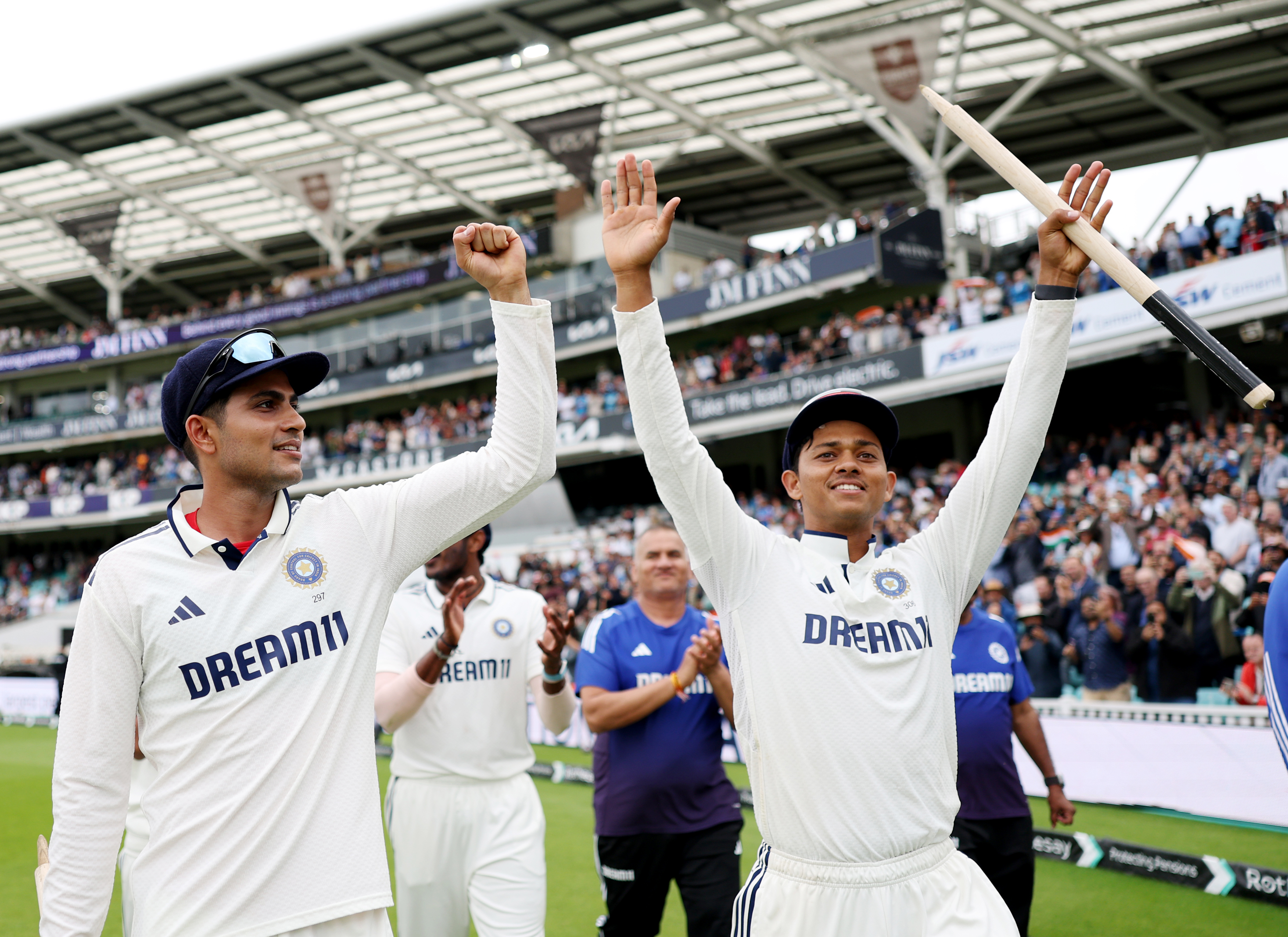
In his first Test series as India’s captain, Shubman Gill combined run-gluttony with ice-cool leadership to steer a transitional side to a 2-2 draw in England — earning praise from none other than Sachin Tendulkar
Asim Khanna
London (UK)
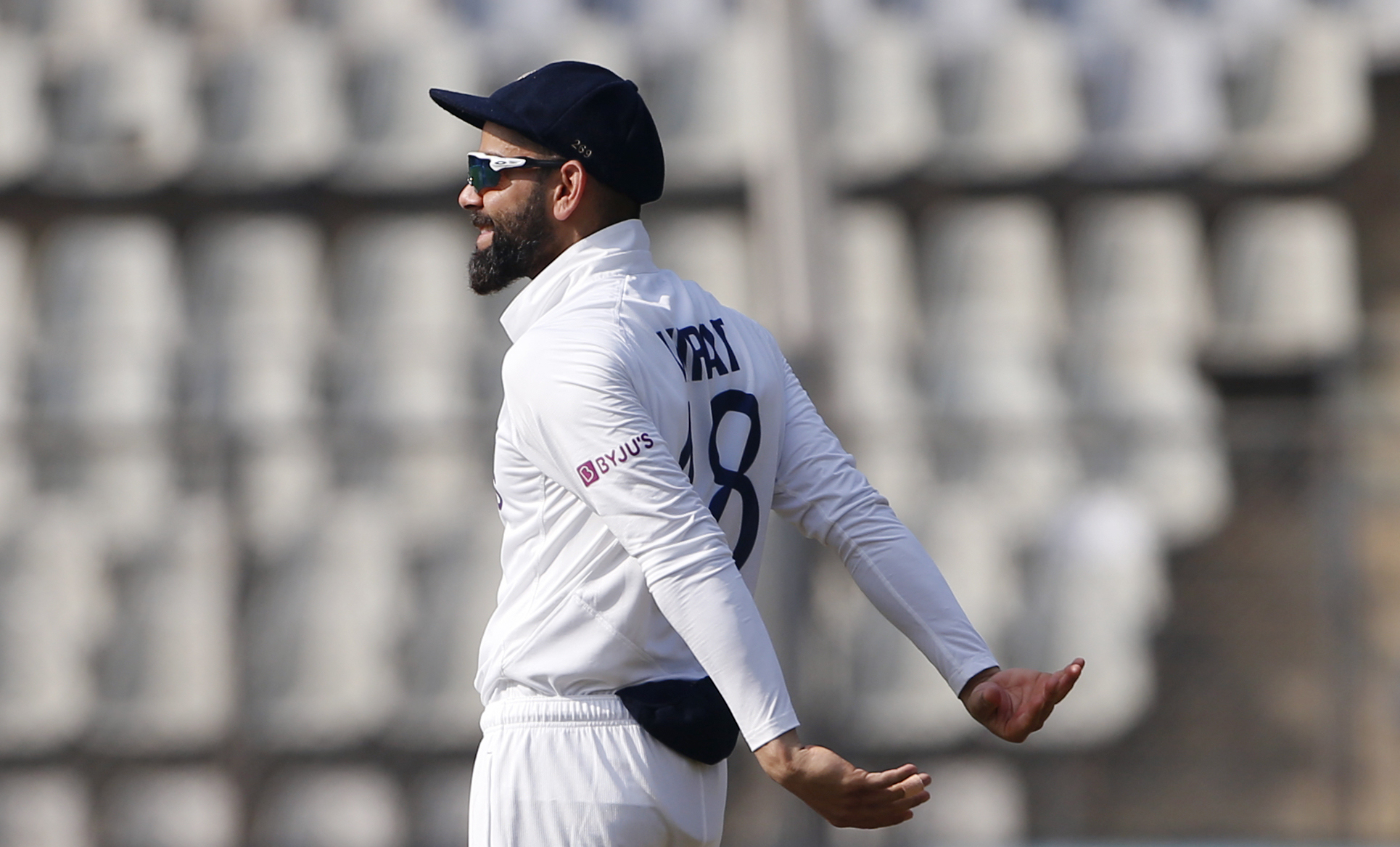
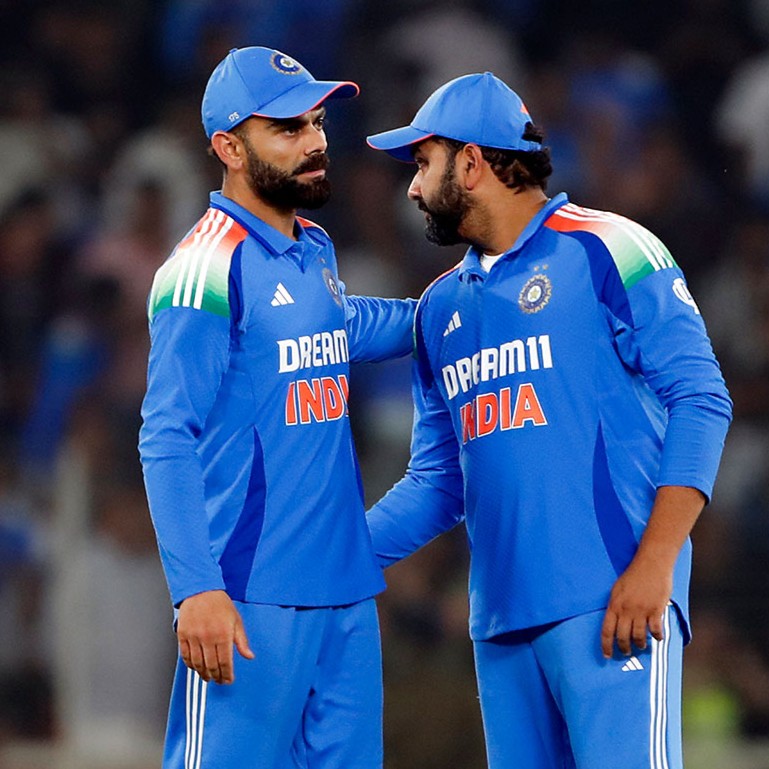
Shubman Gill’s summer in England was the kind of campaign that rewrites reputations. Arriving with questions hanging over his overseas record, the 25-year-old left with his name etched alongside — and in some cases above — the giants of Indian batting history. It was a tour where the ‘Prince’ stepped out of Virat Kohli’s shadow, wore the captain’s blazer for the first time in Tests, and delivered a statistical and tactical masterclass that England won’t forget in a hurry.
Gill walked into the Anderson–Tendulkar Trophy under immense pressure. Since his dazzling 91 at Brisbane in 2021, his away record had been modest, with no score above 40 outside Asia. The challenge was monumental: lead a young side without the recently retired stalwarts Rohit Sharma, Virat Kohli, and R. Ashwin, and do it against a rejuvenated England brimming with the aggressive intent of ‘Bazball.’ By the end of the series, Gill had not only silenced his critics but also drawn comparisons with Sunil Gavaskar, Sachin Tendulkar, and even Don Bradman.
A Summer of Records
Gill’s series began with redemption at Leeds. His 147 in the first innings was his maiden century outside Asia — a landmark that also made him the fourth Indian, after Vijay Hazare, Gavaskar, and Kohli, to score a century in his first innings as captain. In doing so, he crossed the 2,000-run mark in Tests, mirroring Kohli’s milestone moment in 2014.
Then came the Edgbaston epic — 269 in the first innings and 161 in the second. India had never won a Test at Birmingham, and Gill’s double-act changed that, setting up a thumping 336-run victory. The double ton was the highest score by an Indian captain anywhere, surpassing Kohli’s 254*, and the best by any Indian in England, eclipsing Gavaskar’s 221 at The Oval in 1979. He also became the first Asian captain to score a double century in each of the SENA countries (South Africa, England, New Zealand, and Australia).
The numbers were staggering: sixth Indian with a 250-plus Test score, first to do it outside the subcontinent, second-highest match aggregate for an Indian captain, and second only to Graham Gooch for most runs in a single Test. By the time he scored his fourth century of the series at Manchester, Gill had matched Gavaskar and Bradman for most hundreds in a single series by a captain, overtaken Kohli’s best SENA tour, and posted the highest-ever run tally by an Indian against England in a series.
Captain Cool Under ‘Bazball’ Heat
Gill’s leadership drew almost as much attention as his batting. In a series where England’s ultra-attacking approach could have rattled even seasoned skippers, Gill stayed calm. Bowling changes, field settings, and the ability to keep his team focused in high-pressure sessions earned him respect. Sachin Tendulkar noted how Gill “looked calm and composed” even when partnerships were swelling and runs flowing freely.
Tendulkar, though, offered a touch of tactical advice. Against a side like England, he said, there’s room for “boring cricket” — slowing the game, taking the sting out of their tempo. “Things could have been different,” the Master Blaster reflected, “but there are no ifs and buts in cricket. Overall, a fantastic approach.”
Tendulkar’s praise for Gill’s batting was effusive. He highlighted Gill’s subtle technical adjustments — bringing the bat ahead of the pads more often, refining footwork to buy extra time, and showing a consistent willingness to respect the good ball. His front-foot defence, Tendulkar said, was “solid,” and his shot selection “precise.” It was this clarity of thought, visible in his movements at the crease, that made Gill look “so much in control” across the five Tests.
A Series for the Ages
Gill’s final tally — 774 runs at 75.40 with four centuries — was the second-best by an Indian in a Test series, behind only Gavaskar’s 774 against West Indies in 1971. For a debut series as captain, it was the second-highest in history, behind Bradman’s 810 against England in 1936–37. Along the way, he crossed 6,000 international runs, with his Test numbers now reading 2,615 runs at 41.35 in 37 matches.
The 2-2 result may not have been a series win, but for a team in transition, it was a statement. Gill had led from the front, matched England blow for blow, and left with a reputation burnished beyond recognition. The Anderson–Tendulkar Trophy had been billed as a trial by fire. Gill turned it into a coronation.