


Our Bureau
Minneapolis/ St. Paul, MN
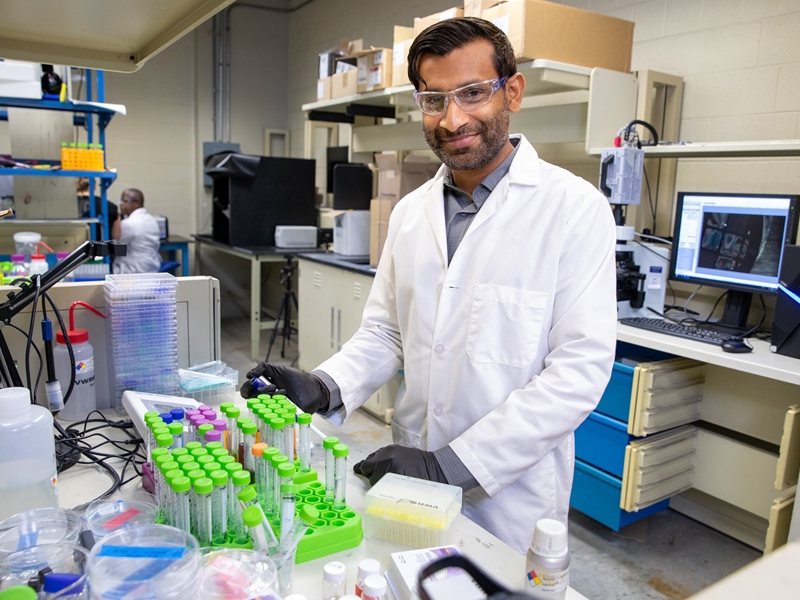
Assistant Professor Varun Gadkari of University of Minnesota’s Department of Chemistry, has been recently honored with 2025 Research Award by the American Society for Mass Spectrometry (ASMS). ASMS’ awards recognize outstanding efforts by chemists working in the area of mass spectrometry research. He will receive the award money of $35,000 for the researcher’s exclusive use.
Assistant Professor Varun Gadkari was honored with the 2025 ASMS Research Award. The award aims to promote the research of academic scientists within the first four years of their career. Gadkari’s application to ASMS outlined a bold strategy to advance RNA structural analysis by developing covalent labeling mass spectrometry methods.
The development of new RNA analysis methods is an area of great interest due to the rapidly growing role of RNA therapeutics. The funding accompanying this award will enable the Gadkari group to embark on an exciting avenue of research which the group has been building towards since its beginning.
Gadkari joined the University of Minnesota–Twin Cities faculty in Fall 2022, and has since grown his research group to include six graduate students and one undergraduate. The group’s work – at the interface of bioanalytical chemistry and chemical biology – is aimed at developing novel mass spectrometry techniques for the structural analysis of proteins, nucleic acids, and their complexes. This work spans a range of sub-topics including biomolecular structure, neurodegenerative disease, and bioanalytical method development.
In 2020, Gadkari was previously recognized by the ASMS as an Emerging Talent in Academia.
The American Society for Mass Spectrometry (ASMS) was formed in 1969 to promote and disseminate knowledge of mass spectrometry and allied topics. Membership includes over 8,500 scientists involved in research and development. Members come from academic, industrial and governmental laboratories. Their interests include advancement of techniques and instrumentation in mass spectrometry, as well as fundamental research in chemistry, geology, forensics, biological sciences and physics.