









Davos 2026 makes one reality unmistakably clear: artificial intelligence must now prove its economic value. Across industries, the conversation has moved decisively toward productivity gains, cost efficiencies, resilience, and competitiveness
H. S. Panaser

The World Economic Forum Annual Meeting 2026 in Davos will be remembered as the moment when artificial intelligence decisively crossed from promise into power. What was once framed as disruptive technology has now become a system-shaping force—one that touches economics, geopolitics, education, healthcare, manufacturing, and the very nature of human agency.
At Davos this year, artificial intelligence was not a separate track or thematic sidebar. It was embedded in nearly every discussion, from global growth and sustainability to security and governance. The language itself has changed. Leaders no longer speak primarily about experimentation or possibility; instead, they debate scale, infrastructure, return on investment, regulation, and societal impact. The age of curiosity has given way to the age of consequence.
From Hype to Deployment: AI Comes of Age
One of the clearest signals from Davos 2026 is that the global conversation around AI has matured. The focus has shifted from early generative AI demonstrations to enterprise-grade and agentic systems capable of operating autonomously within real-world environments. These systems are no longer confined to generating text or images; they are increasingly entrusted with decision-making, workflow orchestration, supply-chain optimization, research acceleration, and financial execution.
Executives from NVIDIA, Microsoft, Anthropic, and Google DeepMind spoke openly about a future in which AI agents act on behalf of individuals, enterprises, and institutions. This evolution from automation to autonomy represents a profound shift: intelligence is no longer merely assisting human intent, but increasingly interpreting and executing it.
At the same time, voices such as historian and philosopher Yuval Noah Harari cautioned that the acceleration of intelligence must be accompanied by equally serious reflection on governance, ethics, and social cohesion. The speed of technological change, he warned, risks outpacing humanity’s ability to adapt its institutions and moral frameworks.
The Economics of Intelligence
Davos 2026 makes one reality unmistakably clear: artificial intelligence must now prove its economic value. Across industries, the conversation has moved decisively toward productivity gains, cost efficiencies, resilience, and competitiveness. Nearly sixty percent of global enterprises are expected to scale AI deployments in 2025 and 2026, moving beyond pilot projects into core operational systems.
This shift has reframed AI not as a software upgrade, but as a form of economic infrastructure. Leaders increasingly compare it to electrification or the rise of the internet—transformations that required massive investment, long-term planning, and public-private coordination. AI’s success is no longer measured by novelty, but by measurable outcomes and sustained value creation.
Infrastructure as Destiny
Perhaps the most sobering discussions at Davos centered not on algorithms, but on infrastructure. AI’s rapid expansion has exposed hard physical constraints: energy availability, data-center capacity, semiconductor supply chains, cooling systems, and grid resilience.
NVIDIA CEO Jensen Huang captured this reality by describing AI as a multi-layered stack—beginning with energy and chips, rising through cloud infrastructure and models, and culminating in applications. His message resonated widely: without sovereign control over these layers, nations risk long-term dependency and strategic vulnerability.
In this framing, AI is no longer just a technological race; it is an industrial and geopolitical one. Decisions about power generation, data localization, and semiconductor manufacturing now directly shape a country’s place in the global order.
The Human Intelligence Shift
Beyond economics and infrastructure, Davos 2026 is defined by a deeper, more existential concern: the future of human intelligence itself. As AI agents increasingly mediate decisions, relationships, and access to resources, the boundary between human judgment and machine action continues to blur.
Advances in robotics, multimodal reasoning, and embodied systems are collapsing the distance between thought and execution. Machines can now sense, decide, and act across both digital and physical domains. This transformation raises urgent questions that echo across industries and societies. Will human intelligence be diminished or augmented? How do individuals retain agency in systems increasingly governed by algorithms? Can intelligence remain plural, or will it converge into a few dominant models controlled by a handful of actors?
These concerns have given rise to what many at Davos describe as a necessary “human intelligence shift”—a deliberate effort to design AI systems that enhance human dignity, judgment, and purpose rather than replace them. The challenge is no longer technical alone; it is moral and societal.
Governance in the Intelligent Age
Nowhere is this challenge more evident than in debates around governance. Artificial intelligence has become a defining instrument of 21st-century power, shaping economic competitiveness, military capability, and information ecosystems. At Davos, leaders expressed growing concern about cybersecurity vulnerabilities, regulatory fragmentation, and the risk of technological concentration.
An overwhelming majority of surveyed executives identified AI-related risks as among the most serious facing the global system. The question is no longer whether AI should be regulated, but whose regulatory philosophy will prevail. Competing models—from market-driven innovation to state-centric control—are vying to define global norms.
The lingering impact of last year’s disruption by Chinese firm DeepSeek, which claimed cost-efficient parity with OpenAI, underscored how quickly leadership can shift—and how fragile dominance can be.
India’s Emergence as a Shaper, not a Spectator
Against this complex backdrop, India’s presence at Davos 2026 stands out not for its scale alone, but for its confidence and coherence. India is no longer content to be viewed as a back-office or downstream consumer of AI innovation. It is positioning itself as a full-stack, first-tier AI power.
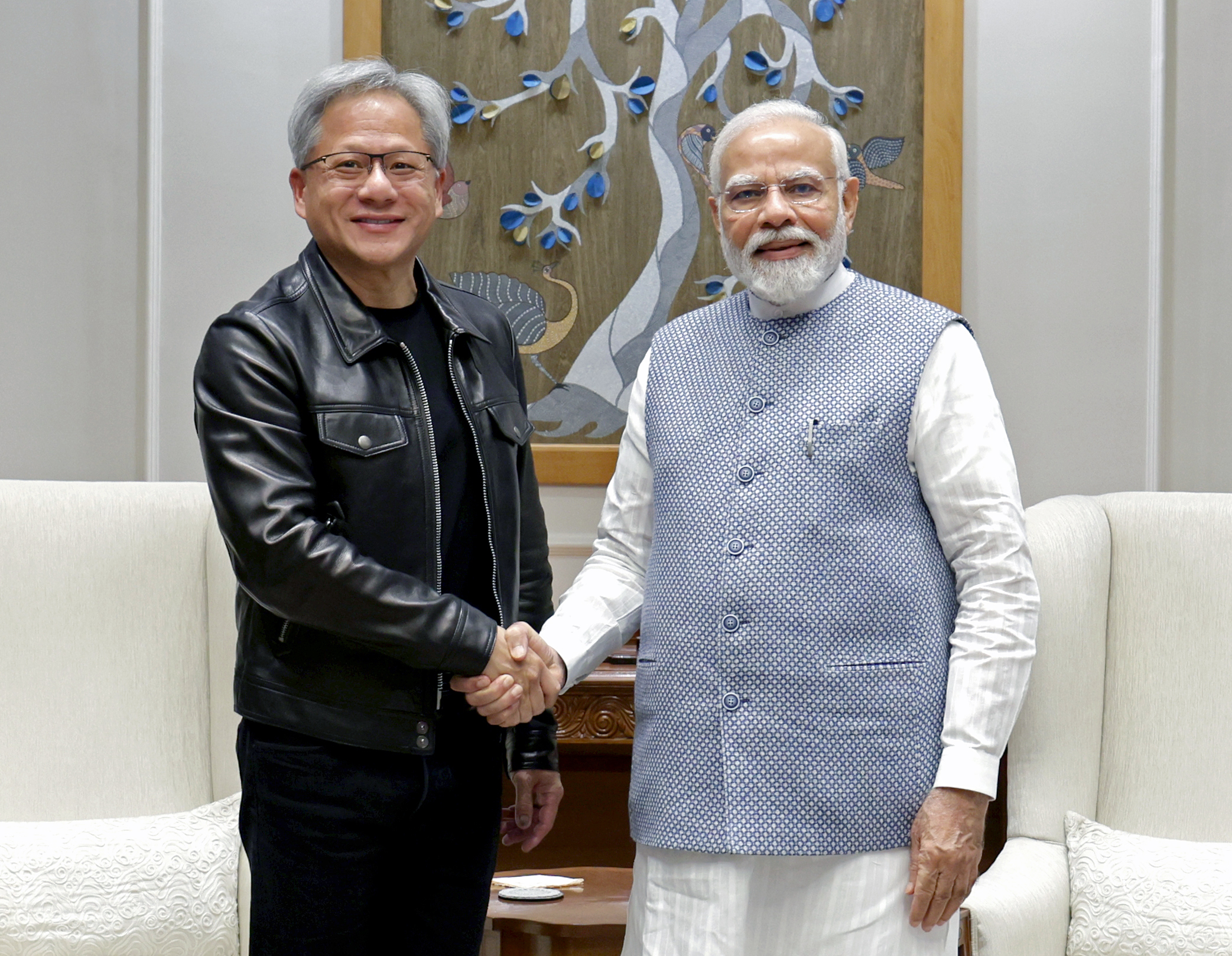
Union IT Minister Ashwini Vaishnaw used the Davos platform to firmly reject the notion of a US–China duopoly, asserting that India belongs to the leading group of global AI nations. India’s strength lies not in a single breakthrough, but in its integrated approach—combining digital public infrastructure, a vast talent pool, democratic governance, and growing industrial capacity.
AI and the Reinvention of India’s Pharmaceutical Ecosystem
Perhaps the most consequential dimension of India’s Davos narrative lies in its pharmaceutical and life-sciences sector. Long known as the “pharmacy of the world,” India is now undergoing a strategic transition toward becoming a global innovation partner.
India already hosts the largest number of FDA-approved pharmaceutical manufacturing plants outside the United States and remains a dominant supplier of generics and vaccines. What is changing is the value profile. The industry is rapidly moving toward complex generics, biosimilars, and high-value active pharmaceutical ingredients, supported increasingly by AI-driven processes.
By 2026, roughly one-fifth of Indian pharmaceutical companies are deploying AI across quality analytics, regulatory compliance, operational workflows, and drug discovery. These tools are accelerating development timelines by as much as 25 to 50 percent, fundamentally altering the economics of innovation.
Government initiatives such as the Promotion of Research and Innovation in the Pharma MedTech Sector are reinforcing this shift, with Centres of Excellence established at institutions like the National Institute of Pharmaceutical Education and Research. At the same time, educational priorities are evolving toward bioinformatics, computational biology, vaccinology, and AI-driven pharmacovigilance—skills essential for high-value manufacturing and research.
From States to the Global Stage
India’s federal innovation model was also on display at Davos. States such as Madhya Pradesh showcased pharmaceutical manufacturing and supply-chain resilience, while Telangana highlighted AI-led disruption in medical technology, positioning Hyderabad as a global knowledge and innovation hub. These sub-national efforts reinforce India’s broader strategy of distributed, scalable growth.
A Long-Term Vision for India and the World
India’s ambitions extend well beyond the current decade. The country aims to grow its pharmaceutical sector to over US$120 billion by 2030 and to as much as US$500 billion by 2047 under its long-term national vision. Artificial intelligence is central to this trajectory, not as an end in itself, but as a multiplier of productivity, quality, and global competitiveness.
Equally significant is India’s positioning as a bridge between advanced AI economies and the Global South. Its announcement of a Global AI Impact Summit in New Delhi reflects a determination to shape inclusive norms and ensure that the benefits of intelligence at scale are not confined to a small group of nations.
Conclusion: Intelligence With Responsibility
Davos 2026 confirms that artificial intelligence is no longer a sectoral phenomenon. It is a civilizational force that will define how economies grow, how power is distributed, and how societies function.
The Intelligent Age demands more than faster machines. It requires infrastructure with foresight, governance with legitimacy, innovation with inclusion, and intelligence guided by human values.
India’s emergence as a confident, values-driven AI leader adds a crucial dimension to this global moment. The future will not be shaped by who builds the largest models, but by who builds the most trusted, human-centered systems.
The Intelligent Age has begun. The responsibility to shape it wisely is now collective.
H S Panaser: Chairman, Global Indian Trade and Cultural Council, USA l Business Development Consultant in Pharmaceuticals, IT and AI I EDP I Advisor in merger and acquisitions I GSK I Ex Chair, USINPAC I President at Global Indian Diaspora Alliance l Associated with Prof. Harkishan Singh Foundation I Social Activist I Columnist
1 thought on “Op-Ed: How Artificial Intelligence Is Rewriting the Global Order—and India’s Role Within It”
Very nice overview of the AI influence globally and the India’s position.
Very written article.