









Builds on Adams Administration’s Environmental Resiliency Work, Including $146 Million Plan for Flooding Prevention at Jewel Streets in East New York
Our Bureau
New York, NY
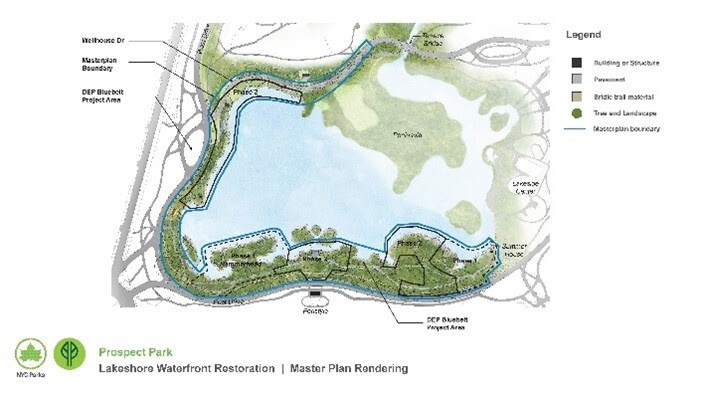
New York City Mayor Eric Adams, New York City Department of Environmental Protection (DEP) Commissioner Rohit T. Aggarwala, New York City Department of Parks & Recreation (NYC Parks) Commissioner Iris Rodriguez-Rosa, and the Prospect Park Alliance (PPA) have announced the city’s plan to protect Brooklyn from flash flooding caused by climate change. The Adams administration has allocated $68 million to build Brooklyn’s first Bluebelt in Prospect Park and continue to restore the park’s lakeshore. The Bluebelt will use nature-based solutions — enhancing the park’s lake and wetlands — to manage intense rainfall. With up to $50 million allocated from DEP for the Bluebelt, this investment complements PPA’s ongoing $20 million lakeshore restoration plan. These actions will help protect Prospect Park, the Prospect Park Zoo, and surrounding neighborhoods against extreme weather events.
“Today’s announcement marks a major step forward in protecting Brooklyn from the growing threat of climate-driven flash flooding,” said Mayor Adams. “By investing up to $68 million to create Brooklyn’s first-ever Bluebelt at the iconic Prospect Park, we’re harnessing the power of nature-based solutions to strengthen the park’s lake and wetlands, and better manage intense rainfall. Working hand-in-hand with the Prospect Park Alliance, this project will safeguard Prospect Park, the Prospect Park Zoo, and the surrounding communities for generations to come. We are proud to make this investment in resilience, sustainability, and the future of Brooklyn.”
“By using Prospect Park to manage stormwater, we’re turning one of Brooklyn’s most cherished public spaces into a powerful tool for climate resilience,” said DEP Commissioner Aggarwala. “This project brings Brooklyn its first Bluebelt and demonstrates how restoring and enhancing the park’s natural drainage not only preserves its scenic waterways but also protects the surrounding neighborhood. Thanks to the partnership with NYC Parks and the Prospect Park Alliance, we are able to implement creative solutions that will benefit both the park and the community.”
“Our public parks are more than just beautiful places to take in the scenery — they are also natural infrastructure making our city more resilient. With this investment, we’re helping protect Prospect Park and the surrounding neighborhoods from flooding, which is critical as climate change leads to more extreme weather events,” said NYC Parks Commissioner Rodriguez-Rosa. “We look forward to working with our partners to bring an inventive Bluebelt system to Prospect Park, complementing the ongoing Lakeshore improvement project, and making ‘Brooklyn’s Backyard’ an integral part of New York City’s sustainable future.”
“Prospect Park plays an essential role in the health and well-being of our community, and through this Bluebelt initiative, it will play an even more important role in protecting our community from severe storms and flooding,” said Morgan Monaco, president, PPA. “This project demonstrates the importance of our city parks and green spaces as a first line of defense against climate change and supports the work we are accomplishing through our Lakeshore restoration, which will greatly enhance Brooklyn’s only lake for the benefit of all our visitors.”
The Adams administration’s investment comes after a year-long study by DEP of flooding in the surrounding Brooklyn communities and how stormwater moves through Prospect Park during heavy rain. Together with NYC Parks and the PPA, the nonprofit that operates the park in partnership with the city, DEP studied the park’s landscape and water systems to find ways to improve drainage. The study found that during intense storms, rainwater often rushes over the ground instead of flowing into the park’s 60-acre lake, leading to flash flooding. The 150-year-old lake also has limited capacity, which can cause it to overflow and strain the sewer system.