








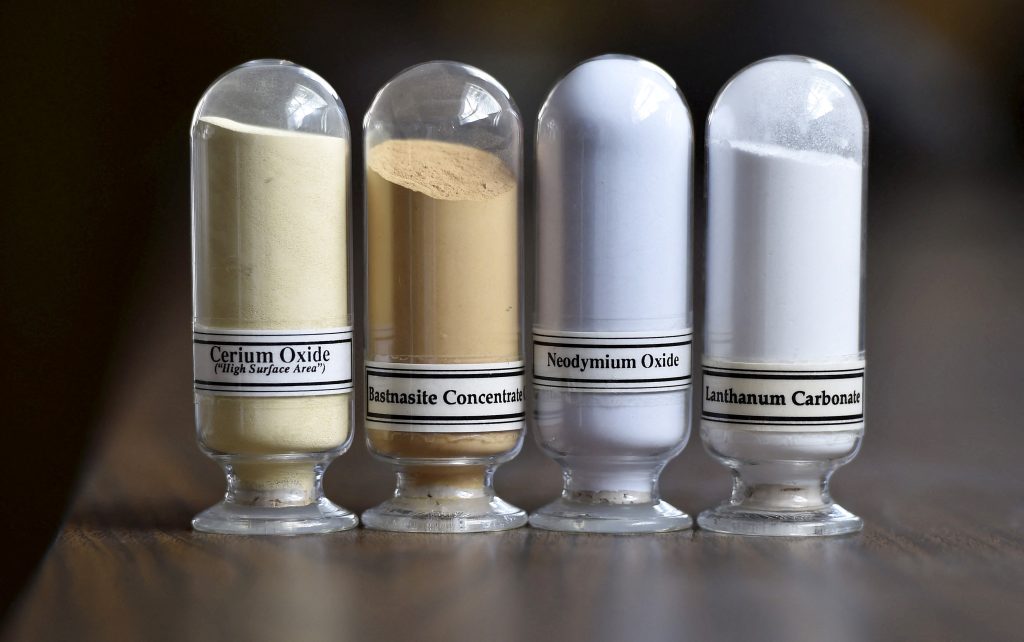
From revising royalty rates for high-tech minerals to expanding exploration into rare earths and helium, India is building the foundations of a self-reliant critical-mineral ecosystem—one that could shape its economic and strategic future
Our Bureau
New Delhi
India has taken a significant step in its critical-minerals strategy, with the Union Cabinet approving long-pending royalty revisions for Caesium, Graphite, Rubidium and Zirconium—minerals essential for electronics, defense, EV batteries, fiber optics, aerospace and nuclear energy. The decision, officials said, will boost domestic production, reduce import dependence and unlock fresh investments in a sector long constrained by pricing ambiguities.
Information and Broadcasting Minister Ashwini Vaishnaw said the revised royalty framework will enable smooth auction of mineral blocks containing these elements. The shift is expected to open up not just these individual deposits but also associated critical minerals—such as lithium, tungsten and rare earth elements—often found alongside them. For the first time, royalty rates on graphite will move from a fixed per-tonne levy to a percentage-based ad valorem model, allowing rates to reflect fluctuations in international prices.
The change comes at a time when India imports nearly 60 per cent of its graphite needs despite its central role in EV battery manufacturing. While nine graphite mines currently operate, officials say more than 70 new blocks are moving through the pipeline, signaling the scale of future domestic capacity. Zirconium—vital in nuclear reactors and high-temperature applications—along with Caesium and Rubidium, both used in advanced electronics, GPS systems, fiber optics and night-vision devices, will now enter the auction cycle under clearer financial rules.
But even as the Cabinet moves to unlock new mining opportunities, India’s largest energy producer is widening its own exploration horizon. ONGC’s Director (Exploration), O P Sinha, confirmed that the company is now evaluating rare earth minerals and helium prospects—resources central to the global shift toward clean technologies. “Our energy consumption is rising exponentially, and domestic exploration must play a much bigger role,” Sinha told ANI. ONGC has already detected traces of helium in existing gas wells and is assessing commercial extraction possibilities.
These moves align with the government’s National Critical Mineral Mission (NCMM), launched this year to secure essential materials for clean energy, semiconductors, electronics and defense. As part of the mission, nine Centers of Excellence (CoEs) have been established to build indigenous processing capabilities—India’s biggest weakness in the minerals value chain. Mohammad Sadiq, Director (G) at the Ministry of Mines, said that the ability to develop the processing and refining ecosystem will define India’s strategic autonomy in the years ahead. “The major challenge is how we can develop the processing value chain. We are working at a good pace,” he said.
The CoEs—from IISc Bengaluru to C-MET Hyderabad and seven others—will operate on a hub-and-spoke model, with nearly 90 industry and academic partners collaborating on next-gen mineral processing technologies. The government has also approved a ₹1,500-crore incentive scheme to accelerate recycling of critical minerals, reducing reliance on imported raw materials.
China today sits at the center of the global critical-minerals ecosystem, controlling not just large reserves but the entire value chain—from mining and processing to refining and manufacturing. It refines more than 80–90% of the world’s graphite, rare earth elements, and key battery materials, giving Beijing enormous leverage over future clean-energy industries. Even minerals mined in Africa, Latin America or Australia are often shipped to China for processing before returning to global markets. This dominance allows China to influence prices, dictate supply flows, and shape technological standards, leaving countries like India racing to build self-reliant, resilient alternatives.
Meanwhile, ONGC continues to push boundaries in traditional exploration, stepping up activity in the Krishna-Godavari and Mahanadi basins while expanding Enhanced Oil Recovery programmes across mature fields. Sinha said the company is aggressively adopting new technologies and forming collaborations to cut costs and improve drilling efficiency.
Taken together, the Cabinet’s royalty reforms, ONGC’s diversification, and the NCMM’s institutional framework reflect a single national priority: reducing vulnerability in a global minerals market dominated by a few countries. As the clean-energy race accelerates, India’s push to secure critical minerals—from exploration to processing—marks a turning point in the country’s industrial and strategic roadmap.