








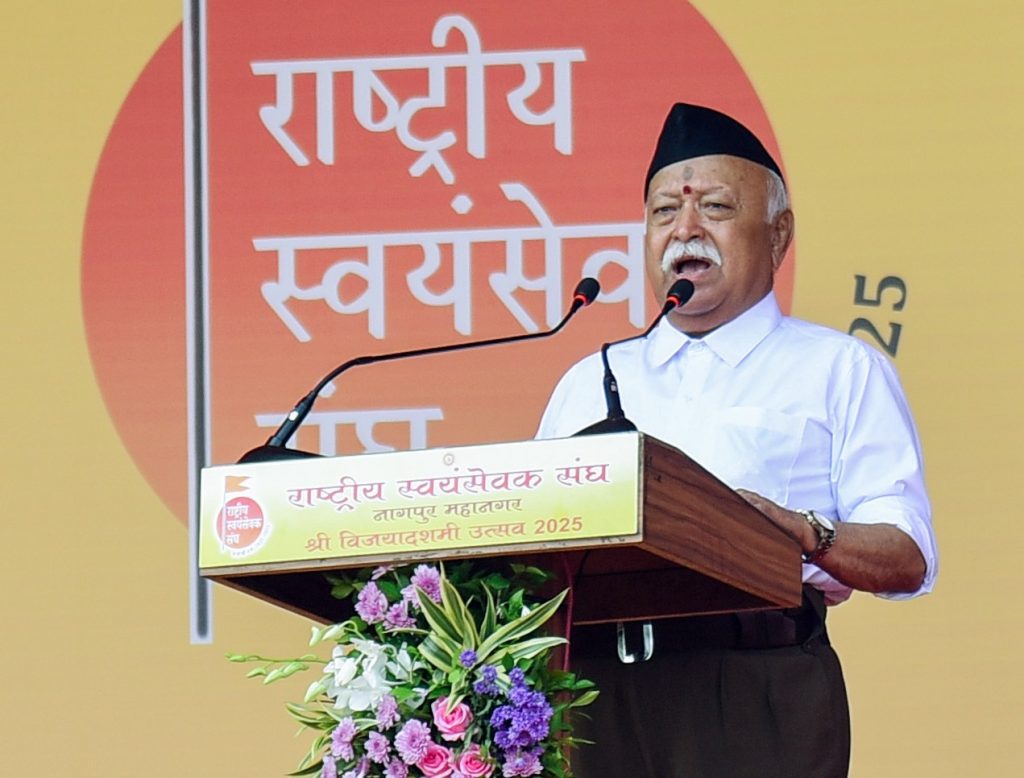
Marking its centenary, the Rashtriya Swayamsevak Sangh reflects on its enduring influence in India’s social, political, and cultural landscape
Our Bureau
Nagpur / New Delhi
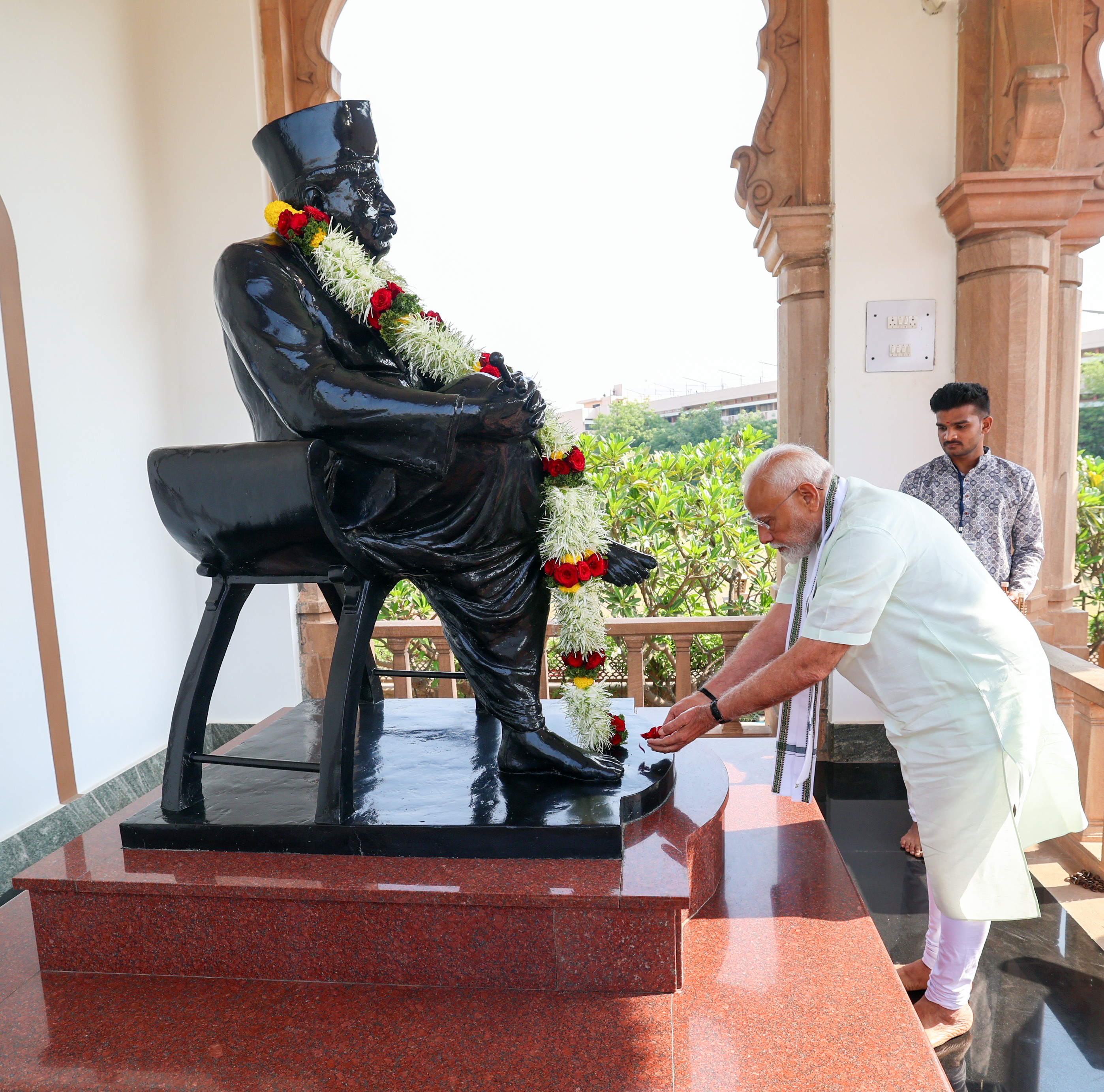
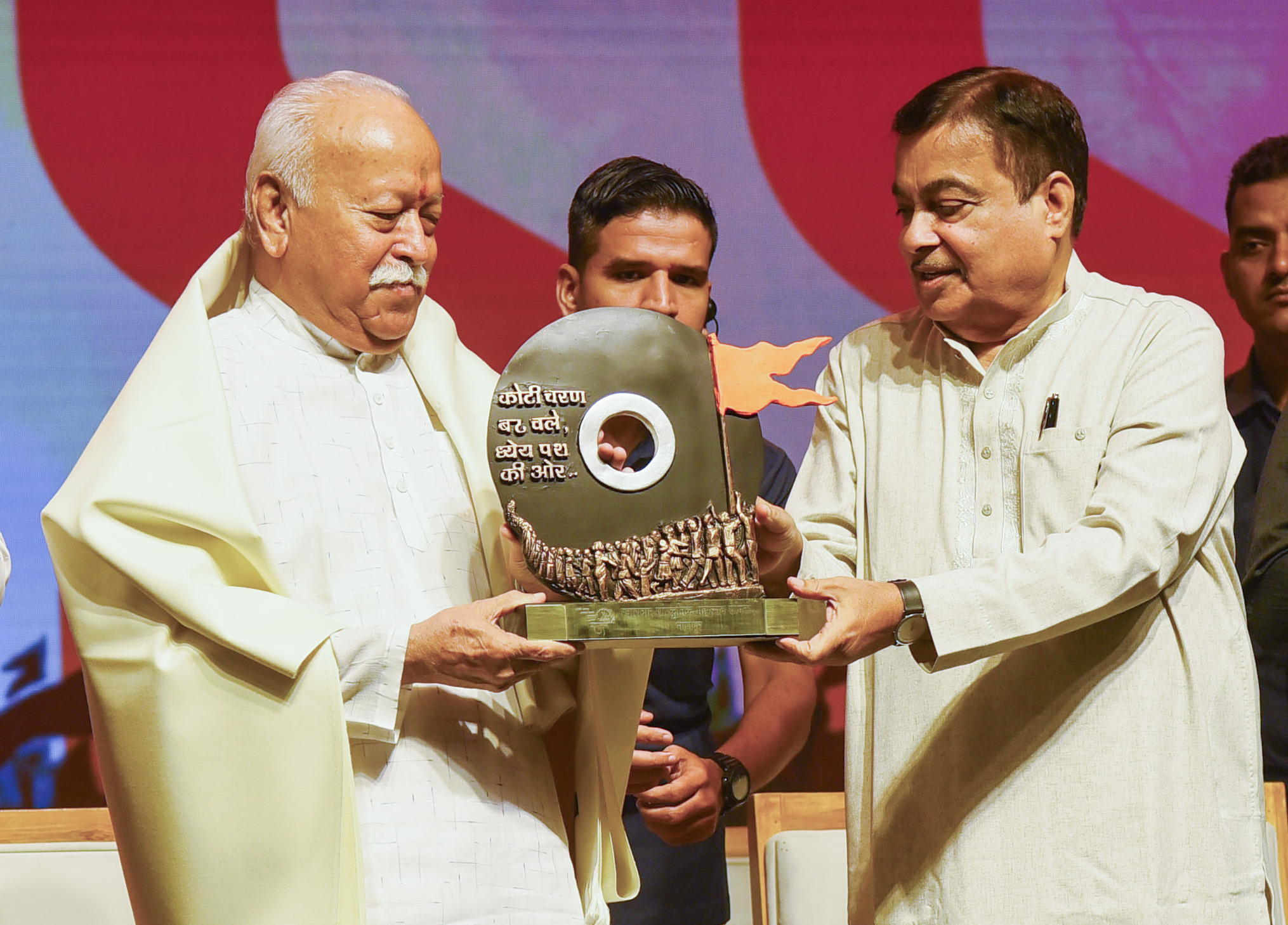
On October 2, 2025, the Rashtriya Swayamsevak Sangh (RSS) celebrated its centenary on the sacred occasion of Vijayadashami, with grand ceremonies held in Nagpur and across India. The milestone marked not just a hundred years of organizational continuity, but also a century-long contribution to India’s social, cultural, and political fabric. The event drew dignitaries, including former President Ram Nath Kovind, Union Minister Nitin Gadkari, and Maharashtra Chief Minister Devendra Fadnavis, alongside countless swayamsevaks who gathered to recite the Sangh Prarthana and pay homage to the organization’s founder, Dr. Keshav Baliram Hedgewar, who established the RSS in Nagpur in 1925.
Prime Minister Narendra Modi highlighted the enduring mission of the RSS in nation-building, noting, “Vyakti nirmaan se rashtra nirmaan—nation-building through character-building—has been the Sangh’s path. For this, it created the unique, simple and enduring mechanism of the daily shakha. The shakha is an inspiring place where every swayamsevak begins his journey from ‘Me to We’ and goes through a process of personal transformation.” Modi’s reflection underscored the Sangh’s emphasis on cultivating individual character as a foundation for collective societal strength.
The centenary celebrations came amid contrasting viewpoints. Opposition leaders, including Congress MP Rahul Gandhi and AIMIM President Asaduddin Owaisi, criticized the RSS and its affiliated Bharatiya Janata Party (BJP), questioning the Sangh’s role in India’s freedom struggle. Gandhi remarked that “cowardice” defined the RSS-BJP ideology, citing statements by External Affairs Minister S. Jaishankar on China to illustrate what he described as the avoidance of stronger adversaries. Owaisi added that “not a single person lost his life in the freedom struggle,” challenging the RSS’s historical legacy. Communist Party of India (Marxist) leader Brinda Karat similarly criticized Prime Minister Modi for lauding the RSS during the centenary celebrations.
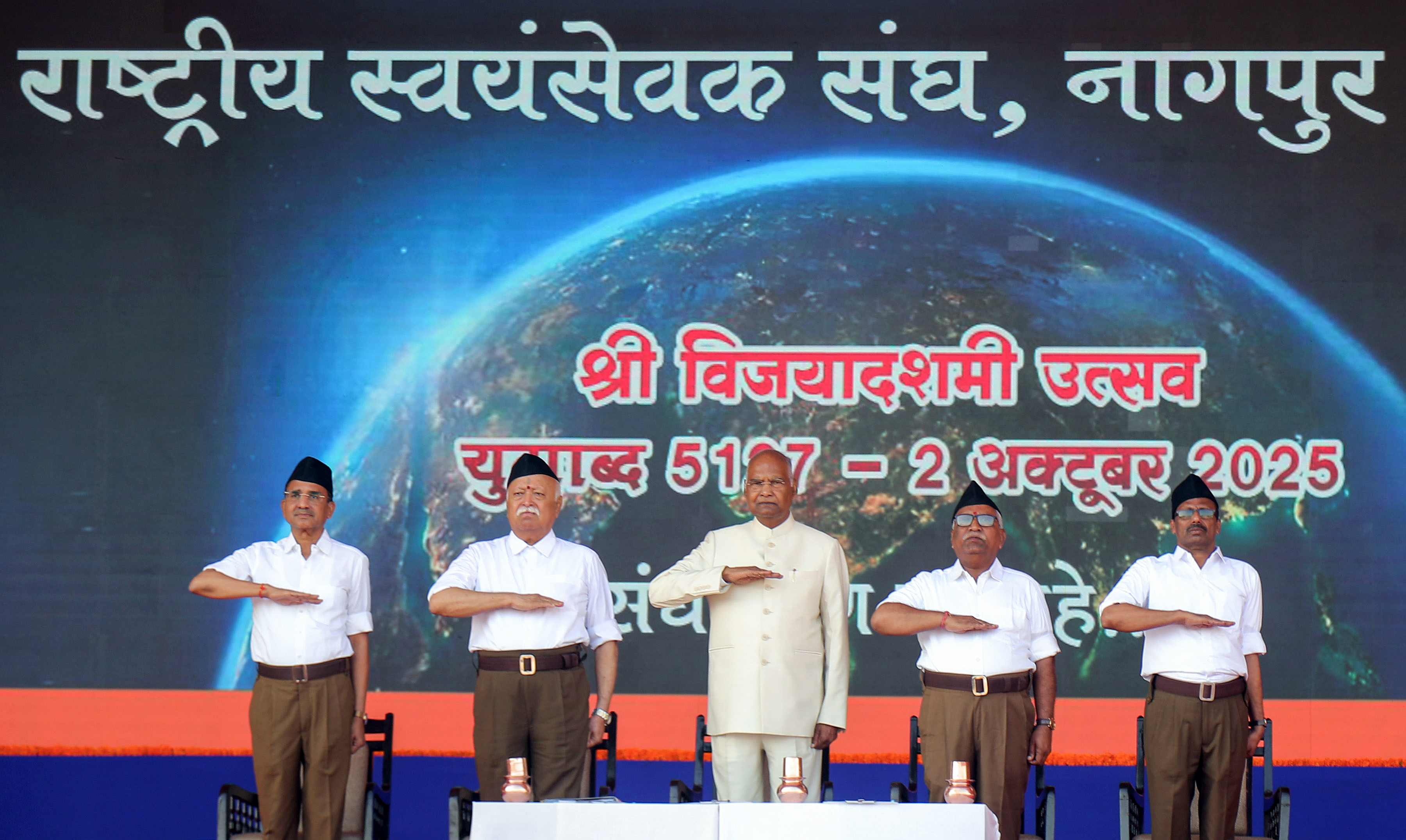
Yet the celebrations and official narratives emphasized continuity, service, and social transformation. RSS chief Mohan Bhagwat, in his annual Vijayadashami address, reiterated the organization’s focus on individual and societal development. “The system for creating individuals was destroyed in our society during the long period of foreign invasion… the Sangh Shakha is such a system. For the past 100 years, Sangh Karyakartas have consistently sustained the system in all kinds of circumstances,” he said. Bhagwat described the shakha as a forum that nurtures personal discipline, value-driven conduct, and solidarity within society, while promoting active engagement in social initiatives.
Bhagwat also highlighted the RSS’s engagement with both local and national-level organizations, underscoring the Sangh’s approach to social dialogue and collective experience. “Swayamsevaks have actively engaged in various aspects of social life, as well as diverse organizations and institutions. Swayamsevaks continue to cooperate and engage in dialogue with numerous individuals who are actively working in society. The Sangh has drawn certain observations and conclusions based on its collective experience,” he said. This, Bhagwat argued, is crucial for shaping a harmonious society guided by ethical and moral principles.
The centenary also featured the release of a commemorative postage stamp and Rs 100 coin, depicting Bharat Mata in Varad Mudra, saluted by swayamsevaks—a symbolic representation of the RSS’s intertwining of culture, patriotism, and organizational identity. Chief Mohan Bhagwat further elaborated on the Sangh’s initiatives under the Panch Parivartan programme, designed to foster social harmony, preservation of family values, environmental protection, self-reliance, and adherence to civic and constitutional duties. “During the Shatabdi Varsh, the Sangh will attempt to ensure that its work of Vyakti Nirman spreads across the country, and the Panch Parivartan programme is adopted by all sections of society,” he said.
Over the past century, the RSS has emerged not merely as a cultural and social organization, but also as a guiding force in India’s contemporary political landscape. Leaders of the BJP and allied Sangh Parivar have often acknowledged the RSS’s influence on policy, governance, and national ethos. BJP leader Anurag Thakur, speaking on the centenary, emphasized the Sangh’s role in “awakening India’s ancient culture and eternal traditions” and in fostering a disciplined, service-oriented society. He noted, “The work the Sangh has done to awaken India’s ancient culture, eternal traditions, and national character is unprecedented and worthy of respect. Today, in every corner of the country, inspired by the Sangh, countless works are being carried out in social service, education, health, rural development, the environment, and other areas.”
Vice President CP Radhakrishnan, himself a former RSS swayamsevak, underscored the organization’s long-standing commitment to nation-building and social service. He described the RSS as “the world’s foremost patriotic organization” and highlighted its man-making ethos: “Creating self-disciplined, responsible citizens is essential for a strong and vibrant society. Guided by Seva Parmo Dharmah, RSS volunteers have always stood at the forefront during floods, famines, earthquakes, or any other calamity—serving the needy selflessly, without expectation or awaiting instructions.”
Beyond India’s borders, Bhagwat addressed the RSS’s perspective on regional and global affairs. Noting political upheavals in Sri Lanka, Bangladesh, and Nepal, he cautioned against violent outbursts as a means of societal transformation, advocating democratic solutions instead. “Peace, stability, prosperity, and ensuring comfort and wellbeing in these countries is a necessity arising out of our natural affinity with these countries, going beyond the consideration for protection of our interests,” he said. The RSS chief also commented on global interdependence, advocating swadeshi and self-reliance while maintaining diplomatic relations: “The world functions with dependence on each other… We need to rely on swadeshi and focus on self-reliance, yet strive to maintain diplomatic relations with all our friendly nations, which will be with our wish and without compulsion.”
Bhagwat reflected on India’s unique cultural diversity, urging citizens to uphold harmony and respect for all faiths and beliefs. He warned against communal tensions, hooliganism, and premeditated provocations: “Whenever some foreign ideologies came to India, we considered them our own. We accept diversity in the world… Taking law into one’s own hands, coming out on the streets and resorting to violence and hooliganism is not right. Trying to incite a particular community and putting up a show of strength are all pre-planned conspiracies.”
In addition to cultural and social guidance, the RSS has maintained an active role in advocating for national security, development, and ethical governance. Bhagwat praised the government’s and armed forces’ response to the Pahalgam terror attack, asserting that unity and decisive action provide an ideal atmosphere in the country, while also highlighting the importance of protecting national interests and discerning genuine allies on the international stage.
The centenary also honored iconic Indian leaders who exemplified dedication, integrity, and service, including Mahatma Gandhi and former Prime Minister Lal Bahadur Shastri. Bhagwat emphasized that their lives serve as models for personal development, societal contribution, and the cultivation of national character.
Analysts note that the RSS has consistently positioned itself at the intersection of culture, politics, and social development. Through its shakhas, social outreach, and educational programmes, the organization aims to instill discipline, ethical values, and national consciousness, preparing citizens for engagement in democratic and civic life. Critics, however, remain vocal, accusing the RSS of political partisanship, historical revisionism, and ideological rigidity. Opposition leaders continue to raise concerns over the organization’s influence on policy-making and its approach to communal identity.
Despite divergent opinions, the centenary celebrations of the RSS reflect a widespread acknowledgement of its deep-rooted presence in India’s societal fabric. The organization’s blend of volunteerism, character building, cultural advocacy, and social engagement demonstrates its strategic role in shaping India’s contemporary discourse. Whether in fostering individual discipline, guiding public morality, addressing environmental concerns, or positioning India in global affairs, the RSS has maintained its influence over a century of societal transformation.
As India marks 100 years of the Rashtriya Swayamsevak Sangh, its legacy—contested yet consequential—remains entwined with the nation’s political, cultural, and social trajectory. Through shakhas, social programmes, and public discourse, the RSS continues to project a vision of India grounded in tradition, discipline, and service, seeking to balance national identity with global responsibility, and unity with diversity.