








The Modi government’s sweeping GST reforms slash taxes on essentials, automobiles, farm machinery, and insurance, with a clear focus on boosting household consumption and driving domestic growth
Our Bureau
Mumbai / New Delhi
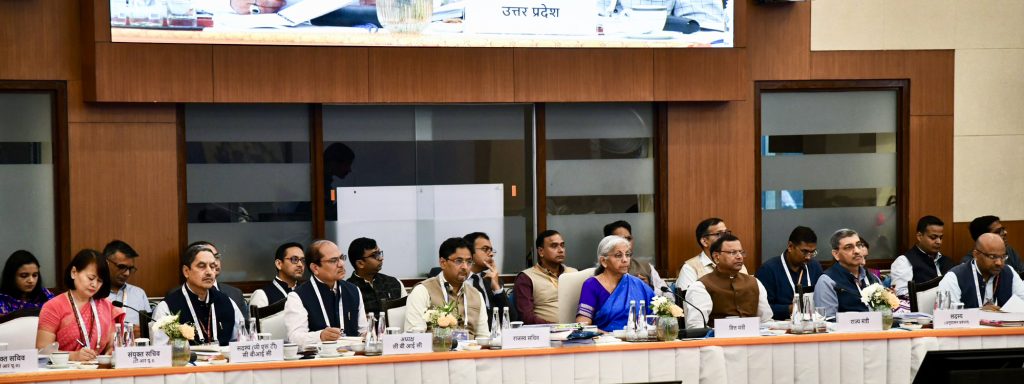
The Indian government has launched what Prime Minister Narendra Modi has described as “next-generation GST reforms,” cutting tax rates across a wide spectrum of goods and services in an effort to boost domestic consumption. The reforms, approved by the GST Council this week, consolidate tax slabs into a simpler dual structure of 5 per cent and 18 per cent, while reducing levies on essential household items, healthcare, automobiles, textiles, and agriculture inputs.
The rate rationalization marks a structural shift in India’s indirect tax regime and signals the government’s pivot towards stimulating internal demand at a time when global markets are tightening under rising tariffs and trade barriers.
Relief for Households
For households, the reforms bring visible relief. Daily-use products such as shampoo, hair oil, toothpaste, toilet soaps, toothbrushes, and shaving cream, earlier taxed at 18 per cent, will now fall into the 5 per cent bracket. Packaged foods including butter, ghee, cheese, namkeens, bhujiya, and mixtures have also seen a cut from 12 per cent to 5 per cent. Similarly, utensils, feeding bottles, and clinical diapers have become cheaper, easing household budgets across the board.
A landmark step in the reforms is the complete removal of GST on individual health and life insurance, which until now attracted an 18 per cent levy. This shift is expected to make insurance products more affordable and accessible to millions of Indians, particularly those in the middle- and lower-income brackets. GST on critical medical items such as thermometers, medical oxygen, diagnostic kits, and corrective spectacles has been slashed from 12 per cent to 5 per cent. Industry leaders have called the measure socially progressive, noting that it not only improves affordability but also strengthens India’s healthcare ecosystem.
Industry Gains
To boost consumption in the automobile sector, GST on small petrol, diesel, hybrid, and CNG cars has been reduced from 28 per cent to 18 per cent. Motorcycles under 350 cc, three-wheelers, and goods transport vehicles also benefit from the lower slab. For agriculture, tractors will now attract just 5 per cent GST, down from 12 per cent, with tires and parts also reduced to 5 per cent. These cuts are expected to reduce costs for farmers and improve rural purchasing power.
Industry associations have welcomed the measures. The Confederation of Indian Industry (CII) hailed them as a “phenomenal milestone,” pointing to the predictability and reduced compliance burden. The textile sector, long struggling with inverted duty structures, has gained relief through the alignment of GST on man-made fibers and yarn at 5 per cent. This correction is expected to ease liquidity pressures for spinners and weavers, most of whom are MSMEs. PHD Chamber of Commerce and Industry (PHDCCI) called the rationalization a “landmark reform” that would ease household budgets, stimulate demand, and strengthen domestic manufacturing.
Strategic Timing
The reforms come at a time when Indian exporters are facing rising tariffs abroad. Commerce Minister Piyush Goyal recently assured exporters of government support but stressed that strengthening domestic demand is crucial for resilience. By easing costs for consumers and businesses alike, the government hopes to offset external trade pressures with robust internal growth.
Prime Minister Modi has framed the changes as wide-ranging reforms benefiting “the common man, farmers, MSMEs, middle-class, women, and youth.” Economists note that while the revenue implications of such broad tax cuts need to be watched, the move could spark a consumption-led growth cycle. By consolidating the slabs and correcting anomalies, the reforms aim to provide stability and predictability, reducing disputes and compliance costs.
With implementation set for September 22, businesses have a short window to adjust pricing and supply chains. Industry bodies have assured cooperation and a quick pass-through of benefits to consumers. If executed smoothly, the GST overhaul could achieve its intended dual purpose: boosting domestic consumption and creating a more efficient, inclusive, and resilient economy at a time of global uncertainty.