








Our Bureau
Santa Barbara, CA
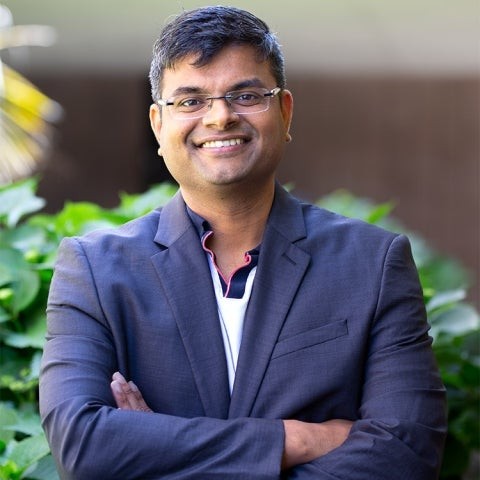
UC Santa Barbara computer scientist Arpit Gupta has earned two major research awards from Google to support his development of low-cost network foundation models. Gupta’s work, which bridges machine learning and computer networks, aims to lower the cost of deploying large-scale AI infrastructure — an advance with broad implications for the efficiency, scalability and democratization of future technologies.
For Gupta, the awards validate his bold vision of rethinking how networks can be made “self-driving” by using a new class of machine-learning models capable of managing themselves with minimal human intervention.
The first honor, a Google Research Scholar Award, supports early-career faculty pursuing promising, high impact research. The second, the inaugural Google ML (Machine Learning) and Systems Junior Faculty Award, recognizes junior faculty worldwide conducting cutting-edge work at the interface of machine learning and systems.
Together these highly selective awards place Gupta, an assistant professor of computer science, among an elite group of emerging leaders with the potential to shape the future of AI and networking.
“The (Google ML) award is going to more than 50 assistant professors in 27 U.S. universities whose research is particularly noteworthy for Google,” said Amin Vahdat, VP/GM of ML, Systems & Cloud AI.
For decades, machine-learning problems in networking have been solved through point solutions — single models tailored to solve individual problems. But as networks have grown larger and more complex, maintaining separate models for each decision task has become time-consuming, computationally expensive and difficult to scale.
Gupta is pursuing a new approach he calls the convergence principle, his term for the idea that, instead of building and maintaining separate models for each task, it may be possible to develop a single, general-purpose foundation model — a large, general-purpose model pre-trained on diverse data and fine-tuned for specific tasks as needed — that can adapt to a wide variety of networking problems across different scales. “Over time, my research has been guided by this convergence principle,” Gupta said.
His work is inspired by the trajectory of the natural language processing (NLP) community, which faced similar challenges in developing task-specific models. Initially, NLP researchers built separate models for translation, sentiment analysis and question answering, each trained and maintained independently. The turning point came with the development of foundation models, such as BERT in 2018 and later GPT-3, which demonstrated that training on broad, diverse datasets could yield a single adaptable model. “They showed it was possible to move beyond point solutions by building a foundation model that could be fine-tuned for a variety of tasks,” Gupta said. “We’re exploring what it would take to bring that approach to networking.”