








New Delhi is crafting a multipolar strategy as US trade barriers push it closer to Beijing and Moscow
Our Bureau
New Delhi / Beijing / Moscow
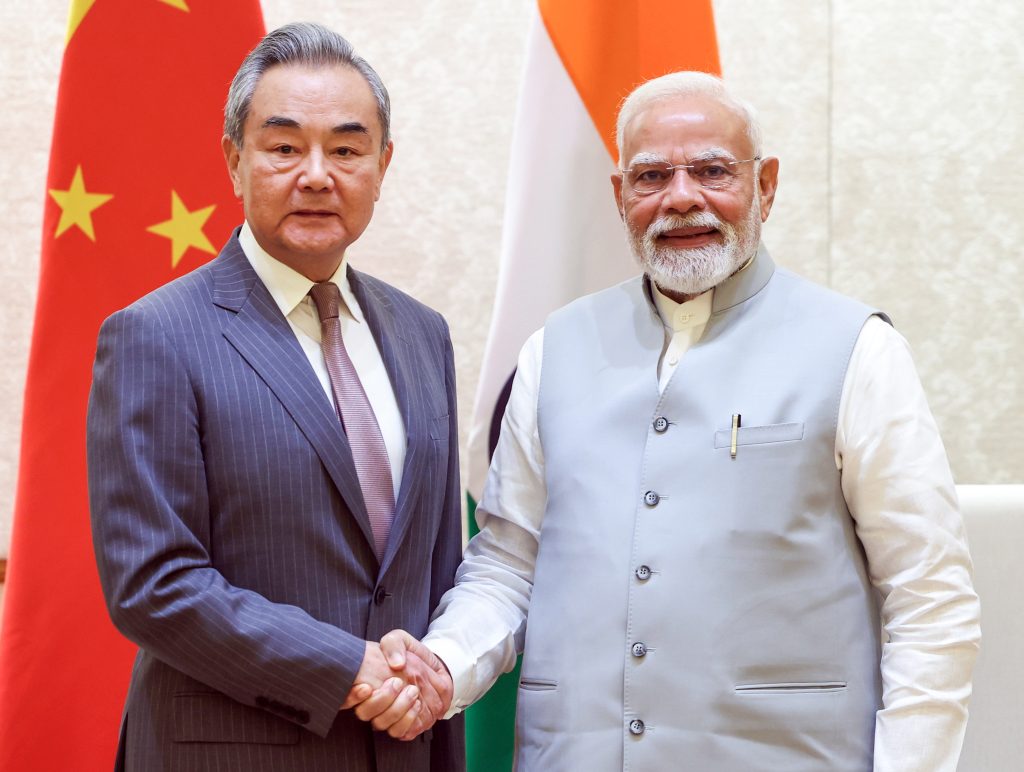
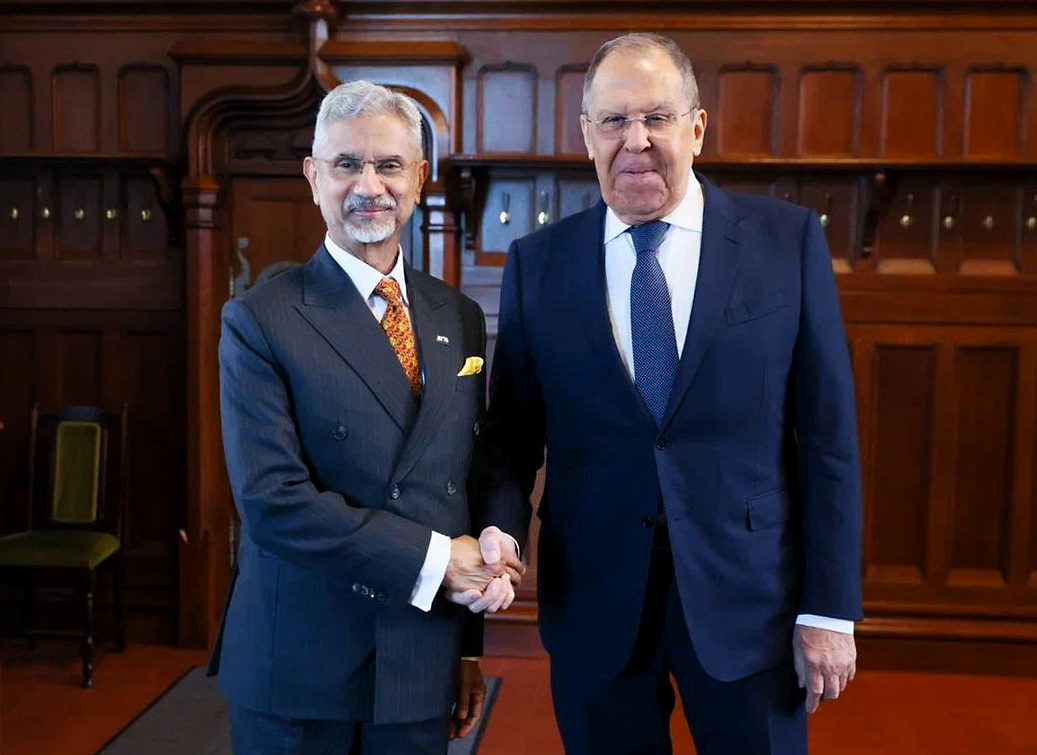
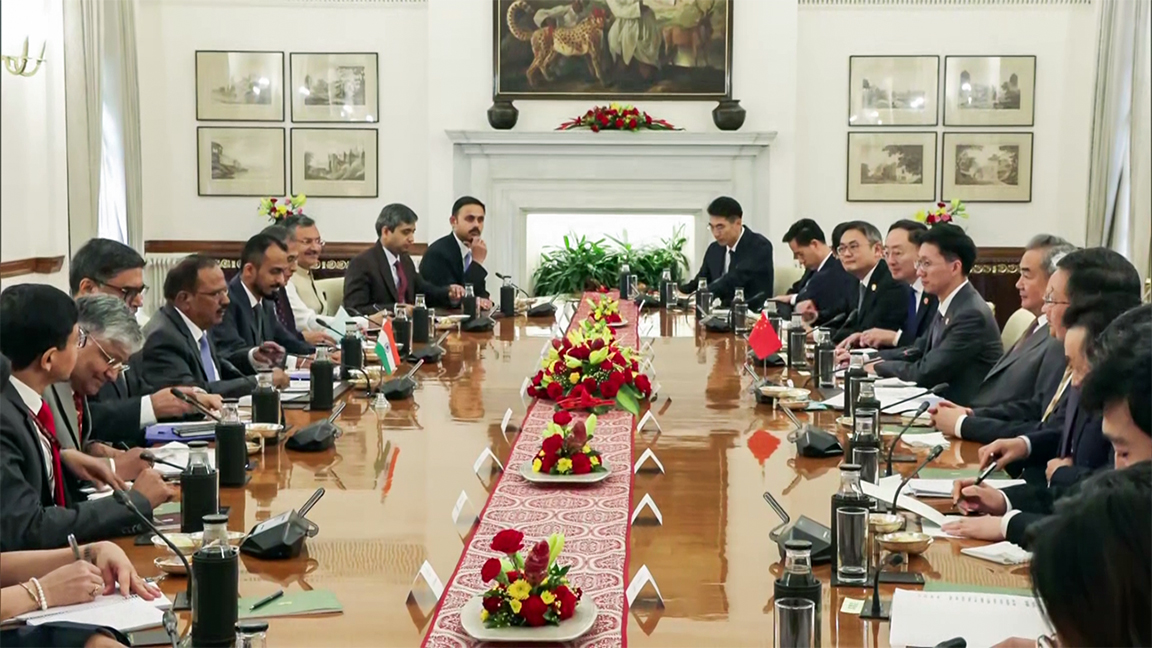
When Chinese Foreign Minister Wang Yi landed in New Delhi for a two-day visit in August, few would have expected such an elaborate show of warmth after years of tension along the Line of Actual Control (LAC). Yet, the meetings that followed—stretching from the corridors of Hyderabad House to the Prime Minister’s residence—revealed a deliberate Indian attempt to recalibrate ties with Beijing. Barely a day later, External Affairs Minister S. Jaishankar was in Moscow, engaging his Russian counterpart Sergey Lavrov on trade and strategic cooperation.
This dual engagement with China and Russia is not a coincidence. It comes at a time when Washington, under President Donald Trump, has slapped punitive tariffs on Indian goods, citing New Delhi’s energy trade with Russia. The tariffs—rising to 50 per cent—have jolted Indian exporters and sharpened India’s awareness of the risks of overdependence on the United States. In this shifting landscape, India is seeking to stabilize relations with Beijing and expand its already resilient partnership with Moscow.
From Standoff to Stabilization
The memory of the Ladakh clashes of 2020 still looms large, but the 24th round of Special Representatives’ talks between NSA Ajit Doval and Wang Yi offered a rare note of optimism. Chinese Ambassador Xu Feihong listed ten points of consensus, ranging from border management to reopening traditional border markets.
The emphasis was on restoring trust. Both sides reiterated that peace along the LAC was essential for the broader relationship. They agreed on setting up expert groups, reviving dialogue mechanisms, and creating new channels for military-level communication in the eastern and middle sectors.
Prime Minister Narendra Modi’s meeting with Wang Yi was particularly significant. Modi accepted President Xi Jinping’s invitation to attend the Shanghai Cooperation Organization (SCO) summit in Tianjin, calling for “stable, predictable, constructive ties.” For Beijing, Modi’s presence is a diplomatic win; for India, it is a calculated step to keep doors open with a powerful neighbor amid global turbulence.
Ajit Doval underlined the progress made since Modi and Xi met in Kazan in 2024, noting that “borders have been quiet” and engagements “more substantial.” The Chinese side, in turn, promised to address three critical Indian concerns—rare earths, fertilizers, and tunnel-boring machines—signaling a willingness to reduce friction in economic ties.
This tentative thaw does not erase strategic mistrust. But it does signal that both sides, constrained by economic pressures and regional uncertainties, are ready to compartmentalize disputes and focus on areas of cooperation.
Trade, Oil and Trust
If relations with China are about managing mistrust, ties with Russia are about leveraging trust. Jaishankar’s three-day Moscow visit showcased the depth of this bond. Meeting Lavrov and Deputy PM Denis Manturov, he co-chaired the 26th Inter-Governmental Commission and pushed for expanding bilateral trade.
The numbers tell their own story. India-Russia trade surged from USD 13 billion in 2021 to USD 68 billion in 2024–25—a fivefold jump. Russia is now among India’s top three trading partners, largely thanks to discounted oil purchases after Western sanctions. Yet, this trade boom has created a massive imbalance, with Indian exports lagging far behind imports. Jaishankar was candid: “Both the diversification and balancing of trade now urgently mandate more strenuous efforts.”
India is urging Russian firms to invest in infrastructure, manufacturing, and energy projects, citing opportunities created by its USD 4-trillion economy. Moscow, for its part, is keen to lock in India as a long-term energy buyer and a partner in circumventing Western sanctions. Jaishankar also confirmed the signing of Terms of Reference for a free trade agreement between India and the Eurasian Economic Union, a move likely to deepen economic integration.
The defense dimension remains robust, with Moscow continuing to support India’s “Make in India” goals through joint production and technology transfer. Despite the shadow of the Ukraine war, the strategic partnership has endured, reflecting a rare continuity in an otherwise volatile world.
Washington Strategy
The backdrop to these diplomatic man oeuvres is the trade shock from Washington. Trump’s decision to impose first 25, then an additional 25 per cent tariffs on Indian goods—explicitly linking them to India’s oil imports from Russia—has strained the “natural partnership” narrative that dominated India-US relations over the past decade.
Jaishankar minced no words in Moscow. He pointed out that India is not the biggest purchaser of Russian oil—China is. Nor is it the largest buyer of Russian LNG—that distinction belongs to the European Union. “We are very perplexed at the logic of singling out India,” he remarked, highlighting the inconsistency of Washington’s argument.
Trump’s tariff move is not an isolated act but part of a broader pattern of economic aggression towards India. Even before the 50 per cent duty, his administration had suspended India’s benefits under the Generalized System of Preferences (GSP), citing unfair trade practices. He repeatedly accused New Delhi of “taking advantage of the US” on issues ranging from pharmaceuticals to digital taxes. The new tariffs, justified on grounds of India’s Russian oil purchases, reflect his transactional style—pressuring partners to fall in line with Washington’s strategic choices. For India, this underlines the volatility of relying too heavily on the US market.
For New Delhi, the tariffs are more than an economic blow; they are a political reminder of America’s transactional approach. While India continues to engage Washington—especially on defense and technology—it is unwilling to let its economic growth be hostage to unilateral trade policies. The recalibration towards Beijing and Moscow is, in this sense, a hedging strategy.
The Multipolar Vision
India’s simultaneous outreach to China and Russia illustrates its core foreign policy instinct: strategic autonomy. Unlike during the Cold War, when alignments were binary, today’s multipolar world allows India to balance multiple relationships without committing exclusively to any.
China, despite being a rival, is also a trade partner and a neighbor India cannot ignore. Russia, though weakened by sanctions, remains a reliable defense supplier and energy partner. The United States, even with tariffs, is indispensable for technology, investment, and balancing China in the Indo-Pacific.
By engaging all three simultaneously, India is signaling that it will not be pushed into a corner. Modi’s acceptance of Xi’s SCO invitation, Jaishankar’s embrace of Lavrov, and India’s continued participation in the Quad with the US, Japan, and Australia all reflect this nuanced balancing act.
Yet, this strategy is fraught with risks. The border question with China is unresolved and could flare up again. Economic cooperation, while desirable, cannot mask deep security concerns. With Russia, overdependence on energy imports could trap India in an unsustainable imbalance. And with the US, the risk of further tariffs or political tensions remains high, especially in an election-driven environment.
The larger question is whether India can sustain growth and stability while juggling these competing pressures. The answer may lie in diversifying trade, building resilience in supply chains, and strengthening indigenous capacities—objectives that Modi’s government has often stressed under the banner of Atmanirbhar Bharat (self-reliant India).
A New Phase
India’s outreach to China and Russia in August 2025 is not an abandonment of the US, nor is it a dramatic realignment. It is a pragmatic response to shifting geopolitical winds, particularly Trump’s tariffs. By mending fences with Beijing and deepening ties with Moscow, New Delhi is hedging against uncertainty while keeping its options open.
As the SCO summit in Tianjin approaches, India’s challenge will be to sustain this delicate balance—engaging China without capitulating, expanding with Russia without overcommitting, and managing the US relationship without succumbing to unilateral pressure.
The story of India’s foreign policy in 2025, then, is one of resilience: a refusal to be boxed in, and a determination to craft a multipolar future on its own terms.