








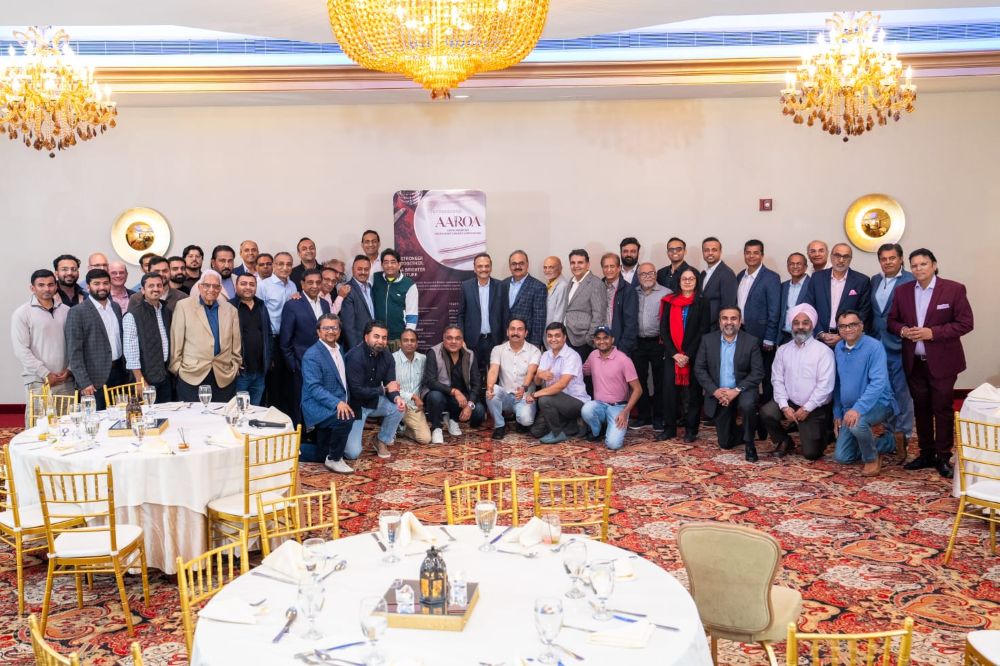
The new organisation, spearheaded by Bipin Patel, aims to address rising food costs, labour regulations, commercial lease pressures and other challenges facing independent and franchise restaurant owners.
Our Bureau
Edison, NJ
Prominent hospitality leaders gathered at the Moghul Banquet Hall in Edison, New Jersey, on Wednesday, October 28, to officially launch the Asian American Restaurant Owners Association (AAROA), an organisation aimed at representing and protecting independent restaurateurs and franchise owners.
Organised on two weeks’ notice, the inaugural convention brought together more than 100 franchise owners, independent restaurateurs and hospitality leaders to build a unified advocacy platform for the restaurant industry.
AAROA is spearheaded by Bipin Patel, founder of the Asian American Retailers Association (AARA), which recently marked 20 years of nationwide advocacy representing convenience store, fuel station and beverage retail owners on legislative, tax and supply-chain equity issues.
Drawing on his own experience as a multi-unit franchisee of brands including Buffalo Wild Wings and Blaze Pizza, Patel recognised that the restaurant and foodservice industry faced specialised challenges requiring collective bargaining and legislative action.
In his welcome address, Patel said the planning for the event had started about a year ago, during which he held several meetings with fellow restaurant owners before setting a date for the launch. “Running a restaurant today is much more difficult than it was a few years ago,” he said, pointing to rising rents, common area maintenance (CAM) charges, property taxes, labour costs, insurance premiums and food and beverage expenses.
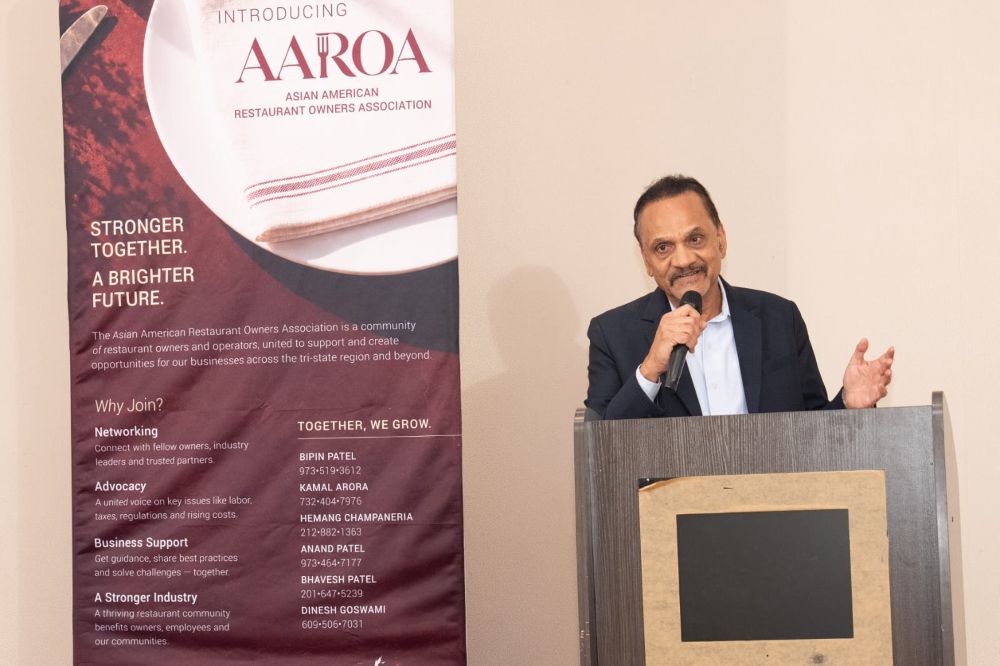
He noted that rents and CAM charges, along with property taxes, continued to increase by 5-6% annually, while New Jersey’s minimum wage was scheduled to rise to $16.48 per hour next January. Insurance premiums were also increasing by double digits every year.
Patel said rising energy and operating costs had pushed up food, beverage and supply expenses, while the economic slowdown had contributed to declining sales. Immigration enforcement was another concern, he said, as it had created uncertainty around employee availability. He added that some communities, including the Hispanic community, were not going out as frequently as before, affecting restaurant businesses. “Overall, the restaurant industry is facing significant challenges. Even major restaurant companies are under pressure,” Patel said, citing a fall of approximately 49% in Chipotle’s share price and around 22% in McDonald’s share price over the last two years.
He said the association was being established to help restaurant owners address these challenges by working together.
Patel said the members represented more than 500 locations and approximately 6,000 employees, giving the association significant collective purchasing potential across food, beverages, supplies, insurance, utilities, and repair and maintenance services.
The association is proposing three committees to identify opportunities for reducing operating costs. The Food, Beverage and Supplies Committee will focus on helping independent restaurant owners obtain better pricing and terms on regularly purchased products.
The Insurance Committee will explore better options and group purchasing opportunities for liability, workers’ compensation, Employment Practices Liability Insurance (EPLI), health insurance and employee benefits.
The Utilities, Repair and Maintenance Committee will look for opportunities to reduce operating expenses in these essential areas.
The board will review the proposals, evaluate their terms and conditions, and approve suitable opportunities.
Patel said the savings could make a significant difference to restaurant owners’ bottom lines. For a restaurant with gross sales of $1.5 million, a 4% saving would translate into $60,000 annually, or $5,000 per month. “Our goal is to create real, measurable value for our members,” he said.
He added that AAROA would go beyond providing a platform for restaurant owners to connect, share experiences and build relationships. As a trade organisation, it would focus on common business challenges, advocacy on issues affecting the industry and building a stronger restaurant community.
Patel also clarified that AAROA would remain a professional trade organisation focused on business-related matters and would not get involved in cultural or religious activities or endorse individual events. “That is what AAROA stands for: Stronger together. A brighter future. Together, we grow,” he said.
To anchor the initiative, Patel partnered with three hospitality leaders: Kamal Arora, entrepreneur, caterer and fine-dining restaurateur; Anand Patel, multi-unit owner of national brands including Dunkin’ and Taco Bell; and Dinesh Goswami, a multi-unit franchise operator.
In a statement, Patel said the restaurant industry operated on razor-thin margins and that independent operators could no longer afford to navigate legislative and operational hurdles in isolation. “Twenty years ago, we demonstrated through AARA that collective unity creates real leverage against vendor monopolies and unfair regulations. Today, AAROA brings that same proven playbook to restaurant owners across the state and the nation,” he said.
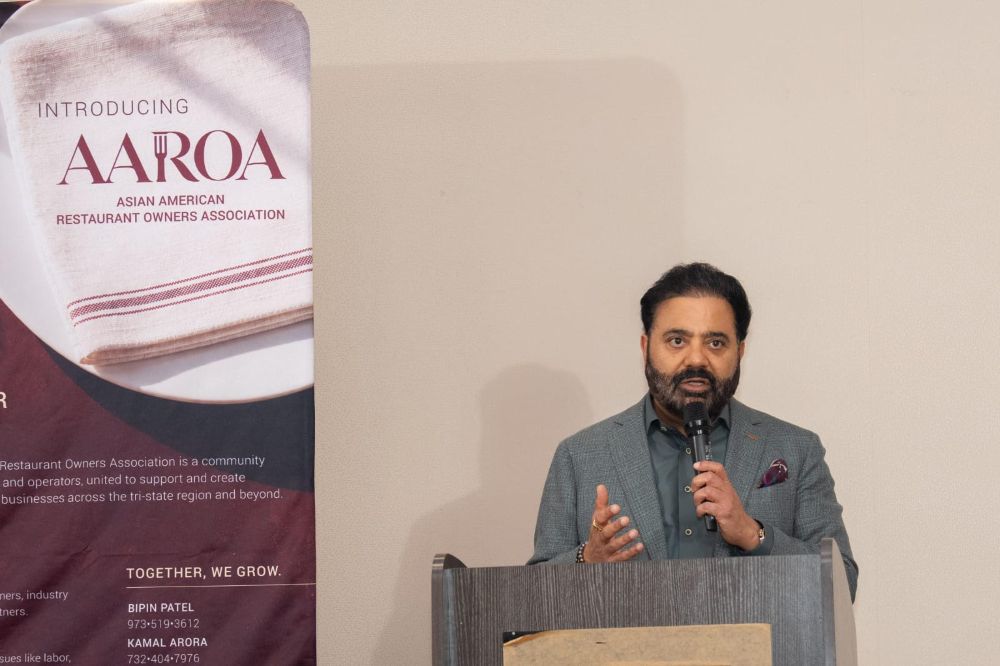
Kamal Arora said restaurants were the cultural and economic cornerstones of communities, but many operators were struggling to keep their businesses open.
“AAROA will ensure our voices reach municipal, state, and federal lawmakers, giving our business owners the institutional backing, legal guidance, and community solidarity necessary to thrive,” he said.
During the convention, participants also discussed the growing burden of predatory labour litigation and regulatory complexities, which frequently expose small business owners to costly legal challenges and online reputation vulnerabilities.
The founders highlighted persistent inflation, rising wholesale food expenses, commercial lease escalations and labour shortages as major pressures on restaurant operators, whose operating margins have been squeezed. They also pointed to corporate footprint reductions across national restaurant chains as evidence of the challenges facing the sector.
The inaugural convention concluded with attendees unanimously endorsing the association’s mission.
The leadership also announced the formation of specialised working committees to address key industry priorities, including government affairs and legislative advocacy, legal and compliance advisory, group purchasing and vendor relations, and operations and reputation management.
These committees will focus on engaging state and federal lawmakers on tax relief, fair commercial leasing frameworks and balanced labour regulations; providing compliance resources to help prevent frivolous employment litigation and safeguard labour standards; leveraging bulk purchasing power to lower ingredient, equipment and operating costs; and assisting restaurant operators in modernising guest experience strategies and navigating online review platforms.
AAROA has invited Asian American restaurant owners, multi-unit franchisees and allied hospitality professionals to join the association as it expands its regional footprint and seeks to establish a national standard for hospitality advocacy.
The Asian American Restaurant Owners Association (AAROA) is a non-profit trade association dedicated to representing, educating and advocating for independent restaurant operators and multi-unit franchisees across New Jersey, New York and nationwide.
Founded in 2026 by industry pioneers, the association provides legislative advocacy, educational resources, legal support frameworks and collective purchasing solutions to promote sustainable business growth in the hospitality industry.