








By Renu Mehta
Toronto
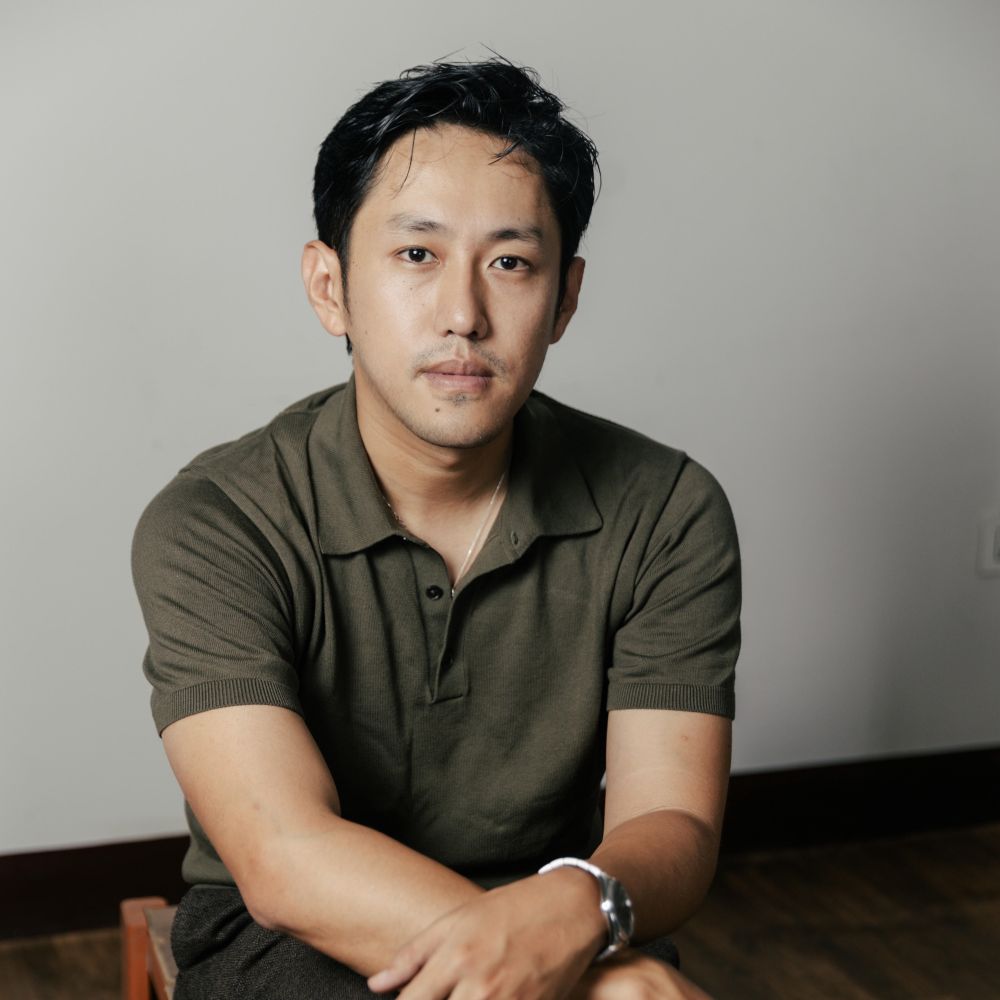
Theja Rio’s Angh won the Platform prize at the recent Toronto International Film Festival (TIFF) that took place from September 10-20, 2026.
“The Platform Prize goes to Angh for its refreshing perspective, strength of filmmaking, and deeply resonant portrait of a world. We praise the filmmaker’s vision, audacity and courage,” stated the Platform Jury at TIFF.
Speaking about the historic win, Rio said: “It is a very special moment for me and for everyone associated with the film. I am aware that it is rare for a debut film to receive this kind of recognition, and all I can say is that we made Angh with a lot of love for the place I come from, for my people and for our culture. At the heart of the film is the relationship between a father and son, but it is also about letting go, our relationship with home and the transient nature of life. These are some of the most universal emotions, and they belong to all of us. To see Angh connect with audiences beyond our own community has been deeply moving. I feel humbled and deeply grateful. I want to thank the jury for recognising our work and for giving us the opportunity to represent our country and our culture on two of the world’s most prestigious stages – TIFF’s Platform Competition and, soon, the Academy Awards as well.”
Angh follows Anghba, the last chief left behind with his sick wife and silent son. He refuses to abandon the life his people once lived in an empty Nagaland village. The film is set in the 60s near the Indo Burma border. Everything shifts when an American missionary arrives. As the mission grows, Anghba becomes more alone, trying to protect a way of life that’s slowly disappearing.
At the festival on September 15, 2026, Rio stated that the feature was born when he was writing the screenplay for his short film in 2018.
How was the film conceptualized?
It all began when I began to write a screenplay in 2018 for a short film and almost immediately realized that this was something that had feature material. The short film was too short to capture all the culture specificities and all the layers that we needed to explore, so from the beginning I knew that there was a much larger story that was there to be told.
How did you maintain a impartial perspective in writing your script?
When I was writing the script, I tried to maintain a very neutral perspective on the whole thing because these conversations are very complex and nuanced and there are so many pros and cons that you have to weigh. Normally, when I write about something, I try to write things that I am conflicted about rather than things I am sure about. I think the depth comes from that.
The heart of the film is the shifting relationship between Anghba and his son. Why did you take that approach?
There is something that is very tragic, very melancholic about generational gaps that I often observe. Our people in Nagaland have gone through very swift transition. The most authentic way, I felt, was to explore that through the lens of a father and son. The transition has happened so fast that we are dealing with not only with how swift it was but also dealing with the hangovers of that and the father and son dynamic emerged most organically.
Douglas Henshall, the actor, who plays the role of missionary in the film, talks about his role and says “With regards to the character, I think mostly when people are doing terrible things, the reason that they are terrible is because they think they are good. The character doesn’t think that he’s doing something badly; he thinks he’s helping. People do the worst things with a smile. It’s the arrogance of ignorance that’s the worst thing in the world.” What do you have to say about this?
Christianity has brought so much peace to the region and has given hope and faith to so many people. At the same time, we are also trying to balance on the other side as to what has been diminished with the arrival of that. I was quite aware and I didn’t necessarily make a conscious decision to be at the point of neutrality. You are trying to balance it with what you are raised with and at the same time with your consciousness. I guess that everything that happens around him goes into a generational gap where the father has a very conservative thought process and is unwilling to change and the boy being a boy to begin with and also having the scenario and the situation of a much more fruitful, much more enjoyable life presented to him. That comes very naturally and balances when he make his decisions.
Any other thoughts?
A lot of times we look back at history as may be just statistics and numbers. My idea was that you have been through journey with this man and seeing things from his perspective and then sort of looking back as a part of history. Of course there is so much to learn from all those excavations and remains that we find, but it’s very melancholic and tragic at the same time. There is also a tendency to completely dehumanise those people and look at it from an academic perspective. When I wrote it down, it was almost a bit of a self-reflection in that sense as to how it’s breaking the third wall.