








Administration is advancing more than 50,000 homes across 100 City sites
Our Bureau
New York, NY
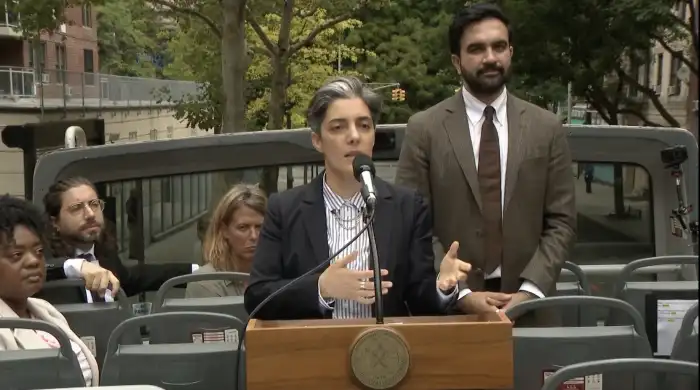
New York City Mayor Zohran Kwame Mamdani has unveiled an ambitious new initiative aimed at addressing the city’s chronic housing shortage by unlocking the potential of publicly owned land. The newly launched Land Inventory Fast Track (LIFT) Tracker provides the first comprehensive public database of city-owned sites earmarked for affordable housing, offering residents an unprecedented window into where and how the city plans to build thousands of new homes.
The interactive tracker maps more than 100 city-owned sites across all five boroughs that are expected to deliver over 50,000 affordable homes in the coming years. Beyond housing, the platform also identifies opportunities to integrate public amenities such as libraries, community facilities and neighbourhood services into redevelopment projects.
The initiative forms a key pillar of Mayor Mamdani’s broader “Block by Block” housing strategy, an ambitious blueprint that seeks to create 200,000 affordable homes over the next decade while preserving another 200,000 existing affordable units. The plan also includes major investments in public housing, stronger tenant protections and expanded opportunities for affordable homeownership.
For a city facing record rents, low vacancy rates and growing affordability pressures, the administration argues that public land represents one of the few tools directly under municipal control that can rapidly increase housing supply.
Mayor Mamdani said the LIFT Tracker is intended to improve transparency by allowing New Yorkers to monitor progress as publicly owned land is transformed into housing and community infrastructure. The administration has committed to maintaining a steady pipeline of projects by issuing requests for proposals (RFPs) for at least five new public sites every year.
Since taking office, the Mayor has moved quickly to reduce the lengthy approval timelines that have traditionally slowed affordable housing construction. On his first day in office, he signed Executive Order 4 establishing the LIFT Task Force, charged with identifying city-owned land suitable for residential development.
The administration has also completed New York City’s first Expedited Land Use Review Procedure (ELURP), a streamlined planning mechanism designed to accelerate approvals for affordable housing on public land. Combined with the newly introduced Neighborhood Builders Fast Track programme, officials estimate that pre-development timelines could be shortened by as much as two years.
Additional reforms under the Streamlining Procedures to Expedite Equitable Development (SPEED) initiative seek to simplify administrative processes that have long delayed construction projects. The administration has also worked with New York State lawmakers to modernise environmental review procedures, another major hurdle in large-scale urban development.
Alongside procedural reforms, the city has begun advancing a series of flagship projects.
Among them is “The Aurea” in Manhattan’s East Village, which will transform a former NYPD parking lot into approximately 131 affordable homes. In Queens, the city recently selected a development team for “The Orion,” a project that will deliver nearly 1,000 new homes along with community facilities on a long-vacant site in Hunters Point.
Brooklyn’s New Utrecht Library is also set for redevelopment, combining a new public library with 100 per cent affordable housing. Similar mixed-use projects are moving forward at the Grand Concourse and Bloomingdale library sites, reflecting the administration’s emphasis on combining housing with public services rather than treating them as separate investments.
The city has also issued an RFP for redevelopment of the “B-East” site in East Harlem, while the first three projects under the Neighborhood Builders Fast Track programme in Bedford-Stuyvesant, Jerome Avenue in the Bronx and St. Albans in Queens are expected to generate up to 300 affordable homes, including around 100 affordable homeownership opportunities.
Additional initiatives include plans to redevelop a municipal service centre in Bedford-Stuyvesant into a mixed-use project featuring entirely affordable housing alongside expanded social services. Financing has also been completed for the Sol on Park project, which will create 229 affordable senior homes on NYCHA’s Morris Houses campus.
The housing push is backed by significant financial commitments. The city’s recently adopted budget allocates a record USD 22 billion for affordable housing over five years, including nearly USD 5 billion in capital funding over the next two years. The administration is also investing USD 5.6 billion in the New York City Housing Authority (NYCHA), representing one of the largest municipal investments in public housing in decades.
Officials say the strategy extends beyond construction. The administration has revitalised the Mayor’s Office to Protect Tenants, introduced the Rental Ripoff reforms comprising 23 policy changes shaped by tenant feedback, and established the city’s first Mayor’s Office of Deed Theft Prevention to safeguard homeowners from property fraud.
Housing agencies have welcomed the initiative, arguing that the LIFT Tracker brings an unprecedented level of public accountability to affordable housing development. Planning officials believe the combination of greater transparency, faster approvals and coordinated inter-agency planning could significantly accelerate construction on publicly owned sites.