








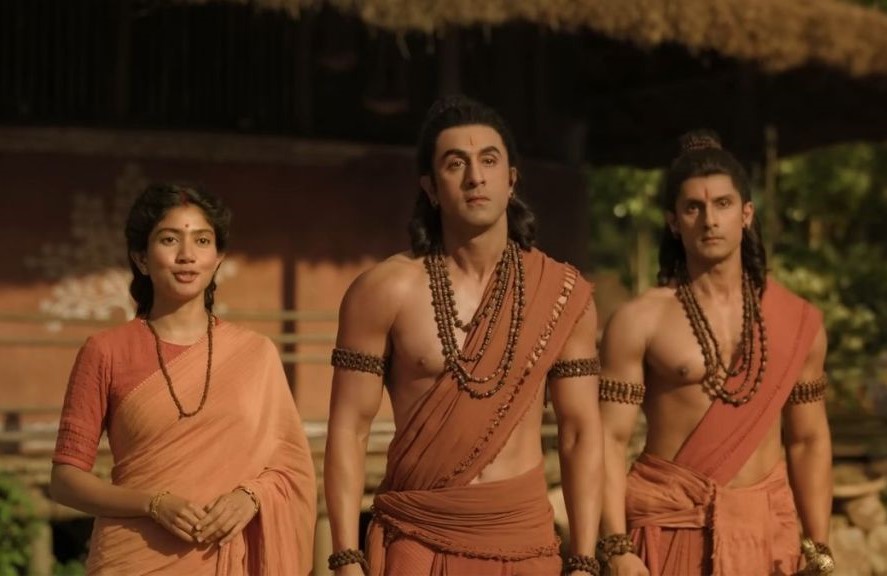
The spectacular first look at Nitesh Tiwari’s mythological epic has generated widespread excitement, with its visuals, music and performances raising expectations for one of Indian cinema’s most ambitious productions.
Our Bureau
New Delhi / Mumbai
The release of the official trailer of ‘Ramayana: Part 1’ has created an unprecedented wave of excitement across the Indian film industry and among audiences worldwide, reinforcing the belief that the upcoming mythological epic could redefine the scale of Indian filmmaking. Released globally during the auspicious Brahma Muhurat, the four-minute-and-nine-second trailer has become one of the most talked-about entertainment events of the year, drawing praise for its breathtaking visuals, emotionally rich storytelling, powerful performances and world-class production values.
Directed by Nitesh Tiwari and produced by Namit Malhotra, Ramayana has been under intense public scrutiny since its announcement because of the enormous responsibility of adapting one of India’s most revered epics. The trailer, however, appears to have met those expectations, offering a cinematic spectacle that blends faith, emotion and technology on an unprecedented scale.
A grand retelling
The trailer wastes little time in establishing its epic canvas.
It opens with Yash’s Ravana emerging from the shadows before ascending to his magnificent palace and proclaiming his dominion over the three realms. The sequence immediately establishes Ravana as a powerful and imposing antagonist rather than a one-dimensional villain.
As darkness spreads across the world, Lord Vishnu is reborn as Prince Rama. Ranbir Kapoor makes his first appearance as the prince of Ayodhya, introduced by King Dasharatha, portrayed by Arun Govil. The trailer then moves through key moments from the Ramayana, including Rama’s marriage to Sita, played by Sai Pallavi, before shifting to the emotional turning point where Rama willingly accepts fourteen years of exile alongside Lakshmana, portrayed by Ravie Dubey.
The narrative gradually builds towards the conflict between dharma and adharma, teasing Shurpanakha’s confrontation, Sita’s abduction and the impending battle that forms the climax of the first part of the saga.
The closing dialogue, where Rama declares that if Ravana rules the three realms, then all three shall witness his death, provides a powerful conclusion to the trailer and has quickly become one of its most discussed moments.
A new benchmark
Perhaps the trailer’s greatest achievement is its visual ambition.
The expansive recreation of Ayodhya and Lanka, the mythical landscapes, elaborate palaces and large-scale battle sequences reflect the expertise of Oscar-winning visual effects studio DNEG. Rather than relying solely on computer-generated imagery for spectacle, the visual effects appear integrated into the storytelling, enhancing both the grandeur and emotional impact of the epic.
The sweeping aerial shots, mythical creatures and detailed production design demonstrate an effort to place Indian mythology within the framework of modern blockbuster cinema while preserving its cultural essence.
Powerful music
Another major highlight is the film’s music.
The collaboration between legendary Indian composer A.R. Rahman and Academy Award-winning composer Hans Zimmer has generated considerable excitement ever since it was announced. The trailer demonstrates why.
Their score blends orchestral grandeur with devotional undertones, creating music that amplifies both the emotional and action-driven moments. The soundtrack lends spiritual depth to scenes depicting Rama’s journey while adding intensity to Ravana’s imposing presence and the climactic battle preparations.
The partnership between Rahman and Zimmer also symbolises the filmmakers’ ambition to create a film capable of appealing to audiences both in India and internationally.
Although the trailer offers only selected glimpses of the characters, the performances have already attracted significant praise.
Ranbir Kapoor’s restrained portrayal of Lord Rama has impressed viewers with its calmness, dignity and spiritual aura. Rather than emphasising aggression, the trailer presents Rama as compassionate, composed and morally resolute.
Yash’s Ravana has emerged as one of the trailer’s biggest talking points. His commanding screen presence, powerful dialogue delivery and regal appearance have generated widespread appreciation and heightened anticipation for the confrontation between Rama and Ravana.
Sai Pallavi appears graceful and serene as Sita, while Ravie Dubey portrays Lakshmana with quiet determination. Sunny Deol’s brief appearance as Hanuman has also sparked excitement, with audiences eager to see his larger role in the film.
A global vision
At the trailer launch in Delhi, Yash described Ramayana as “India’s dream,” saying everyone involved had worked with a single objective—to present the story of Lord Rama to a global audience while celebrating India’s cultural heritage.
That vision is evident throughout the trailer. While the production embraces cutting-edge technology and international filmmaking standards, it remains firmly rooted in the emotional and spiritual themes that have made the Ramayana timeless. Scheduled for release during Diwali 2026, with Ramayana: Part 2 following in Diwali 2027, the film already appears poised to become one of the biggest cinematic events in Indian history. If the overwhelming response to the trailer is any indication, audiences are ready to embrace a new interpretation of an ancient epic—one that seeks to honour tradition while presenting it on a scale never before attempted in Indian cinema.