








Our Bureau
New Delhi
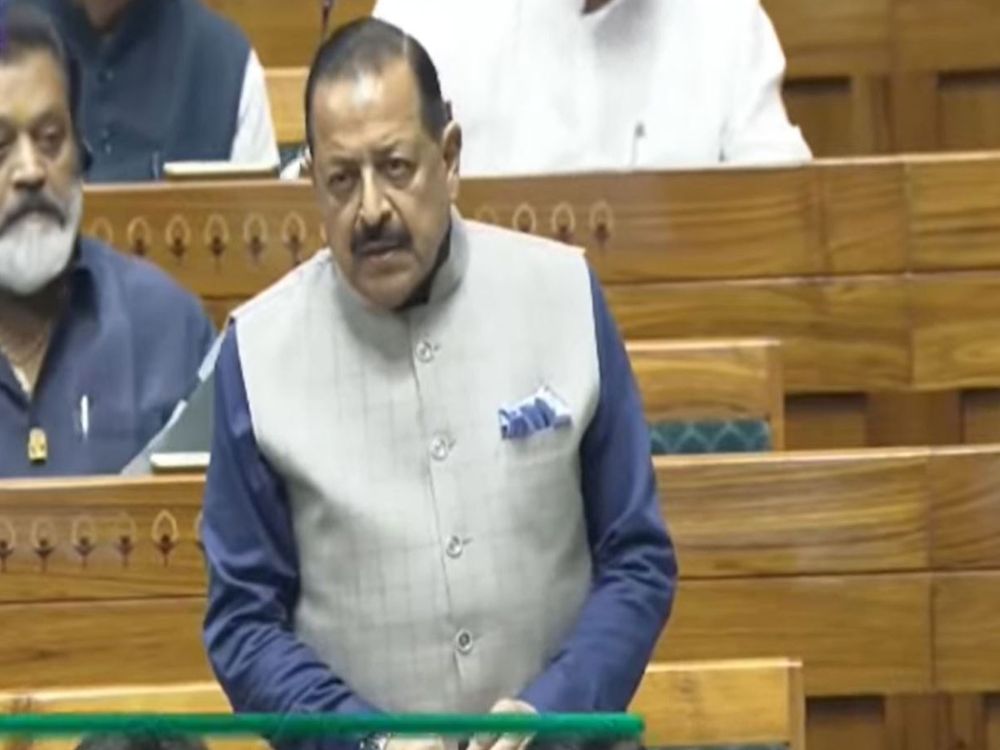
The Public Examinations (Prevention of Unfair Means) Amendment Bill, 2026 was introduced in the Lok Sabha on Monday by Union Minister of State for Personnel, Public Grievances and Pensions Jitendra Singh amid loud sloganeering by Opposition members, following which the House was adjourned till 2 pm.
The Bill, aimed at strengthening the legal framework against paper leaks and examination malpractices, was introduced even as Opposition MPs continued their protest over the alleged police action against students during the July 20 ‘Sansad Chalo’ demonstration.
However, the Opposition does not appear to be in a mood to cede any ground to the Government as they continued sloganeering and demanding action over the police action on protesting students.
Meanwhile, Parliamentary Affairs Minister Kiren Rijiju on Monday appealed to Congress and other opposition parties to participate in the debate on the Public Examinations (Prevention of Unfair Means) Amendment Bill, 2026, instead of disrupting Parliament, saying the proposed legislation seeks to address paper leaks and ensure stringent, time-bound punishment for those involved.
Addressing a press conference here today, Rijiju said the Bill was being brought in response to concerns raised by students across the country and urged the Opposition to hold a “thorough and open debate” on the legislation.
“Today, in light of the concerns raised by students across the country, a crucial bill is being introduced in the Lok Sabha to address issues such as paper leaks. However, Congress party and some Opposition members are refusing to discuss it; instead, they are creating a disturbance,” Rijiju said.
He appealed to the Opposition to consider the measures announced by Prime Minister Narendra Modi for examination reforms, including the constitution of a high-powered task force and the proposed legislation.
His remarks came amid continued Opposition protests in Parliament over the alleged use of force against students during the July 20 protest in Delhi over examination irregularities.
The proposed legislation introduces seven major amendments to the Public Examinations (Prevention of Unfair Means) Act, 2024, with the objective of ensuring time-bound investigations and trials, stricter punishment for offenders and a stronger enforcement mechanism.
Among the key provisions, State Governments and Union Territory Administrations will be empowered to designate Courts of Session as Special Fast-Track Courts for offences under the Act. Trials in such courts are proposed to be conducted on a day-to-day basis and completed within three months of filing of the chargesheet, while investigations are to be concluded within two months.
The amendments also empower the Central Government to constitute a Special Task Force to investigate examination-related offences and allow states to appoint Special Public Prosecutors for such cases. Enhanced prison terms, higher financial penalties and a time-bound appeal mechanism before Division Benches of High Courts have also been proposed.
The Bill comes amid nationwide protests over NEET-UG paper leaks and examination irregularities. A day after the resignation of Dharmendra Pradhan as Union Education Minister, Prime Minister Narendra Modi announced the formation of a high-powered task force headed by technology expert Nandan Nilekani to recommend comprehensive reforms aimed at improving the transparency and credibility of India’s examination system.