








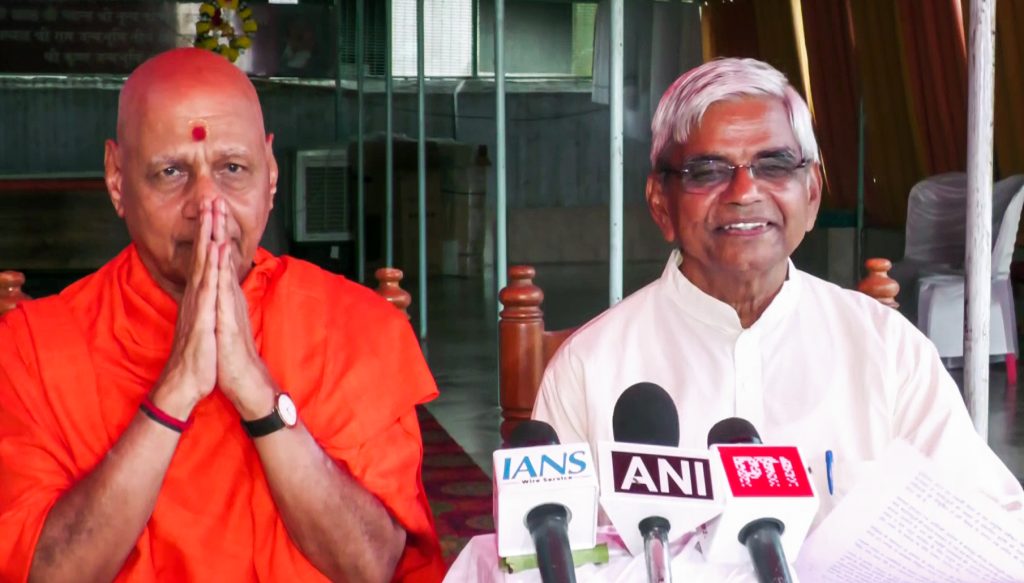
The alleged irregularities at the Ram Temple have prompted sweeping reforms, highlighting how transparency is important in managing the prominent temple
Our Bureau
Ayodhya / Lucknow
The alleged donation counting scandal at the Ram Janmabhoomi Temple in Ayodhya has become a defining test of institutional governance for one of India’s most significant religious institutions. While the Special Investigation Team (SIT) probe into the alleged irregularities is still underway, the Shri Ram Janmabhoomi Teerth Kshetra Trust has responded with an extensive package of administrative and religious reforms aimed at restoring public confidence and strengthening financial oversight.
The measures announced after the Trust’s latest meeting go well beyond immediate damage control. They represent an effort to institutionalize transparency in the management of a temple that attracts millions of devotees and handles enormous volumes of cash offerings every year.
The controversy erupted after allegations surfaced regarding irregularities in the counting of donations received at the Ram Temple. The matter quickly acquired national attention because of the temple’s symbolic significance as one of India’s most revered religious sites and because public donations constitute an essential source of its operations and future development.
Although the investigation remains incomplete, the Trust has sought to reassure devotees that reforms will proceed irrespective of the final outcome. It has emphasized that no conclusions should be drawn until the SIT submits its report and due legal process is completed, while simultaneously introducing safeguards designed to prevent similar incidents in the future.
Among the most significant changes is the overhaul of the donation counting process. The Trust has decided that an Assistant General Manager of Indian Bank, along with a representative of Swarna Rajat Finance, will remain present during cash counting. Live CCTV monitoring of the entire counting process will also be introduced, creating continuous surveillance and reducing opportunities for manipulation.
These reforms reflect a broader shift towards professional financial management. Large religious institutions today often manage financial resources comparable to those of sizeable charitable organizations, making robust governance mechanisms increasingly necessary. The introduction of independent banking oversight and real-time surveillance aligns temple administration with modern standards of financial accountability.
The Trust has also initiated a review of its existing banking arrangements after expressing concern over lapses in standard operating procedures. Significantly, several seers attending the meeting questioned the role of the State Bank of India because personnel engaged by the bank in donation counting were among those accused in the case. As a result, the Trust indicated that its current arrangement with SBI for counting and depositing donations could be reconsidered.
Equally important are the institutional reforms beyond financial oversight. Recognizing the need for greater transparency in public communication, the Trust has decided to appoint an official spokesperson who will provide timely and authoritative information regarding temple affairs. This move appears aimed at reducing speculation and ensuring that official information reaches devotees directly during periods of controversy.
The Trust has simultaneously moved to strengthen religious governance by reconstituting its Puja-Anushthan (Religious) Committee. The new committee, headed by Swami Govind Dev Giri and comprising prominent seers from different traditions, has been tasked with preserving the sanctity and traditional practices associated with temple rituals. This reflects an attempt to ensure that administrative reforms do not come at the expense of the temple’s religious character.
Leadership restructuring forms another important component of the reform process. The selection of a new Chief Executive Officer has entered its final phase, with more than 5,200 applications reportedly received from across the country. The Trust has also approved a secretary-level administrative appointment to strengthen day-to-day management, although final decisions on the CEO and General Secretary are expected only at its next meeting in September.
These developments follow earlier leadership changes triggered by the controversy. The resignations of General Secretary Champat Rai and Trustee Anil Mishra were accepted earlier this month, with retired Indian Forest Service officer Krishna Mohan assuming charge as Acting General Secretary. The leadership transition underscores the Trust’s willingness to initiate organizational changes while investigations continue.
The reforms also come against the backdrop of judicial scrutiny. The Supreme Court has asked the Uttar Pradesh government to consider reconstituting the SIT under the leadership of a senior IPS officer experienced in financial investigations. According to the preliminary investigation, CCTV footage reportedly captured around 70 suspicious incidents, while investigators also identified systemic weaknesses such as inadequate frisking, poor control over personal belongings and deficiencies in cash-counting procedures.
For the Ram Janmabhoomi Trust, the challenge extends beyond resolving an individual case of alleged misconduct. The temple occupies a unique place in India’s religious and political landscape, making its governance a matter of national public interest. Every administrative decision carries implications not only for financial accountability but also for public confidence in institutions entrusted with managing sacred spaces.