








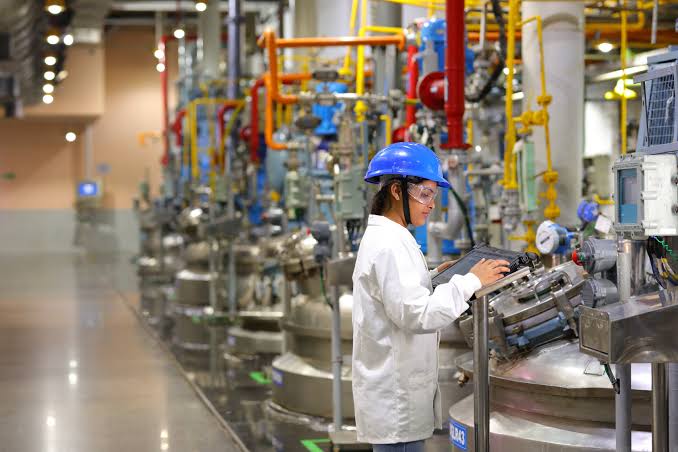
While the proposed US tariffs have rattled investors, industry leaders believe India’s cost advantage, established manufacturing base and global role in generic medicines will limit the long-term impact.
Our Bureau
Washington, DC / New Delhi / Mumbai
US President Donald Trump’s proposal to impose steep tariffs on imported generic medicines has injected fresh uncertainty into one of India’s most important export sectors, prompting concerns over future market access while also highlighting the structural strengths that have made Indian pharmaceutical companies indispensable to the American healthcare system.
The announcement, which envisages zero tariffs for two years followed by duties of 100 per cent in the third year and 200 per cent from the fourth year, has triggered an immediate market reaction, with shares of leading Indian drugmakers coming under pressure. Yet, industry executives and analysts argue that the eventual impact may prove less severe than initial investor sentiment suggests, owing to the practical challenges of shifting generic drug manufacturing to the United States.
The proposed tariffs form part of the Trump administration’s broader strategy to revive domestic manufacturing by encouraging companies to establish production facilities in the US. However, pharmaceuticals present a unique challenge because of the highly regulated nature of the industry, long approval timelines and the economics of generic medicine production.
For India, the stakes are significant. The United States is the largest overseas market for Indian pharmaceutical exports, with Indian companies supplying a substantial share of generic medicines consumed by American patients. The industry has earned global recognition as the “pharmacy of the world” by producing affordable medicines at scale while maintaining regulatory compliance with international standards.
Industry leaders believe the proposed timeline itself raises questions about feasibility. Pharmexcil Chairman Namit Joshi argued that building a complete generic pharmaceutical ecosystem requires at least four to five years, making the proposed two-year transition period unrealistic. He added that manufacturers operating on already thin margins would find it nearly impossible to absorb tariffs of 100-200 per cent, leaving companies with little choice but to pass on costs to consumers or withdraw from segments of the market.
This observation highlights one of the central dilemmas in the tariff proposal. Generic medicines operate on extremely competitive pricing models where profit margins are significantly lower than patented drugs. Unlike high-value innovative medicines, generic manufacturers have limited pricing flexibility, making steep tariffs economically difficult to absorb.
At the same time, the industry’s integrated relationship with the US pharmaceutical ecosystem provides an important buffer. According to the Indian Pharmaceutical Alliance (IPA), Indian pharmaceutical companies already operate more than 40 manufacturing facilities across the United States, supporting American employment in manufacturing, research and supply chains. The organisation has indicated it will continue engaging with the US administration to strengthen bilateral cooperation in healthcare security.
Financial analysts broadly share this assessment. Motilal Oswal Financial Services believes the proposed tariff regime is unlikely to materially alter the competitive position of Indian generic manufacturers. The firm notes that around 90 per cent of generic prescriptions in the United States are imported, implying that tariffs would affect suppliers globally rather than targeting India alone. Moreover, India’s manufacturing cost advantage of 40-60 per cent over US production would remain significant even after tariffs are imposed.
Another practical consideration is regulatory complexity. Establishing pharmaceutical manufacturing facilities involves not only construction but also lengthy inspections, product approvals and regulatory clearances. Analysts estimate that even after building a new plant, companies would require an additional 12-15 months before commercial production could begin, limiting the speed with which domestic US manufacturing capacity can replace imports.
Equally important is the uncertainty surrounding implementation. Market analysts point out that the most significant tariff increases would begin only in 2028 and 2029, extending beyond much of the current political cycle in the United States. This creates room for negotiations, policy modifications or even changes in implementation depending on future administrations.
Meanwhile, India’s domestic pharmaceutical market continues to provide a measure of resilience. According to an Equirus Securities report, the Indian Pharmaceutical Market recorded its strongest monthly performance in more than two years in June, with 16 per cent year-on-year growth and broad-based expansion across major therapy segments. Companies focused on chronic therapies and new product launches have continued to outperform, indicating that domestic demand remains robust even as global trade uncertainties increase.
Ultimately, the debate over Trump’s tariff proposal is about more than trade policy. It reflects competing priorities between reshoring manufacturing and maintaining affordable healthcare. For India, whose pharmaceutical industry has built its global reputation on supplying high-quality, low-cost medicines, the coming years will test its ability to adapt to changing trade policies while preserving its competitive advantage in one of the world’s most important healthcare markets.