








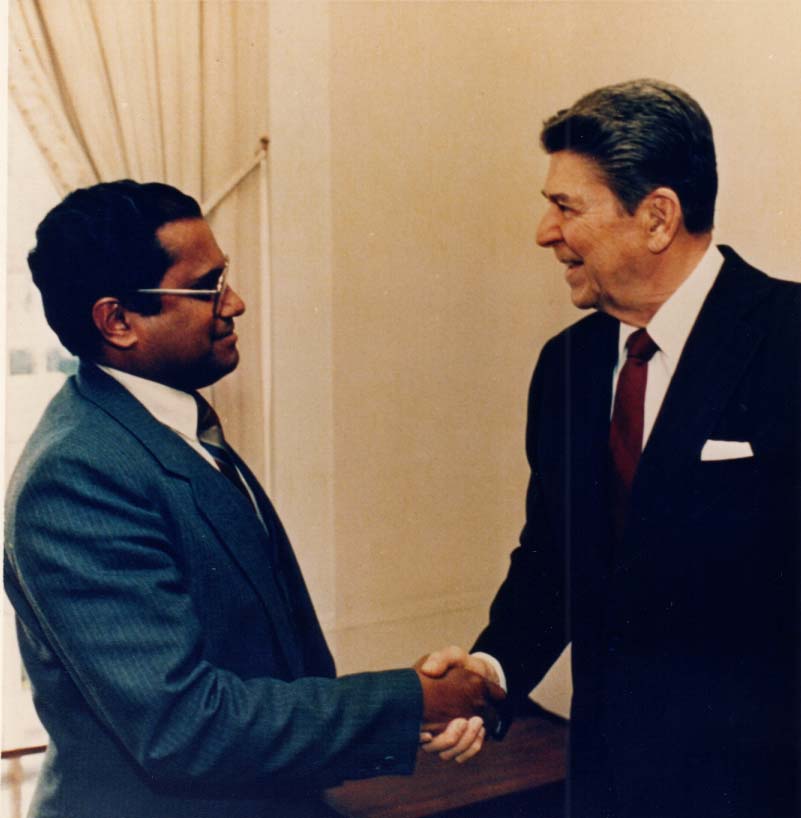
Dr. Thomas Abraham
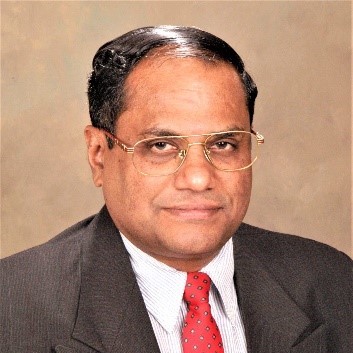
When I left India in 1973 to pursue graduate studies in the United States, I carried with me one suitcase, an engineering education, $75 in my pocket and a dream. Like thousands of young Indians of my generation, I came not in search of wealth but in pursuit of knowledge, opportunity, and the chance to contribute to society.
Looking back over more than five decades, I realize that my own journey mirrors the larger story of Indian Americans—students who became scientists, engineers who became entrepreneurs, and immigrants who helped strengthen both America and India while building vibrant communities across the world.
After graduating from Malaviya Regional Engineering College (now Malaviya National Institute of Technology) in Jaipur, Rajasthan, I briefly served as a lecturer at my alma mater before working as a metallurgist in Jodhpur. Although these were rewarding positions, I aspired to pursue advanced education and research in the United States.
That opportunity came in early 1973 when I received a fellowship to study for my Master’s and Ph.D. at the Henry Krumb School of Mines of Columbia University in New York City, one of America’s oldest engineering schools.
The timing was significant. Following the passage of the 1965 Immigration and Nationality Act, America opened its doors to talented professionals from around the world based on merit rather than national origin. At the same time, many American universities were experiencing shortages of graduate students in engineering and the applied sciences. Indian students answered that call in large numbers.
Nearly half the graduate students in my department at Columbia were from India. Similar scenes could be found at engineering schools across America. That generation of Indian students would go on to make important contributions in science, engineering, medicine, higher education, information technology, entrepreneurship, and public service. We were fortunate to become part of one of the greatest periods of technological innovation in American history.
My own professional career began as a Research Metallurgist at the University of Denver and later at Brookhaven National Laboratory, where I worked on advanced materials research. I subsequently joined Business Communications Company (BCC), where I advanced from Director of the Advanced Materials Group to Vice President.
My work focused on advanced ceramics, composite materials, and emerging technologies. During the 1990s, I recognized the enormous commercial potential of nanomaterials and nanotechnology long before the field entered mainstream discussion. In 1998, I organized one of the world’s first international conferences and exhibitions dedicated to the commercialization of nanotechnology in New York City. These annual conferences brought together scientists, entrepreneurs, investors, and industry leaders from around the world and helped accelerate the transition of nanotechnology from research laboratories to commercial applications.
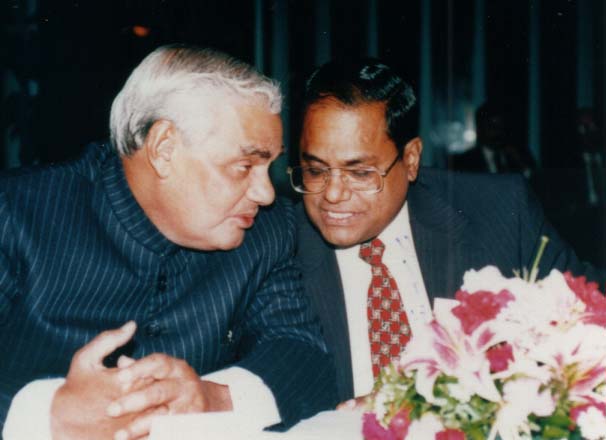
Driven by an entrepreneurial spirit, I later founded Innovative Research and Products (IRAP), a technology research, consulting, publishing, and conference company. Building a company from the ground up fulfilled a lifelong dream and gave me the opportunity to work with innovators, entrepreneurs, Fortune 500 companies, research laboratories, and governments on emerging technologies.
While my professional career provided great satisfaction, I always believed that success carries with it a responsibility to serve others.
Soon after arriving in New York, I became involved in the Indian American community. At that time, the Indian diaspora was still relatively small, and there were few organizations representing the interests of immigrants from India. I felt that as our community grew, we needed institutions that could preserve our cultural heritage, advocate for our civil rights, encourage civic participation, and help future generations succeed.
Over the past five decades, I have had the privilege of helping establish or lead several organizations that have become important institutions within the Indian American community. These include the Federation of Indian Associations (FIA), which today organizes one of the world’s largest India Day Parades outside India; the National Federation of Indian American Associations (NFIA); the Indian American Kerala Cultural and Civic Center; the South Asian Council for Social Services (SACSS); the National Indian American Association for Senior Citizens (NIAASC); and the Jagdish Bhagwati Chair for Indian Political Economy at Columbia University.
Perhaps the most significant milestone came in 1989 when I helped organize the First Global Convention of People of Indian Origin in New York. That historic gathering led to the establishment of the Global Organization of People of Indian Origin (GOPIO), the first worldwide organization representing the Indian diaspora.
Over the years, GOPIO has grown into a global network with chapters in numerous countries, promoting community development, youth leadership, educational initiatives, women’s empowerment, entrepreneurship, civil rights, humanitarian service, and stronger ties between India and the countries where people of Indian origin have made their homes.
One initiative particularly close to my heart has been mentoring young people. Whether helping newly arrived students, encouraging young professionals, creating networking opportunities, or promoting leadership development, I have always believed that investing in the next generation is among the most meaningful ways to give back.
As both a scientist and community leader, I have witnessed extraordinary changes over the past fifty years. I arrived in America during the era of mainframe computers, witnessed the personal computer revolution, the internet age, biotechnology, nanotechnology, artificial intelligence, and today’s digital transformation. Throughout these changes, one principle has remained constant: America continues to reward innovation, hard work, creativity, and perseverance.
The success of Indian Americans is not an accident. It reflects the convergence of America’s openness to talent and the strong educational foundation and work ethic that many immigrants bring with them. Together, these qualities have enabled Indian Americans to make significant contributions in technology, medicine, academia, business, public service, entrepreneurship, and government. Today, they are among the most highly educated and economically successful communities in the United States, while remaining deeply committed to family, education, philanthropy, and civic engagement.
As the United States celebrates its 250th anniversary, I look back with profound gratitude. America gave a young engineering graduate from India the opportunity to become a scientist, entrepreneur, author, technology analyst, institution builder, and community leader. It allowed me not only to fulfill my own aspirations but also to help create opportunities for countless others.
My story is only one among millions of immigrant journeys. Yet it reflects the enduring promise of the American Dream—that talent should matter more than birthplace, that opportunity should reward hard work, and that success finds its highest purpose when it is used in service of others.
That, to me, is the true meaning of achieving the American Dream.