








By George Abraham

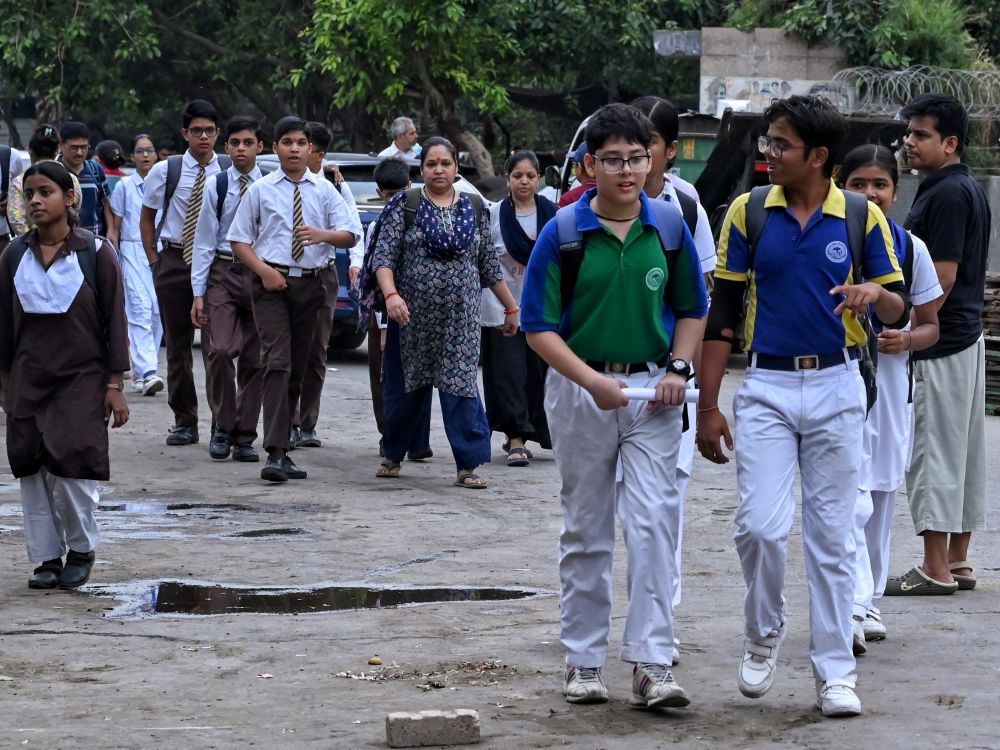
Something is happening in India that deserves our serious attention. Young people who were expected to concentrate on their education, find employment, and build a future are increasingly taking to the streets. They are called Generation Z, or simply Gen Z. But why are they protesting? What happened to their dreams and expectations? What has been brewing beneath the surface over the last decade that has brought their frustrations to the surface?
These protests did not emerge overnight. They are the result of years of disappointment, broken promises, and a growing realization that the future they were promised may never materialize. This generation grew up hearing that India was becoming an economic superpower and would soon be the world’s third-largest economy. Yet, when they finish their education and look for a job, many find the doors closed. They see enormous wealth accumulating in a few hands while millions struggle to make ends meet.
Unlike previous generations, these young people are connected to the world through the internet and social media. They know how their counterparts in America, Europe, and China live and work. They see opportunities elsewhere and wonder why their own country cannot offer them similar prospects. They are no longer satisfied with patriotic slogans or grand announcements about GDP growth. They want jobs, fairness, and a government that listens. Is that too much to ask?
The unemployment figures tell a disturbing story. According to India’s Periodic Labor Force Survey, unemployment among young people aged 15–29 stood at 15.3 percent during July–September 2026, using the current weekly status measure. Among urban youth, it was 18.9 percent, and among young urban women, it reached 26.1 percent. The International Labor Organization’s India Employment Report 2024 also drew attention to the disproportionate unemployment among educated youth.
We have encouraged our children to pursue higher education, often at enormous financial sacrifice, but have failed to create enough opportunities for them. Parents borrow money, sell property, and spend their savings to educate their children, believing that a degree will open the door to a better future. Instead, many graduates find themselves competing for a handful of jobs or accepting employment far below their qualifications.
What does an impressive GDP growth rate mean to these young people? What difference does a booming stock market make to someone who cannot find a decent job? Economic progress cannot be measured merely by the wealth accumulated at the top. Its real meaning lies in the opportunities it creates for ordinary citizens.
For decades, foreign employment provided an escape route. Millions of Indians built successful careers in America, Canada, Britain, Australia, and elsewhere. Their achievements demonstrated what Indians could accomplish when given the right opportunities. However, immigration restrictions, tighter student visa policies, and changing labor markets are narrowing those avenues. India can no longer expect other countries to solve its unemployment problem. We must create opportunities at home, or our much-celebrated demographic dividend could become a demographic liability.
Young Indians are also questioning whether merit and hard work are sufficient to succeed. The NEET examination controversy in 2024 was particularly damaging. The Supreme Court acknowledged question paper leaks in certain locations, but found insufficient evidence to cancel the entire examination. Imagine the plight of a student from a low-income family who spends years preparing for an examination, only to discover that its integrity has been compromised. When students begin to believe that money and influence can outweigh merit, the damage goes far beyond one examination.
Meanwhile, India had approximately 94,000 fewer government schools in 2024–25 than in 2014–15. Some were consolidated because of declining enrollment, but the larger question remains whether children in rural and disadvantaged communities have convenient access to quality education. A government that speaks endlessly about technological progress must ensure that poverty does not determine a child’s educational future.
India has a history of student movements influencing its political direction. The protests associated with Jayaprakash Narayan in the 1970s became part of a larger struggle over corruption and democratic accountability. Today’s Gen Z protests deserve to be viewed against that background. Whether the issue is unemployment, examination irregularities, or electoral integrity, young Indians are increasingly demanding answers.
What is particularly disturbing is the reported treatment of protesters by the authorities. Human rights organizations have documented allegations of beatings, arbitrary detentions, and restrictions on peaceful demonstrations. Such allegations demand investigation and accountability. Was it not peaceful protest that helped India secure its independence? Gandhi taught the world that nonviolent resistance could challenge even the mightiest establishment. Freedom of expression and peaceful assembly are constitutional rights, not favors granted by those in power. A secular democracy cannot flourish if peaceful dissent is treated as disloyalty.
There is also the question of economic concentration. Enormous influence rests with a relatively small number of business conglomerates, including those led by Ambani and Adani. Large corporations have an important role in development, but fair competition and transparent access to public resources are equally essential. At the political level, considerable authority is concentrated around Prime Minister Modi and Home Minister Amit Shah, both from Gujarat. The concern is not their regional origin but whether political and economic decision-making remains sufficiently accountable.
History reminds us of the dangers of concentrating political and economic power. Colonial rule was characterized by decisions made by a few affecting the lives of millions. Independent India is fundamentally different, but the lesson about accountability remains relevant. Southern states, including Kerala, Tamil Nadu, Telangana and Karnataka, have also raised legitimate questions about the fairness of central financial allocations. Poorer states deserve assistance, but federalism cannot flourish if states perceive development funding as politically discriminatory.
However, criticism alone will not solve India’s problems. We need a fundamental change in economic thinking. India must move beyond supplying inexpensive labor and technology services to become a nation that invents, develops, manufactures, and exports world-class products. We possess the intelligence and entrepreneurial spirit. What we lack is an ecosystem that effectively connects education, research, investment, innovation, and manufacturing.
Consider our information technology industry. India proudly calls itself an IT superpower, and our software professionals have indeed achieved worldwide recognition. But much of our industry’s success has historically depended on outsourcing and providing services to foreign corporations. Although the industry has advanced considerably beyond traditional body shopping, why have we not created more globally dominant technology products of our own?
The artificial intelligence revolution illustrates the problem. The United States and China are leading the development of the most advanced AI systems. India has talented researchers and promising startups but remains behind in frontier AI development. For a country claiming technological leadership, this should be a wake-up call. We have supplied engineers to some of the world’s finest technology companies. Why can’t we create similar enterprises in India?
The transformation must begin with our universities. Too many remain institutions for awarding degrees rather than centers of original research. Students are trained to pass examinations and secure jobs instead of being encouraged to experiment, innovate, and develop new technologies. Graduate schools should establish research laboratories working closely with industry. Professors should receive incentives to pursue ambitious projects, secure patents, and help students establish innovative enterprises.
There is one initiative I would particularly advocate. Thousands of Indian-origin professors, scientists, and engineers have spent their careers in leading institutions across America, Europe, and other developed countries. Many are retired or approaching retirement. Why not invite them back as visiting professors, research mentors, and advisers? Their experience could help establish laboratories, strengthen graduate programs, and develop partnerships with international institutions. Distinguished foreign researchers should also be welcomed.
Having spent much of my professional life in information technology, I have seen that technological advancement depends not merely on intelligent people but on institutions that encourage creativity, experimentation, and collaboration. India does not lack talent. It needs an environment where talent can flourish.
Research funding must become a national priority. India’s expenditure on research and development remains below one percent of GDP. We should establish a long-term goal of increasing it toward two percent, drawing upon both public and private investment. Universities and startups should compete for research funding through transparent, independent evaluation.
We must also examine how our banking system allocates capital. Major corporate loan defaults and non-performing assets have periodically imposed substantial costs on financial institutions. Although banking conditions have improved, resources lost through reckless lending and inadequate accountability represent opportunities that could have supported scientific research, new industries, and employment. Public money should not become easy financing for influential borrowers while genuine entrepreneurs struggle to obtain loans.
India needs a venture capital ecosystem willing to support young innovators. A graduate with a promising invention should have access to research facilities, experienced mentors, investment capital, and opportunities to bring products to market. We should establish innovation and manufacturing clusters around universities, focusing on artificial intelligence, robotics, biotechnology, medical equipment, advanced electronics, and renewable energy.
Manufacturing must occupy a central place in this strategy. We cannot become a major economic power merely by providing services to the rest of the world. We must produce world-class products for export. Small and medium-sized enterprises should receive particular attention because they can create employment across regions. Technical education, apprenticeships, and vocational training must prepare young people for these opportunities.
Ultimately, Gen Z is not asking for charity. These young Indians want their education to be valuable, examinations to be fair, employment to be based on merit, and opportunities to innovate and prosper. Above all, they want their voices heard without fear.
The Modi government has emphasized infrastructure development, digitalization, and economic growth, and some initiatives have delivered measurable results. Yet continuing unemployment among educated young people demonstrates that growth alone is insufficient. The success of economic policy must also be measured by the quality and availability of jobs it creates.
India does not lack intelligent minds. It lacks sufficient opportunities to utilize them. It does not lack hardworking young people. It needs an economic system that rewards their hard work. And it certainly does not lack patriotism. What young Indians need is a country where patriotism is accompanied by opportunity, justice, and freedom.
India’s future cannot be left in the hands of a few billionaires or a handful of politicians wielding enormous power in New Delhi. What matters is whether an ordinary young man or woman, regardless of family background or economic status, can get a decent education, find a good job, and build a better life. We have no shortage of talent or ambition. What we lack is a system that gives everyone a fair chance to succeed. After all, what is the point of becoming the world’s third-largest economy if millions of our young people are left wondering what the future holds for them?
Perhaps the most important question is not why Gen Z has begun protesting, but why those in power failed to recognize their frustrations for so long. India’s Gen Z may well be the generation that forces the country to reconsider what real progress means. And that could become its greatest contribution to the nation’s future.
(writer is a former Chief Technology Officer at the United Nations and Vice-Chairman of the Indian Overseas Congress, USA)