








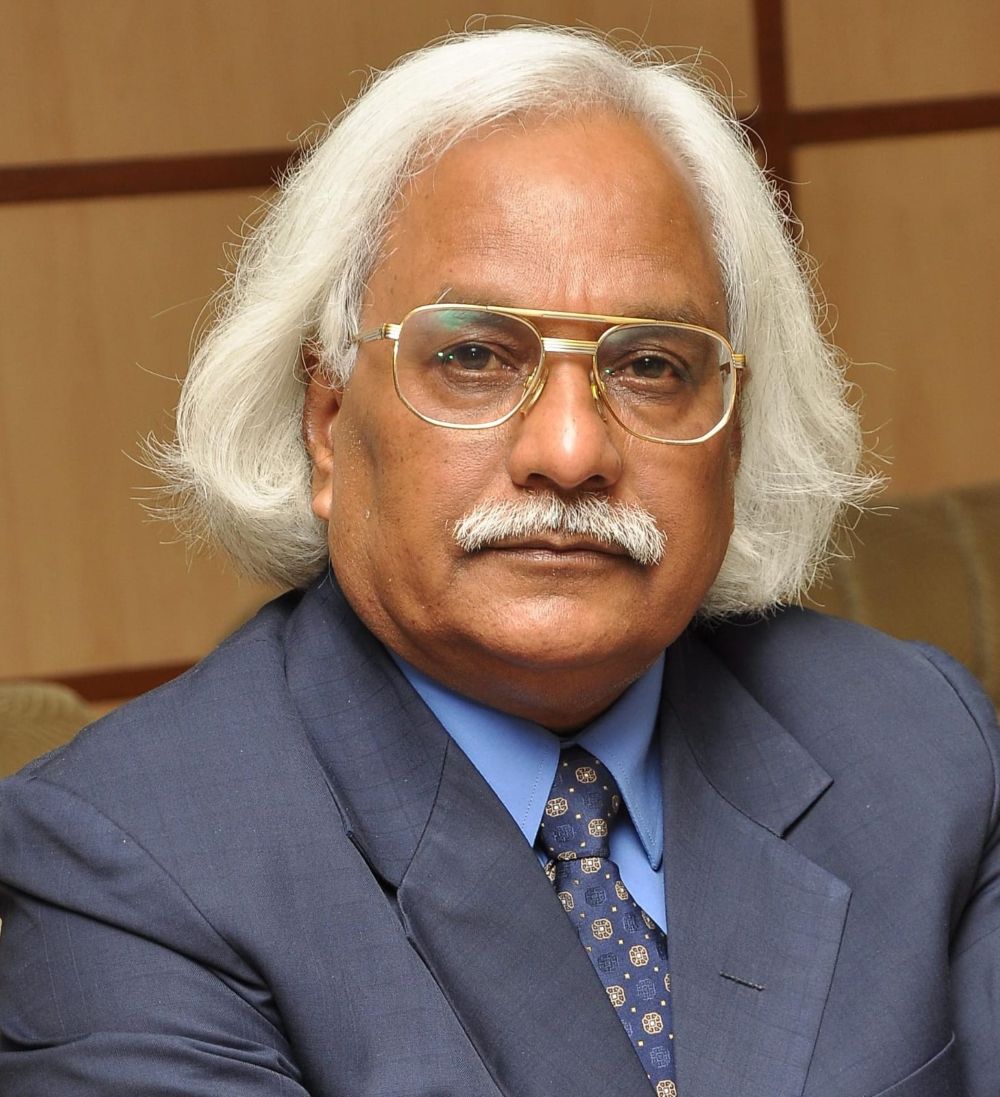
By Prof. P. B. Sharma
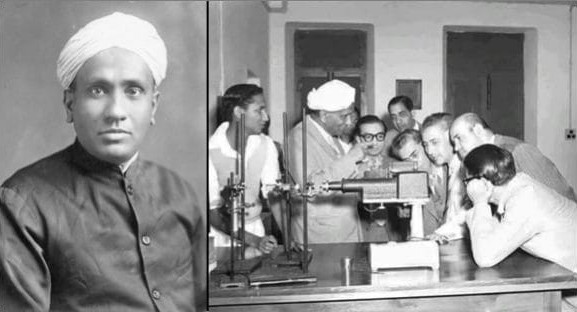
Come October each year, the global scientific community and people at large applaud the announcement of the Nobel Prize awards that recognize the eminence of scientists whose epoch-making discoveries have laid the foundations for a transformative future. These prizes are a class apart. They honour the unmatched power of the human intellect pursued with devotion, humility and a selfless intent to benefit humanity and serve society with distinction. India produced one such scientist of unmatched eminence in Sir C.V. Raman, who received the Nobel Prize in Physics in 1930 for the discovery that the world rejoices as the “Raman Effect.” Even today, he remains the only scientist to have won a Nobel Prize in the natural sciences while conducting his pioneering research on Indian soil. It is no exaggeration to say that Sir C.V. Raman and Dr Albert Einstein continue to shine as two of the brightest stars in the universe of science, inspiring generations to come.
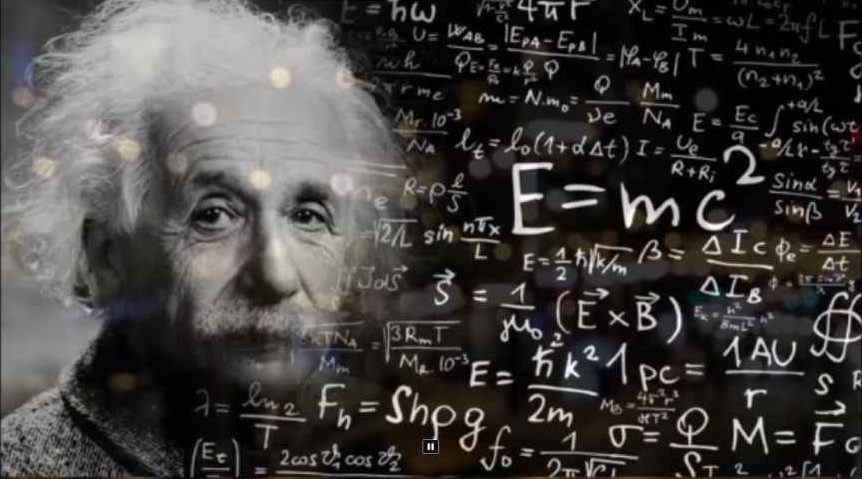
Both Raman and Einstein shared a common quest: the desire to decipher the mysteries of nature. Einstein ventured into the foundations of space, time and mass-energy equivalence; Raman explored the nature of light and used light scattering to probe the molecular and chemical structure of matter. Neither pursued science with the ambition of winning a Nobel Prize. Instead, they pursued truth, beauty and the service of humanity. Nobel recognition followed as a natural consequence of the originality, relevance and enduring impact of their discoveries.
Yet, every October, a quiet introspection echoes through India’s academic and scientific corridors: Why has a nation of 1.4 billion people celebrated for its rich intellectual heritage, mathematical genius, and rapid technological advancement not produced another Nobel laureate in basic sciences working on Indian soil for nearly a century?
The Silence After Raman
The question is not merely about receiving awards, it is fundamentally about the depth, freedom and direction of our scientific culture. The Nobel Prizes in Physics, Chemistry and Physiology or Medicine are largely conferred for fundamental discoveries that redefine our understanding of natural laws and open new horizons for human welfare.
In the post-independence era, India rightly focused its creative energies on nation-building, developing indigenous capabilities in space research, defence, nuclear energy, industrial infrastructure, agriculture, information technology and pharmaceuticals. These achievements have earned the nation legitimate pride. India’s robust foundation of heavy industries, ISRO’s planetary missions, India’s digital transformation and the global strength of its IT and pharmaceutical industry stand as lasting testimonies to Indian engineering and scientific capability of which every Indian and I am sure the global humanity is proud of.
However, in the pursuit of immediate national priorities and accelerated expansion of higher education, curiosity-driven, fundamental research in the universities gradually receded into the background. Research for career prospects and publications became more of a phenomenon leaving little or no room for fundamental research with passion and for global impact. Our entire planning of higher education and research in the universities revolved around Gross Enrolment Ratio and capacity building for research. The love for scientific research with a relentless quest for discovering the truth and unveiling the mysteries of creation and the universe got no rooms even in the Ivy league intuitions of eminence in a nation of thousand plus universities that India is today. Surely, you get what you plan for and what you implement. India achieved great acclaim for its alumni in corporates of eminence worldwide but no Nobel Laureate from India and its universities after Sir CV Raman. A nation cannot harvest epoch-making discoveries if its scientific ecosystem remains predominantly oriented toward short-term technological outcomes rather than deep, exploratory and passionate research for the discovery of truth, that the Nobel Prize requires from scientists of great eminence.
The Constraints on Discovery in India, the Bharat
Grand discoveries require more than brilliance, they demand sustained investment, world-class infrastructure, intellectual freedom and an institutional culture that protects a researcher’s right to question, explore and fail. Some of these constraints are:
- Research Spending and Investment: India’s Gross Expenditure on Research and Development (GERD) has remained modest for decades, historically hovering around 0.6% to 0.65% of GDP far below the 2.5% to 3.5% sustained by leading scientific powerhouses such as the United States, Germany, South Korea and China. Basic science requires advanced instrumentation, uninterrupted funding, freedom from procedural delays and long-term security for risk-heavy research projects whose fruits may take decades to mature. This becomes all the more important, now that we are in the age of rapid economic gains and a new era of returns of investments.
- Bureaucratic Governance vs. Scientific Autonomy: Scientific breakthroughs thrive in an atmosphere of intellectual freedom and operational autonomy. Sir C. V. Raman worked with modest equipment at the Indian Association for the Cultivation of Science (IACS) in Kolkata, driven purely by passion and unburdened by administrative bottlenecks. He required no support of funding for his research that was driven by his ingenuity and his passion to decode the secret of light and its interactions. Today, researchers often spend disproportionate time and energy navigating hierarchical approvals, procurement procedures, and bureaucratic red tape. When a scientist’s mind is burdened by paperwork, the momentum of discovery inevitably slows down and if not boosted in time by the research leadership around, it can derail even a highly passionate scientist.
- Education and the Spirit of Inquiry: The seeds of scientific temperament are sown in the classroom and in the keenness of performance of laboratory experiments. An educational system that primarily rewards examination performance, high marks and memorization may produce competent professionals, but it rarely nurtures the audacity to challenge established paradigms. Frontier science demands curiosity, imagination, interdisciplinary thinking and the resilience to fail repeatedly before striking gold. Our schools and universities must move beyond exam-centric learning toward inquiry-based education, where questioning is welcomed and the joy of discovery is restored. In Amity University where I am, we are paying a great attention not only to attract the best talent in science and engineering but also ensuring that they are inspired to think innovatively and utilize their ingenuity and passion to pursue frontal areas of science without bureaucratic hurdles in securing grants and implementing their passionate scientific work.
- The Structural Divide: Over the decades, elite research institutions grew increasingly separated from mainstream universities, where the vast majority of young minds study. Consequently, university professors were burdened primarily with teaching and examinations without adequate research support, while research scholars in specialized institutes remained isolated from the vitality of undergraduate classrooms. Building vibrant research universities that integrate teaching and fundamental research is essential to establishing a continuous pipeline of scientific talent that provides pathways for passionate scientists to rise to the level of Nobel Laureates. A greater synergy between research labs in the university and the national R&D organizations like DRDO, ISRO and BARC would do a great good to nurture fundamental research as well as to translate research outcomes to strengthen technology missions of the government and accelerated advancement of the tech intensive industries.
From Lamentation to Leadership
India stands today at a decisive moment in its scientific evolution. Initiative such as the Anusandhan National Research Foundation (ANRF) and an emphasis on public-private research partnerships signal a welcome shift in national intent. However, a nation like India still is awaiting its National Science Policy for its quest for Viksit Bharat@2047 that should nurture the ecosystem for scientific research for the New India of our dreams that will provide a fertile ground for pursuit of fundamental research with passion for the discoveries that make the global humanity proud. The technology missions would then be better supported by the research and innovation driven universities and institutions of higher learning.
However, policy alone cannot produce Nobel-Caliber science. To translate intent into transformative achievements, India must adopt a clear and courageous agenda:
- Empower Young Researchers: Provide young scientists with substantial, non-bureaucratic start-up grants and complete operational autonomy to pursue original, high-risk ideas. At the same time invest in grooming young researchers to nurture integrity, reliability and relevance of the research they carry out and communicate.
- Elevate R&D Spending: Significantly scale up national R&D expenditure towards at least 2% of GDP, simultaneously actively encouraging private industry and corporates to co-fund both fundamental and applied research. A greater involvement of industries in funding for research in the universities would go a long way to assure both relevance and speedy translation of research outcomes.
- Build Modern “Gurukuls of Science”: Create world-class research ecosystems nestled in inspiring environments combining advanced data science, cosmology and basic sciences with an emphasis on ethics, human values, and deep contemplation to create an environment for pursuit of science and engineering with passion and with unwavering commitments to truth and integrity.
- Restore Social Esteem for Scientists: Cultivate a societal culture that celebrates scientists, researchers and innovators of great eminence and of unwavering integrity as national icons, inspiring the next generation to dedicate their lives to address the monumental challenges knocking on our door steps around the world and also for solving the deep mysteries of the universe.
Conclusion
Make no mistake that Sir C. V. Raman’s triumph in 1930 was not an anomaly nor an accident of history; it was a testament to what the Indian mind can achieve when fuelled by passion, intellectual freedom, and an unwavering commitment to humanity. His discovery of the Raman Effect continues to illuminate science and industry across the world.
October each year should not, therefore, remain a month of collective lamentation. Let it become a moment of national resolve. By liberating our academic institutions, investing boldly in basic sciences, nurturing curiosity from the classrooms to the laboratory and honouring the noble pursuit of truth, India can once again illuminate the global scientific horizon and claim its rightful place in the galaxy of Nobel eminence.
*The author Prof PB Sharma is an eminent academician, tech innovator and institutional builder of great writ and vision, a former Professor of IIT Delhi, Founder Vice Chancellor of DTU and Past President of AIU, Currently, Vice Chancellor of Amity University Gurugram. The views expressed are personal views of the author.