








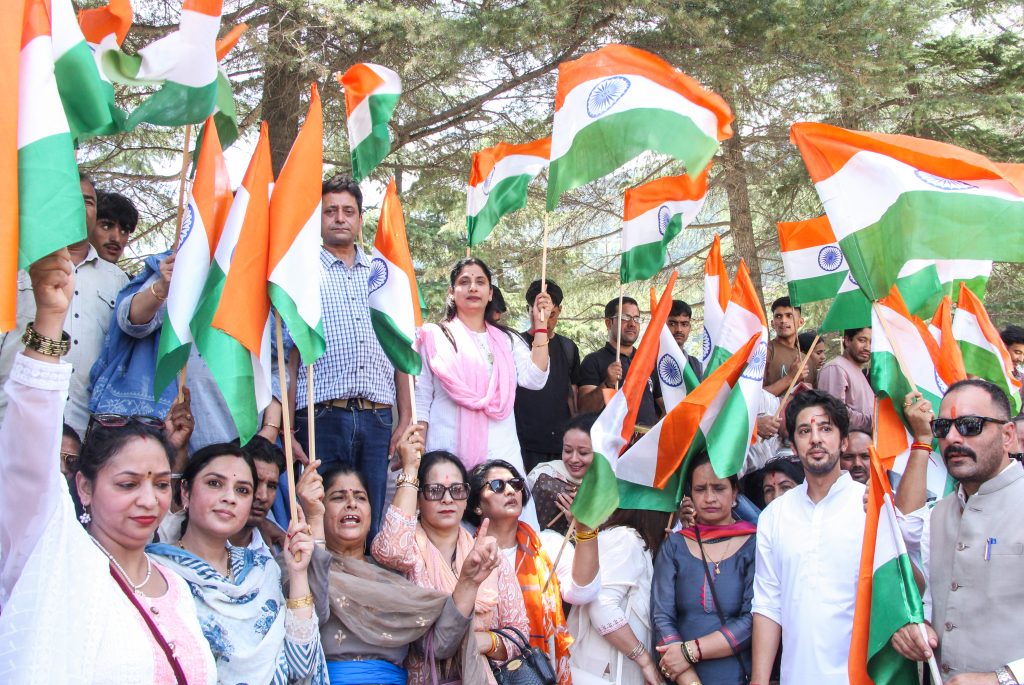
Eight decades after Independence, India today is a transformed country even as major challenges remain unfinished
Our Bureau
New Delhi
When India became independent in August 1947, the country inherited a deeply impoverished economy, low levels of literacy and industrialization, a fractured society and the enormous task of holding together one of the world’s most diverse populations. Eight decades later, the contrast is striking.
India in 2026 is the world’s most populous country, one of the fastest-growing major economies, a nuclear and space power, a digital giant and an increasingly influential voice in global affairs. Its athletes compete for medals on the world’s biggest stages, its films and music travel far beyond its borders, and its diaspora has become a bridge between India and the countries in which millions of Indians and people of Indian origin live.
But India’s 80-year journey is not simply a story of achievement. It is also a story of unfinished promises — of poverty that has not disappeared, jobs that remain inadequate, inequalities that persist, institutions that are constantly tested and a vast population still seeking a better quality of life.
The story of India at 80 is therefore one of remarkable transformation, but also of an unfinished national project.
The endurance of democracy
Perhaps India’s greatest achievement is political rather than economic or technological: democracy survived.
At independence, sceptics doubted whether a largely poor, illiterate and socially fragmented country could sustain democratic government. Yet India built a constitutional democracy based on universal adult franchise, regular elections, an independent judiciary, a federal structure and a multiparty political system.
There have been difficult periods — the Emergency of 1975-77, political instability in the late 1980s and 1990s, communal tensions, insurgencies and continuing debates over institutional independence. But elections have remained central to the transfer of political power.
The scale of Indian democracy is extraordinary. In the 2024 Lok Sabha election, 64.64 crore votes were polled, compared with 41.73 crore in 2009. Overall voter turnout was 66.10 per cent.
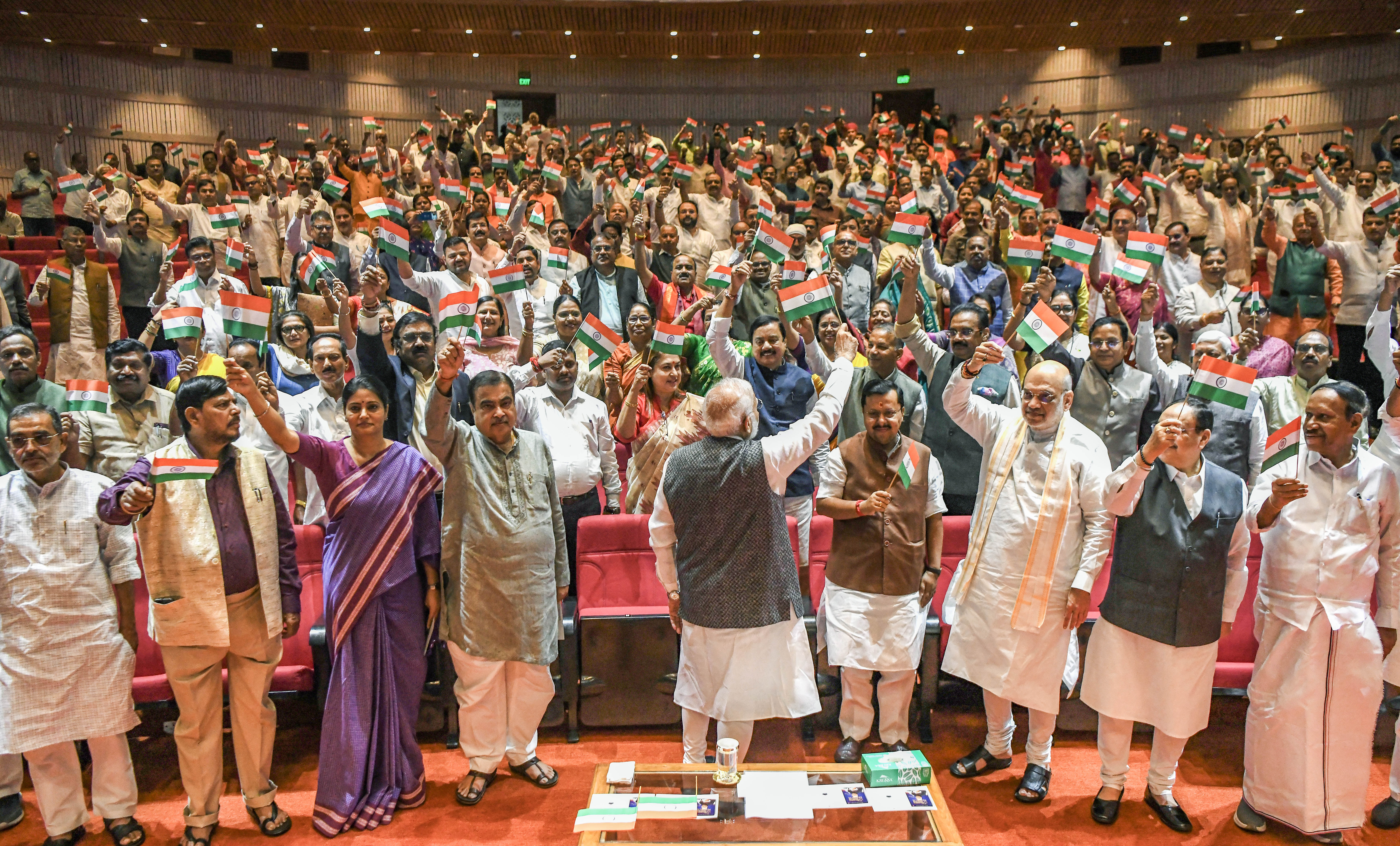
More significantly, women are becoming an increasingly powerful electoral force. In 2024, female voter turnout was 65.78 per cent, slightly higher than the 65.55 per cent turnout among men. Women accounted for 48.62 per cent of registered electors.
Yet political representation remains a weakness. Women constituted only around 10 per cent of MPs and MLAs analyzed in a 2026 Association for Democratic Reforms study. The 2023 constitutional amendment providing for one-third reservation of seats for women in Parliament and state assemblies could eventually change that equation.
India’s democratic story at 80 is consequently both impressive and contested.
From scarcity to aspiration
In 1947, India was overwhelmingly dependent on agriculture, had little industrial capacity and was struggling with food insecurity. The economic journey since then has been dramatic.
The early decades were dominated by planning, public-sector investment and protectionism. The 1991 economic reforms changed the trajectory, opening India to greater competition, private investment and global trade.
The transformation since then has been enormous.
The World Bank estimates India’s GDP at around $3.96 trillion in 2025, with real GDP growth of 7.6 per cent that year. The Economic Survey 2025-26 estimated growth of 7.4 per cent for FY26 and projected 6.8-7.2 per cent growth for FY27.
India’s economy is now driven not only by agriculture and manufacturing but increasingly by services, technology, finance and a huge domestic consumer market. Services exports reached a record $387.6 billion in FY25, while India’s share of global merchandise exports nearly doubled from 1 per cent in 2005 to 1.8 per cent in 2024.
Digitalization has become another defining feature. Millions of Indians who once stood outside formal banking now participate in the financial system. By March 2025, more than 55 crore bank accounts had been opened under the Jan Dhan programme.
Yet the next economic challenge is more complicated. India needs millions of productive jobs for its young population, higher manufacturing capacity and faster improvements in living standards. Growth has to become more employment-intensive and more evenly distributed.
India at 80 is therefore no longer asking whether it can grow. It is asking whether growth can become sufficiently broad, productive and inclusive to transform the lives of all Indians.
A modern reach
India’s cultural influence has perhaps expanded in ways few could have predicted in 1947.
Bollywood has become a global cultural industry. Indian music, cuisine, fashion and television have travelled across continents. Yoga, Ayurveda and Indian spiritual traditions have acquired international audiences, while Indian festivals are increasingly celebrated outside the country.
The global recognition of Indian cultural traditions is reflected in UNESCO’s Intangible Cultural Heritage list. India’s entries include yoga, Kumbh Mela, Durga Puja, Garba, Vedic chanting and, most recently, Deepavali. UNESCO lists 16 Indian elements on the Representative List.
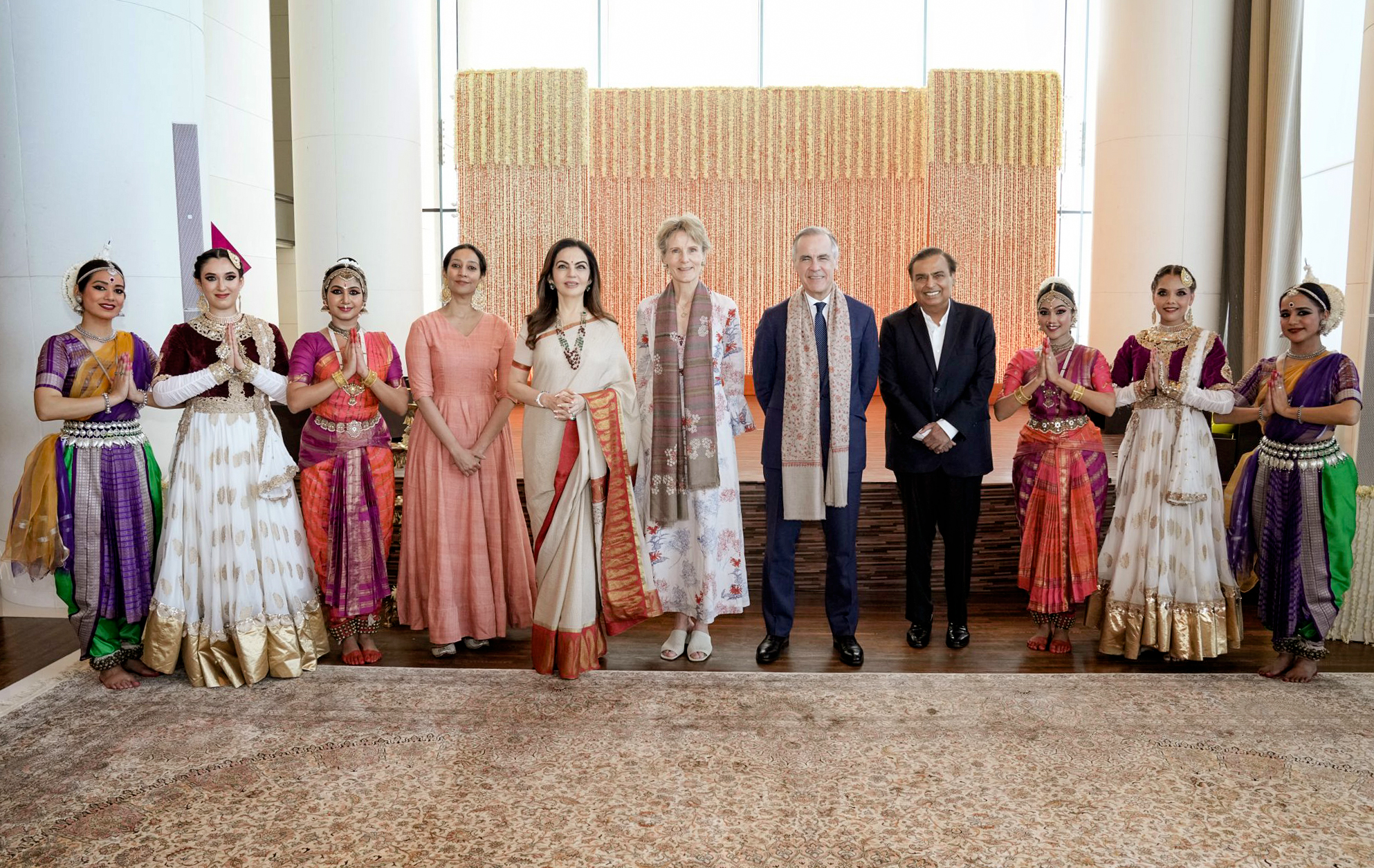
Yoga is an especially powerful example of India’s cultural reach. UNESCO inscribed it on the Representative List in 2016, noting its spread and practice across societies around the world.
But India’s cultural story is not simply about exporting tradition. It is also about negotiating the relationship between tradition and modernity.
India’s film industry has moved from black-and-white social dramas to streaming platforms and global productions. Indian authors write for international audiences. Indian designers and chefs have become global figures. Regional cinema has acquired unprecedented visibility.
At the same time, India’s cultural diversity remains its greatest asset and one of its most complicated responsibilities. The challenge is to preserve hundreds of languages, traditions, art forms and local identities while allowing culture to evolve.
From the margins to the frontier
Few areas better illustrate India’s transformation than science and technology.
In the early years after independence, science was associated primarily with nation-building — dams, laboratories, atomic energy, agricultural research and space exploration. Institutions created during those decades laid the foundations for later breakthroughs.
Today, India is operating at the frontiers of space science.
Chandrayaan-3’s successful landing in 2023 made India the first country to land near the lunar south pole. Aditya-L1, India’s first dedicated solar mission, is studying the Sun from the Sun-Earth L1 point. Its observations have already produced new insights into solar phenomena, including coronal mass ejections and geomagnetic storms.
India’s technology transformation is equally visible on Earth. Digital public infrastructure, online payments, Aadhaar, mobile connectivity and India’s expanding startup ecosystem have created a model that is attracting international attention.
The country’s innovation ranking has also improved. The Economic Survey notes that India’s Global Innovation Index ranking rose from 66th in 2019 to 38th in 2025. Ten semiconductor manufacturing and packaging projects had been approved across six states, involving around ₹1.60 lakh crore of investment.

A sporting ambition
For decades, Indian sport was synonymous with cricket. Cricket remains enormously important, but the sporting landscape has changed.
India’s athletes have increasingly demonstrated that excellence is possible across disciplines. At the Paris Olympics, Manu Bhaker became a major national sporting figure, while Neeraj Chopra continued India’s rise in athletics. Indian badminton, wrestling, shooting, boxing and hockey have also expanded their international presence.
Chess has become another symbol of India’s sporting transformation. The rise of young players, culminating in Gukesh Dommaraju’s world championship victory, reflects a new generation growing up in a more competitive sporting ecosystem.
Cricket, meanwhile, has become a global Indian asset. India’s 2024 men’s T20 World Cup victory reinforced its dominance in the sport, while the growth of the Indian Premier League transformed cricket into a major entertainment and business industry.
The transformation is increasingly visible in women’s sport. India’s women athletes and teams have challenged old assumptions about who represents the country on the sporting stage.
India beyond its borders
Perhaps the most remarkable change in India’s relationship with the outside world is the transformation of its diaspora.
Indians and people of Indian origin are no longer viewed primarily as migrants seeking economic opportunity. They have become business leaders, scientists, academics, doctors, politicians, entrepreneurs and cultural ambassadors.
The Ministry of External Affairs estimates the overseas Indian population at more than 35.4 million, comprising NRIs and people of Indian origin. The community is spread across virtually every major region of the world, from North America and Europe to the Gulf, Africa, Southeast Asia and the Caribbean.
Their economic importance is enormous. India remained the world’s largest recipient of remittances, with inflows reaching $135.4 billion in FY25.
But the diaspora’s importance extends beyond money.
Indian-origin political leaders have reached the highest levels of government in several countries. Indian-origin scientists and technology professionals have played prominent roles in global companies and universities. Diaspora communities have also helped deepen India’s diplomatic, commercial and cultural connections.
India at 80 is difficult to define in a single sentence. That is why the 80th Independence Day should be viewed less as a finish line than as a milestone.