








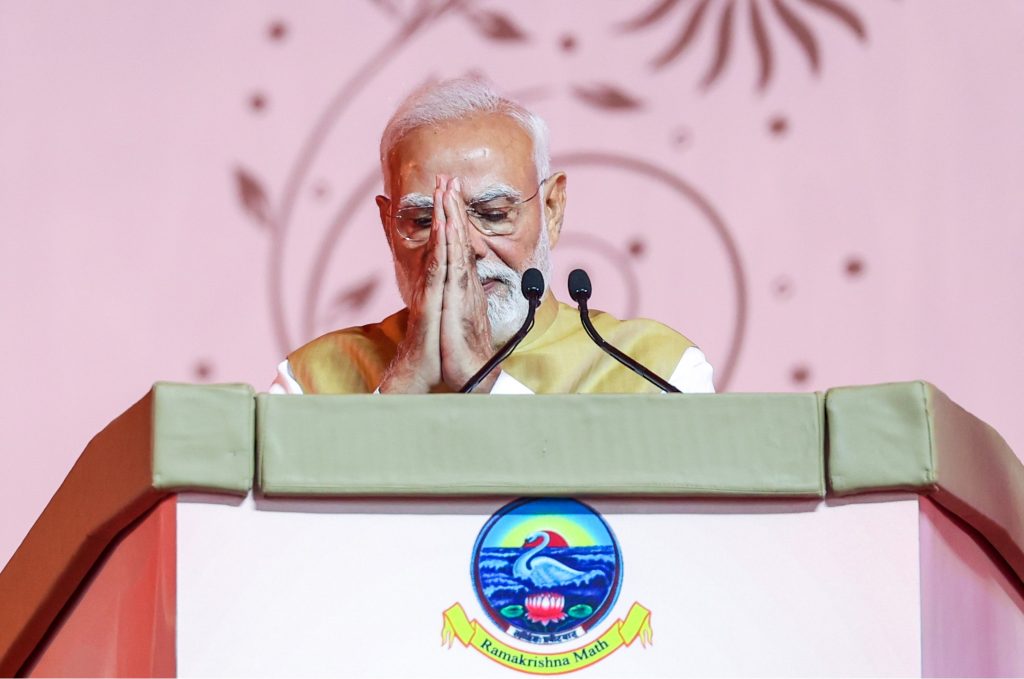
The political battle over the NEET controversy has pushed both the ruling BJP and the Congress party to engage with of the young voters vocal about accountability and fairness
Our Bureau
New Delhi
The controversy surrounding the National Eligibility-cum-Entrance Test (NEET) has moved beyond allegations of paper leaks and examination irregularities to become a significant political issue centered on India’s youth. The responses from the Bharatiya Janata Party (BJP)-led government and the Congress suggest that students have emerged as an increasingly important political constituency, with both sides attempting to frame themselves as protectors of young aspirations.
While the government has focused on restoring confidence in the examination system through enhanced security measures and appeals for reconciliation following student protests, the Opposition has sought to position itself alongside aggrieved students and their families by making accountability the central political issue.
Taken together, the developments indicate that the NEET controversy has become a contest over political messaging directed at Generation Z—a demographic whose expectations increasingly extend beyond employment opportunities to include institutional credibility, transparency and responsiveness.
Competing narratives
Prime Minister Narendra Modi’s response to the protests at Jantar Mantar reflected an effort to separate the behavior of some protesters from the larger student community.
Referring to abusive slogans allegedly directed at him and his late mother during the protests, the Prime Minister said, “Mistakes happen in childhood, and childhood also offers the opportunity to correct those mistakes.” He urged society not to punish or socially ostracize those involved but instead to “embrace these children and show them the right path.”
He argued that legal action and social harassment would not solve the problem, saying, “Punishing them, dragging them through court proceedings, and harassing them in society, none of this will change the situation. I want to forgive them.”
The Prime Minister concluded with a direct appeal to young people, urging them to move forward with the nation, pursue their dreams and learn from their mistakes while contributing to India’s progress.
The government’s messaging therefore sought to reduce confrontation while emphasizing guidance, national development and reconciliation.
The Congress adopted a markedly different approach.
Leader of Opposition Rahul Gandhi framed the issue not as one of youthful conduct but of institutional failure. In a post on X, he said, “Nothing is more painful than seeing a parent grieve their child. Behind every young life lost is a family carrying pain that will never leave them—and serious questions about a broken education system.”
He alleged that repeated paper leaks and cancelled examinations had undermined students’ faith in the system, stating: “Leaked papers. Cancelled exams. Years of preparation destroyed overnight. Our students are told to work honestly in a system that is not honest with them.”
Accountability versus reassurance
The contrasting responses reveal two distinct political narratives emerging from the same controversy.
The BJP has concentrated on restoring confidence in public examinations.
Union Health Minister J.P. Nadda reviewed preparations for NEET-PG 2026, directing officials to ensure a “fair, transparent and candidate-friendly examination” while maintaining the highest standards of security.
The review highlighted extensive technological safeguards, including encrypted question paper preparation, biometric authentication, CCTV surveillance, signal jammers, live monitoring, advance verification of examination centers and deployment of more than 60,000 examination personnel.
Nadda also warned candidates not to believe rumors regarding paper leaks, stressing that the final question paper is selected shortly before the examination through a highly secure process and that any claim of prior access is “entirely false.”
The government’s emphasis has therefore been on administrative reform and technological safeguards designed to reassure students that corrective measures are being implemented.
The Congress has instead focused on moral and political accountability.
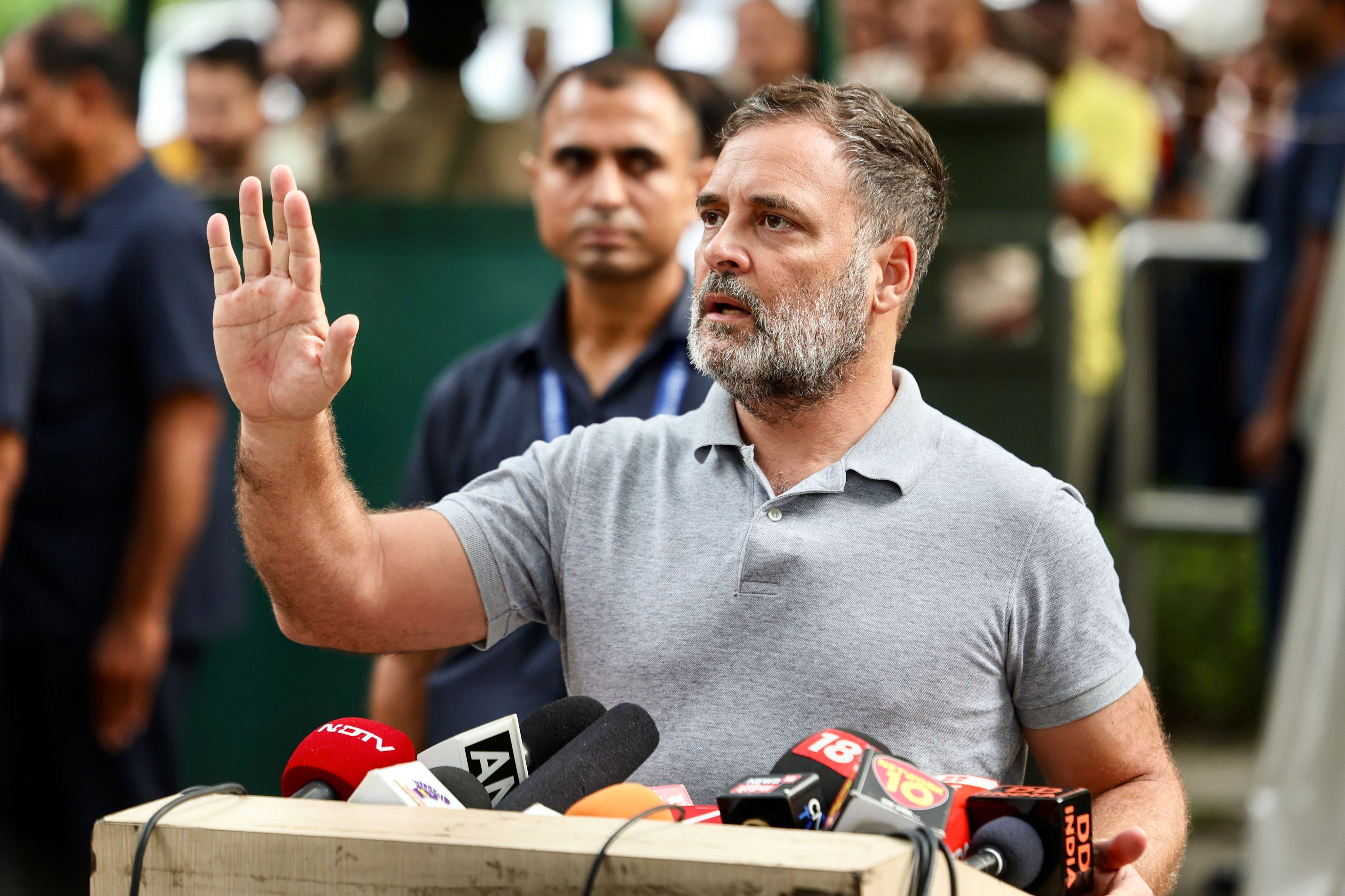
Rahul Gandhi intensified his campaign by visiting the families of Gopika, Roshini and Vetri Anandan, three medical aspirants whose lives were lost following the NEET paper leak and cancellation of the examination. He wrote that each family was left asking why “honest, hardworking students pay the price for a dishonest system.”
After meeting the families, Gandhi said his conviction had strengthened that “India’s students need no forgiveness. The government owes them truth, justice and an apology.”
Thus, while the government has highlighted reform, the Opposition has concentrated on accountability.
Youth and political messaging
The controversy has also brought wider questions about youth participation into political discourse.
National Security Advisor Ajit Doval, addressing the Lokmanya Tilak National Award ceremony, urged young Indians to reflect on Lokmanya Tilak’s vision of nation-building and cautioned against equating freedom with unrestricted liberty.
“Youth should dedicate themselves completely to the nation,” Doval said, adding that “a rare window of opportunity has come in our country’s history.”
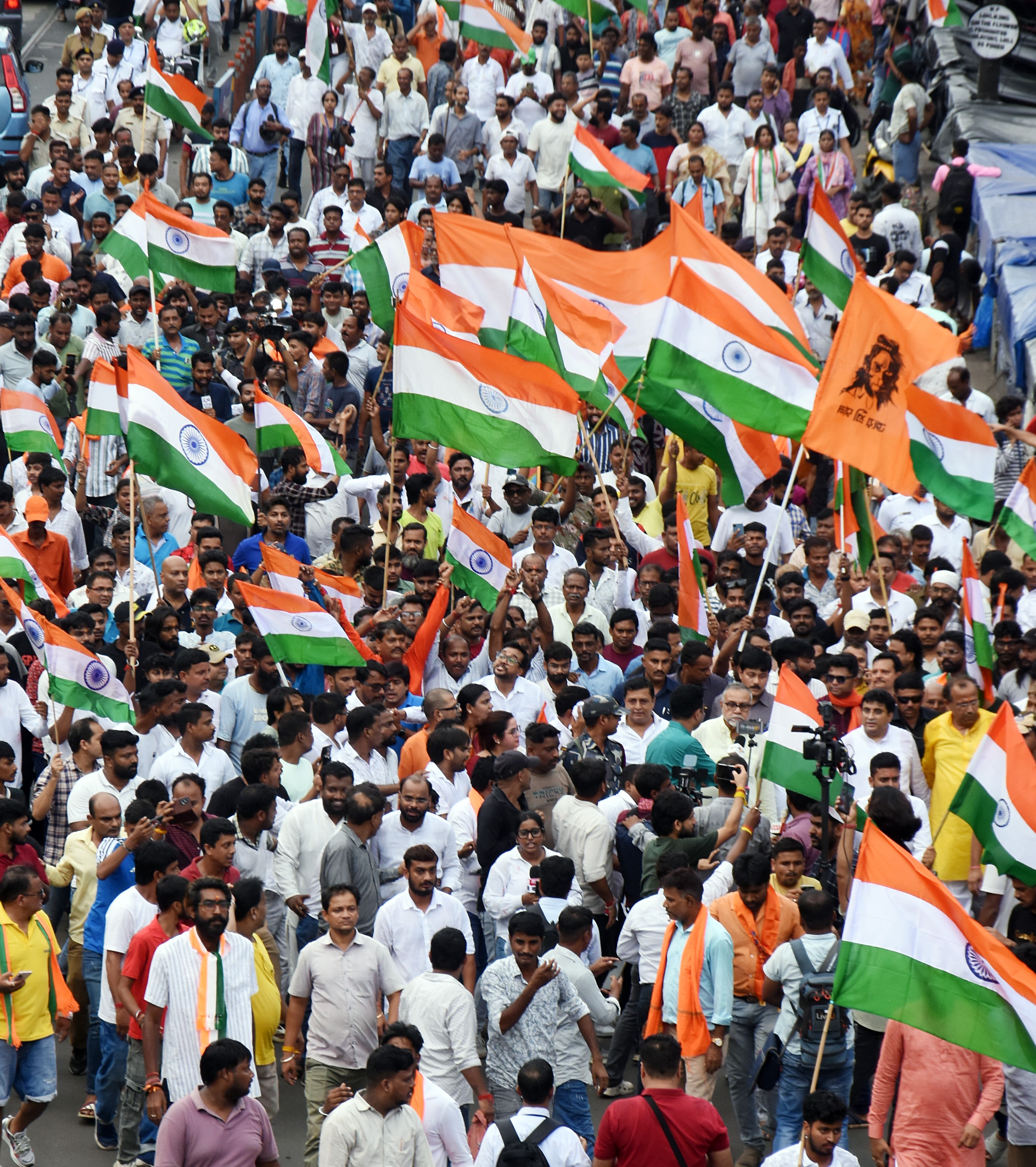
His remarks came after large student demonstrations over examination irregularities. The accompanying ANI report noted that recent youth mobilization at Jantar Mantar over issues including NEET paper leaks had placed political pressure on the government, while also highlighting differing views over democratic expression and national responsibility.
Meanwhile, the political contest has increasingly extended to social media.
A BJP Telangana social media office-bearer alleged that Opposition-backed social media accounts had circulated morphed photographs and videos targeting the Prime Minister during the protests and stated that complaints had been filed with cybercrime authorities.
The complaint led to the registration of a case against operators of several social media accounts under provisions of the Information Technology Act and the Bharatiya Nyaya Sanhita.
These developments illustrate how the NEET controversy has expanded beyond examination administration into broader political communication across both physical protests and digital platforms.
A new constituency
Although the supplied material does not establish that the NEET controversy represents a decisive turning point in Indian politics, it clearly shows that students have become the focus of competing political narratives.
The government has responded by strengthening examination systems, introducing enhanced security measures for NEET-PG, appealing for calm and urging young people to contribute positively to nation-building.
The Opposition has framed the controversy as evidence of systemic institutional failure, repeatedly highlighting paper leaks, cancelled examinations and the emotional impact on affected students and their families while demanding accountability and an apology from the government.
Parliament has also passed the Public Examinations (Prevention of Unfair Means) Amendment Bill, 2026, introducing stricter penalties, time-bound investigations and fast-track courts to address examination malpractices.
Taken together, the events indicate that competitive examinations are no longer merely administrative exercises but have become politically significant issues. The contest over the NEET controversy has evolved into a broader effort by both the ruling party and the Opposition to engage India’s younger generation, placing students and their aspirations at the center of contemporary political discourse.
Future tense
The NEET controversy has emerged as one of the most politically sensitive challenges facing Prime Minister Narendra Modi because it strikes at the aspirations of India’s youth, a demographic that has been central to the BJP’s vision of a “New India.” For millions of students, competitive examinations represent the primary pathway to higher education, professional success and upward social mobility. Any perception that these examinations are compromised can quickly erode public confidence in government institutions.
Unlike many political controversies that are driven by opposition parties, the NEET issue has been fueled by students and their families, giving it an authenticity that is difficult to dismiss as partisan politics. The controversy has also shifted the political conversation from ideology to governance, placing questions of transparency, accountability and institutional credibility at the forefront.
For the BJP, the challenge extends beyond managing a single examination. It is about reassuring young Indians that merit remains the basis of opportunity and that the state is capable of protecting the integrity of one of the country’s most important competitive examinations. At the same time, the Opposition has recognized the political significance of student anger and has sought to position itself as the voice of aspirants demanding accountability.
The contest over NEET therefore represents more than an education policy debate—it is increasingly becoming a battle to win the trust and confidence of India’s Generation Z.