








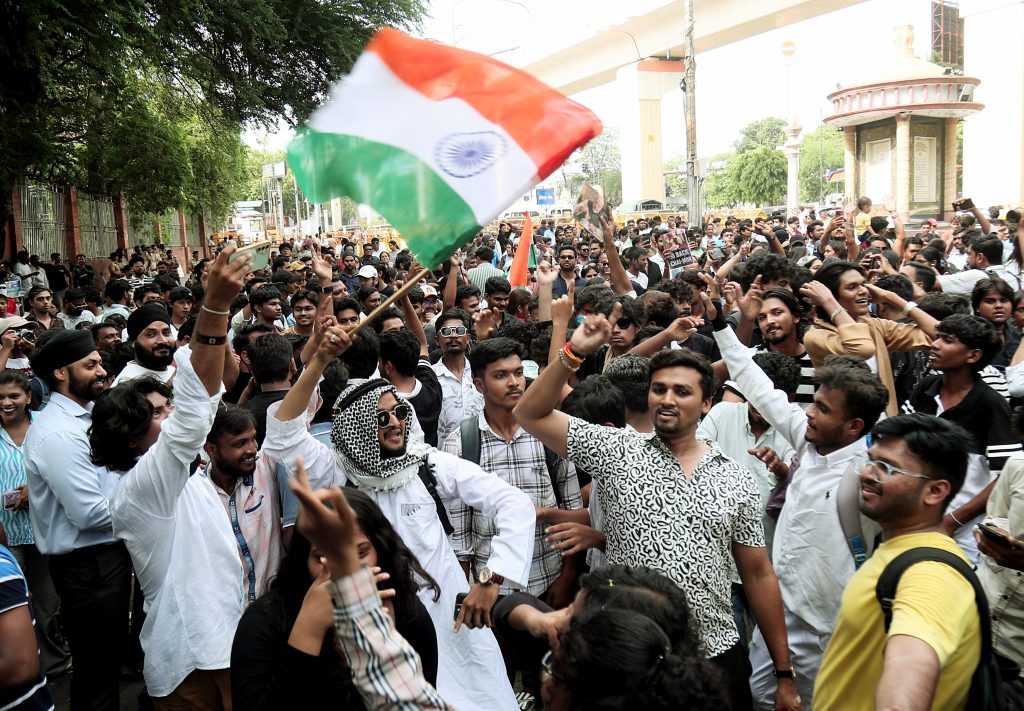
Union Education Minister Dharmendra Pradhan submits his resignation to PM Modi after more than a month of protest and agitation by the Cockroach Janata Party and Opposition parties
Our Bureau
New Delhi
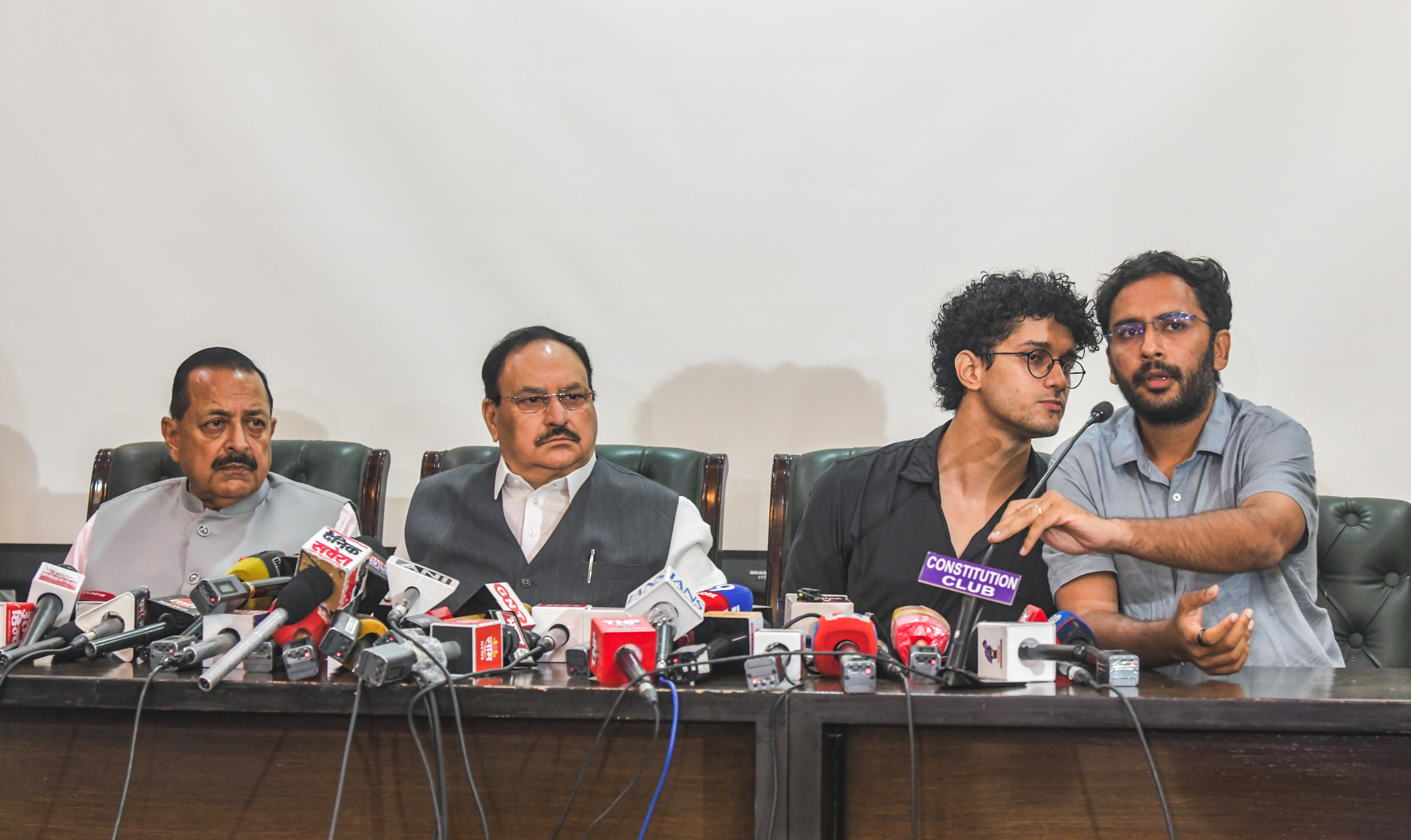
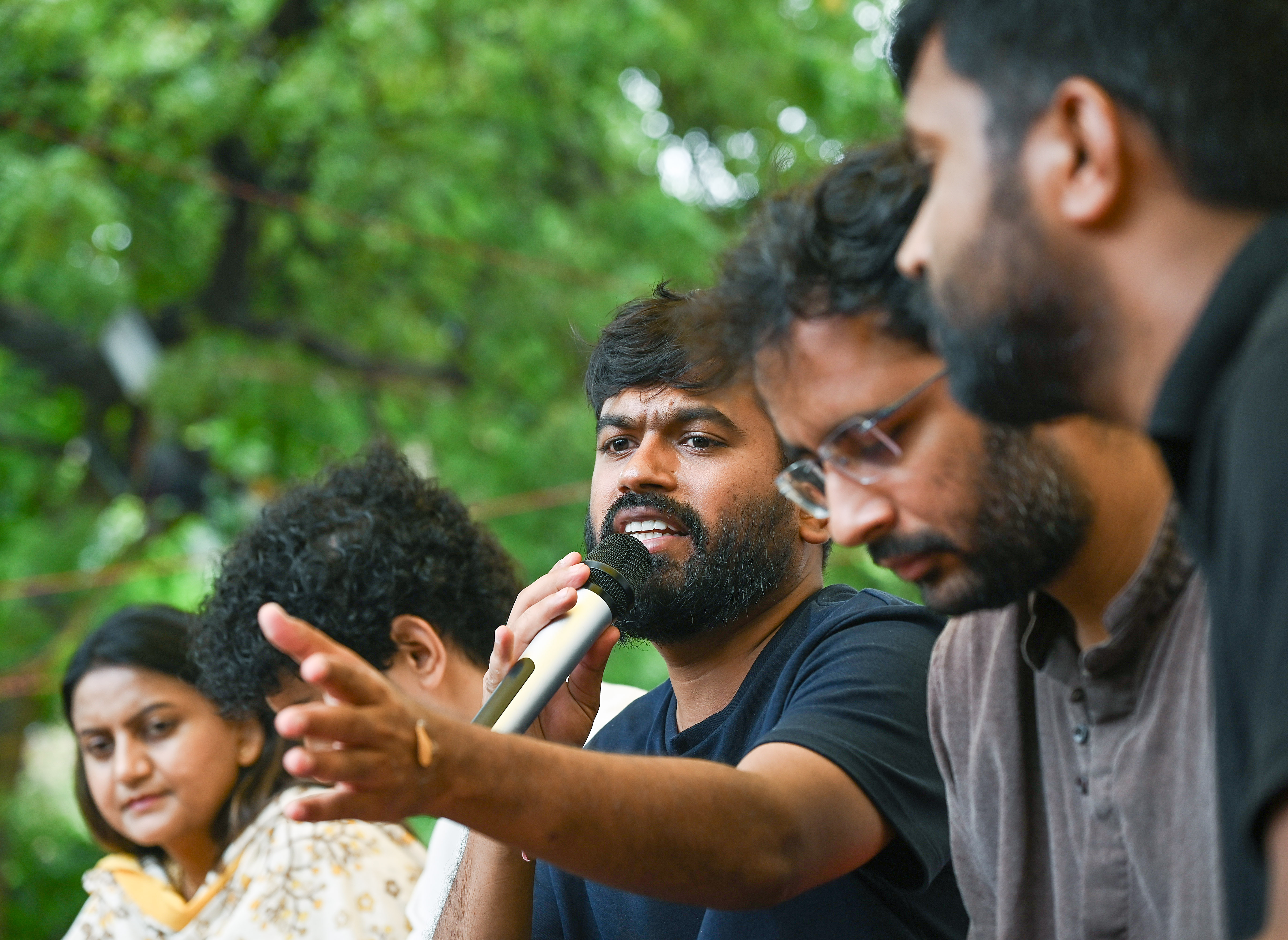
After a big victory on Saturday, Cockroach Janata Party (CJP) announced that it has withdrawn the 37-day long agitation at Jantar Mantar in “good faith” after Education Minister Dharmendra Pradhan stepped down from the Council of Ministers and the outfit received assurance on other demands from the government. Addressing a press conference at the Constitution Club in the national capital, CJP’s Chief Spokesperson Saurav Das said, “Cockroach Janta Party declares that we withdraw the agitation in good faith, with the understanding that the agreed-upon terms will be executed within the agreed-upon timelines.”
Following the third round of talks with Union Ministers J P Nadda and Jitendra Singh at the Constitution Club, the CJP said that the Central government has agreed to provide suitable compensation to the families of the NEET aspirants who died by suicide and assured to withdraw the FIRs lodged against protesters anywhere in India.
Earlier, Dharmendra Pradhan submitted his resignation to Prime Minister Narendra Modi and stated that he was stepping down in the larger interest of students to ensure that the country’s youth do not become “trapped in a web of confusion.”
The Cockroach Janata Party (CJP), beginning as a satirical social media account from CJI Surya Kant’s remarks, led the movement along with activist Sonam Wangchuk at Jantar Mantar in the national capital, demanding Pradhan’s resignation.
The CJP has presented a five-point demand charter before the government and will hold the next round of talks after four weeks. CJP Spokesperson Ashutosh Ranka said, “We had demanded compensation of Rs 1 crore for the families of NEET victims. The government has agreed to this, stating that an honorary compensation will be given to those families under whatever rules and regulations allow. Apart from this, we also placed a five-point demand charter before the government, which talked about broader educational reforms and exam reforms. We will meet the government again in about four weeks regarding that demand charter so that we can work together on broader reforms. If all these demands are agreeable to the government, then we would also like to withdraw the agitation.”
“All our demands have been accepted, so we request the protesters to withdraw immediately and return home peacefully. We will inform you of our future strategy or any other issues. But we request the protesters to withdraw immediately,” he added.
Several FIRs have been filed against protesters across India after the July 20 ‘Chalo Sansad’ march at Jantar Mantar. The CJP had demanded a withdrawal of the FIRs and no legal action in the future. Das said that the government has agreed to the demand.
Saurav Das said, “Our second demand was that all the FIRs filed against the protesters, not just in Delhi but in all BJP-ruled and BJP-allied states, should be withdrawn. This was also our second demand. The government has accepted that demand as well. Furthermore, the withdrawal will be done shortly. The government has assured us that it will share copies of all the FIRs filed – as per our last information, 15 to 20 FIRs were filed in Delhi – and we will receive those copies within three to four days in any case. The government has also assured that the withdrawal will be done shortly.”
Meanwhile, leader of the Opposition in the Lok Sabha and Congress MP Rahul Gandhi on Saturday launched a direct attack on Union Home Minister Amit Shah, holding him personally responsible for police action and excessive use of force, including allegedly using pellet guns, against student protesters in the national capital. Speaking at a press conference, Gandhi alleged that Shah authorised the usage of lethal weapons during the protests, citing it as a fundamental issue in Parliament.
“We hold Amit Shah directly responsible for the violence that has taken place against our students. He authorised the shooting of our students. He authorised the use of lethal weapons, including pellet guns, against our students. For us, this is a fundamental issue. We will not accept our own forces shooting at the future of India. This will be a major issue in Parliament,” he said,
Gandhi emphasised that the protests were a direct outcome of the failed “education system, media system, and job creation system” in the country, adding that this could seriously impact the country in case of an economic crisis in the future.
“The students are also demanding an apology from the Prime Minister. This protest has happened, and the deeper reason behind it is that India’s systems- the job creation system, education system, institutional system, and media system have been destroyed. They have ceased to function effectively. There are consequences to this. We are now facing a serious economic crisis. During times of serious economic crisis, these systems become even more important. The government should understand that what has happened here is just one step in a much deeper problem,” he said.
The Congress MP further underlined that these student protests were a stern warning to the government, saying that it is high time that the centre stop treating the country as its “personal fiefdom.” Gandhi added that if the government continues to ignore the youth, a similar situation with a greater impact could arise in the future.
LoP Rahul Gandhi demanded that Prime Minister Narendra Modi apologise to the students, adding that both implementers and organisers who attacked, assaulted, and beat the students should be dealt with legal action.
“Our education system has been hollowed out from within. So, deep steps will have to be taken. I don’t think they can take these, but let’s see. The students had two more demands. They should not be forgotten. The first demand is that action should be taken against both the implementers and organisers who attacked, assaulted, and beat the students, and that action should be visible. The students should see that these people have been punished for this reason. Secondly, the main operator of the system, Narendra Modi ji, should apologise to the students of India,” he said.
Calling Dharmendra Pradhan “a symbol of corruption and destruction of the education system,” Gandhi said that the government will have to take concrete steps to make reforms in the education system.
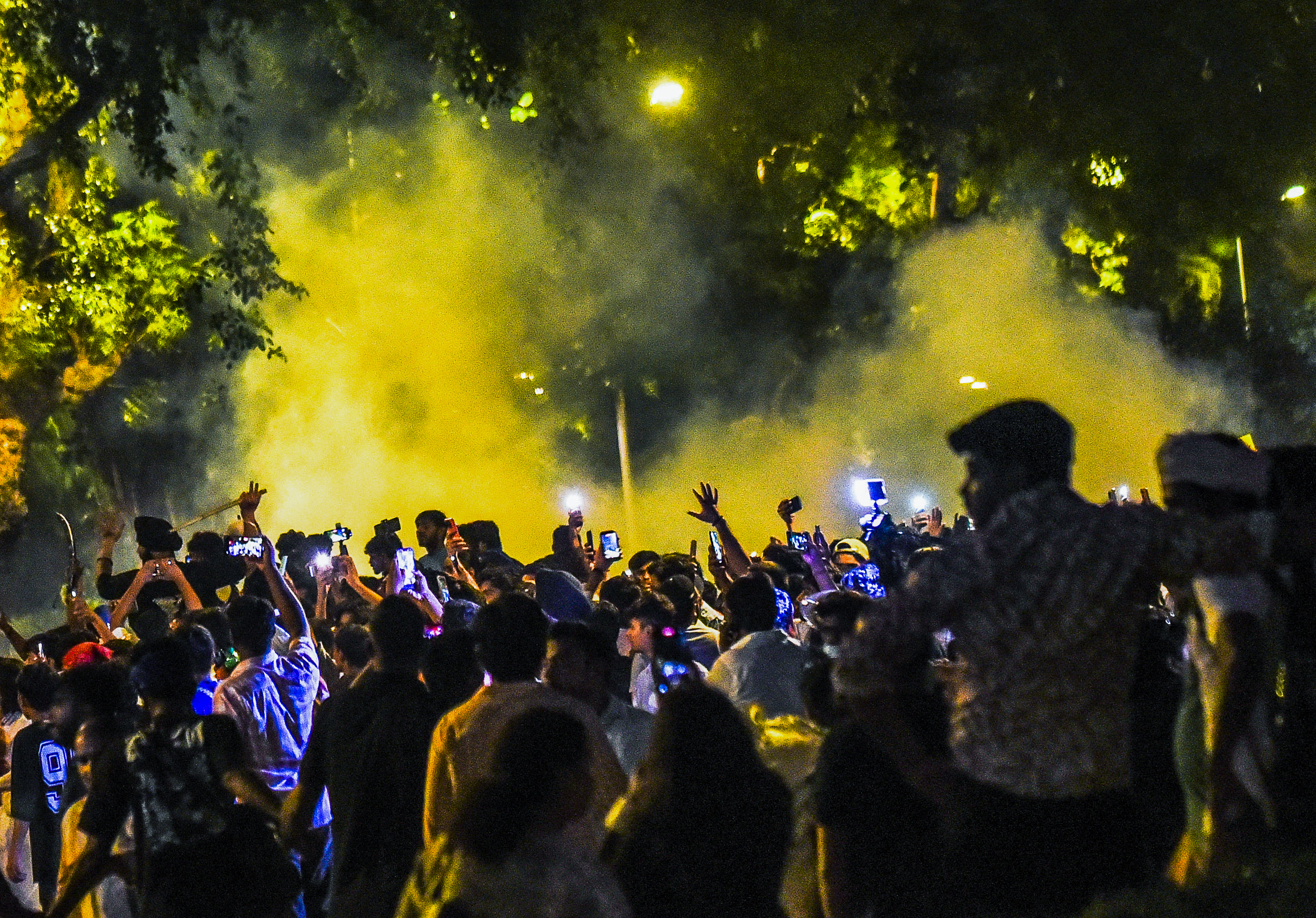
The resignation came after weeks of nationwide protests over alleged examination irregularities and a 26-day hunger strike led by Wangchuk at Jantar Mantar. The agitation was spearheaded by the Cockroach Janata Party (CJP), which has been demanding accountability over alleged paper leaks. On July 20, the group organised a ‘Sansad Chalo’ march from Jantar Mantar to the Parliament, during which instances of laathi charge and tear gas shelling were reported to disperse the huge crowd gathered in central Delhi.
Earlier, The Union government’s decision to engage directly with representatives of the student movement protesting at Jantar Mantar reflects the growing political significance of the agitation over alleged irregularities in the National Eligibility-cum-Entrance Test (NEET). While the Centre has not accepted the protesters’ principal demand for the resignation of Union Education Minister Dharmendra Pradhan, it has demonstrated a willingness to negotiate on other key issues, signaling that the movement has become too important to ignore.
What began as outrage over alleged examination irregularities steadily transformed into a broader political issue. Initially, the government’s response focused on administrative measures, investigations into alleged paper leaks and assurances that the integrity of the examination process would be protected. However, sustained protests at Jantar Mantar have shifted the narrative from procedural lapses to political accountability.
Student movements have historically occupied a unique place in India’s democratic landscape.
Unlike protests centered on sector-specific demands, student agitations often evolve into wider debates about governance, fairness and opportunity. They attract sympathy because they are associated with aspirations rather than vested interests.
India has witnessed several student-led movements that eventually influenced national politics. The Nav Nirman movement in Gujarat during the 1970s, the student participation in Jayaprakash Narayan’s movement against the Emergency, the Mandal Commission protests of the early 1990s, and more recent demonstrations over university autonomy and citizenship laws all demonstrated the capacity of youth mobilizations to shape political narratives.
Not every student protest develops into a mass political movement. Many lose momentum once immediate grievances are addressed. However, governments have traditionally treated such protests with caution because they resonate strongly with middle-class families, whose children are directly affected by educational policies.
The significance of the protests extends beyond a single examination. Over the past several years, concerns over examination paper leaks, recruitment irregularities and delays in competitive examinations have emerged in multiple states and across different recruitment agencies.
The participation of civil society figures such as Sonam Wangchuk has further broadened the movement’s appeal. Unlike conventional political protests, student movements often attract support from parents, teachers, professionals and social organizations, expanding their influence beyond traditional partisan boundaries.
That wider support explains why the government chose engagement rather than confrontation. Negotiation helps reduce the possibility that the protests evolve into a broader campaign questioning governance itself.