








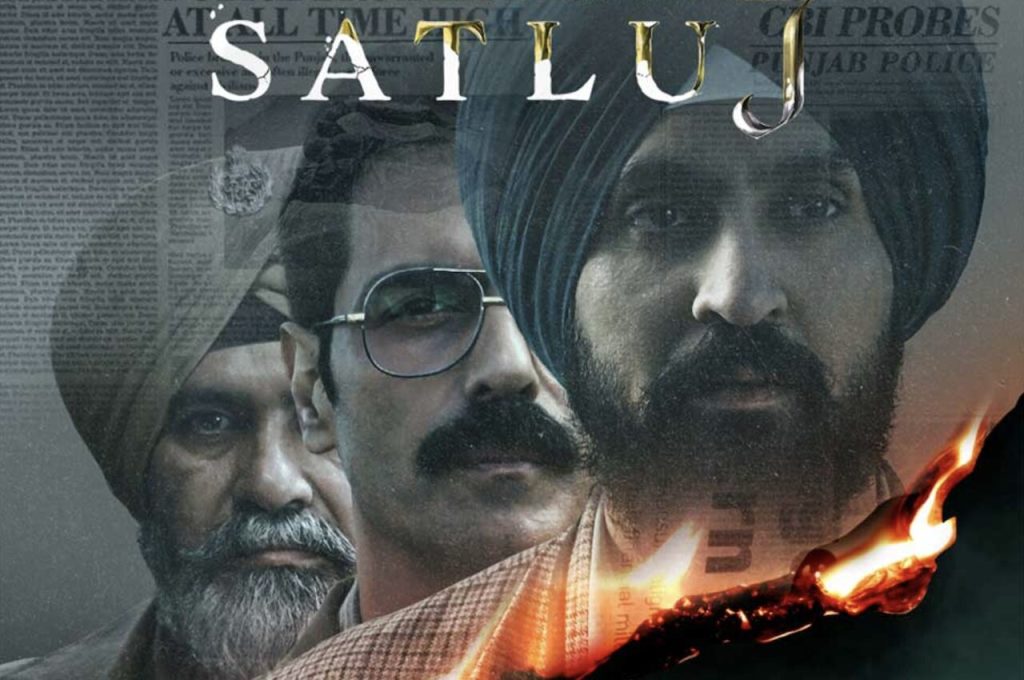
From certification disputes to human rights, free speech and Punjab’s troubled past, Diljit Dosanjh’s Satluj has ignited one of India’s most contentious film controversies in recent years.
Our Bureau
Mumbai
What was expected to be a powerful biographical film on the life of human rights activist Jaswant Singh Khalra has instead become the centre of a nationwide debate over censorship, historical memory and freedom of expression.Just two days after premiering on ZEE5, Satluj, starring Diljit Dosanjh, was taken down from the streaming platform in India, triggering sharp reactions from political leaders, filmmakers, actors and members of the Sikh community.
At the heart of the controversy lies a disagreement over whether the film was released without completing the required certification process and whether its removal amounts to the suppression of an important chapter in India’s recent history.
According to the Ministry of Information and Broadcasting, the film did not possess the required certification for theatrical release. Ministry officials alleged that instead of complying with the certification process, the filmmakers changed the title and released the film directly on an OTT platform. The Ministry further claimed that the certification body had recommended nearly 100 cuts and said no representation seeking approval or reconsideration had been received before the release.
Following the developments, ZEE5 announced that Satluj would remain unavailable in India until further notice while it explored “every appropriate avenue through due process” to restore the film for audiences. The platform later reiterated that it stood firmly behind the film and its creative vision while acknowledging the overwhelming audience response it had received after release.
The controversy has drawn attention largely because of the subject matter. Satluj tells the story of Jaswant Singh Khalra, the Punjab human rights activist who exposed alleged illegal killings and secret cremations during the militancy and counter-insurgency period in Punjab during the late 1980s and early 1990s. Khalra disappeared in 1995 and was allegedly kidnapped, tortured and killed by Punjab Police officials. Following a Supreme Court-ordered CBI investigation, several policemen were convicted, with the Supreme Court ultimately upholding life sentences for four of the accused in 2011.
Supporters of the film argue that the story represents an important account of alleged human rights violations and should remain accessible to the public.
Congress leader Pargat Singh said films dealing with alleged misuse of state power should not be banned because they offer society an opportunity for reflection and reform. He argued that such a film “should be screened, not banned.”
The Delhi Sikh Gurdwara Management Committee also criticised the removal, saying Khalra’s work exposed evidence of thousands of alleged illegal cremations and helped bring international attention to events in Punjab. The committee announced plans for public screenings and educational seminars to ensure the story continued to reach audiences.
Political reactions quickly followed across party lines. Shiromani Akali Dal president Sukhbir Singh Badal described the removal as “an assault on our collective memory, truth, and freedom of expression,” while Punjab Assembly Speaker Kultar Singh Sandhwan and AAP MP Malwinder Singh Kang also criticised the decision. Punjab BJP president Kewal Singh Dhillon said the matter was being taken up with the Central government.
Several prominent figures from the film industry also voiced concern. Filmmaker Onir questioned whether storytellers were surrendering their right to tell difficult stories, while actor Ranvir Shorey described the removal as “utterly disappointing.” Former cricketer Harbhajan Singh praised Khalra’s courage in exposing alleged human rights violations, writing that “Truth cannot remain buried forever.”
Diljit Dosanjh himself said he had anticipated that the film might face restrictions. “What I had already expected is exactly what happened,” he said during an Instagram live session after the film was removed. He revealed that uncertainty surrounding the project had influenced the team’s promotional strategy, saying they believed extensive publicity might have prevented the release altogether. Despite the setback, the actor expressed satisfaction that audiences had already watched and downloaded the film, adding that community screenings at gurdwaras had brought him immense joy.
The actor also described the project as the culmination of nearly seven years of work marked by repeated delays, halted shoots and production challenges. Director Honey Trehan, he said, had dedicated years of research and personal commitment to bringing Khalra’s story to the screen.
The controversy has also revived discussion about the film’s long journey to release. Originally titled Ghallughara, it was later renamed Punjab 95 during the certification process before finally being released as Satluj. According to reports, the film eventually secured clearance after multiple changes, including 21 cuts and a title change, before its release on ZEE5.
As the debate continues, Satluj has become more than just a film. It now sits at the intersection of certification rules, artistic freedom, historical accountability and competing narratives over how India’s difficult past should be remembered and presented to the public.