

Rising oil prices, market volatility and risks to the Gulf-based diaspora underline how the Iran conflict could ripple across India’s economy and strategic interests.
Our Bureau
Tehran / Doha / New Delhi
The escalating war involving Iran, the United States and Israel is emerging as a major external risk for India, with potential implications for energy security, economic growth, financial markets and the safety of millions of Indians living in the Gulf. As tensions intensify across West Asia, the conflict is reverberating through global energy markets and shipping routes, particularly the Strait of Hormuz — a vital corridor for global oil flows and a lifeline for energy-importing economies such as India.
Despite the uncertainty, government sources say India remains relatively well positioned in the short term due to diversified supply sources and existing fuel stocks.
“India is in a very comfortable position regarding crude oil, petroleum products and LPG supplies,” government sources said, adding that the country currently has access to energy supplies from multiple sources that exceed the volume that could potentially be affected by disruptions through the Strait of Hormuz.
Officials say the government is closely monitoring developments and plans to ramp up supplies from alternative geographies if necessary. Over the past few years, India has significantly diversified its crude import basket, particularly after increasing purchases from Russia.
“In February, India imported about 20 per cent of its total crude oil imports from Russia, amounting to around 1.04 million barrels per day,” government sources said.
However, economists caution that the broader economic impact of sustained geopolitical instability in West Asia could still be significant.
Oil prices and economic pressure
India remains one of the world’s largest importers of crude oil, making its economy highly sensitive to price fluctuations. According to Vandana Bharti, Research Head – Commodity at SMC Global Securities, rising crude prices could quickly translate into slower economic growth and higher inflation.
“Every USD 10 per barrel increase in global crude oil prices could reduce India’s GDP growth by about 0.5 per cent,” Bharti said in an interview.
The recent surge in prices illustrates the vulnerability. Crude oil prices jumped from around USD 69 per barrel to nearly USD 78 within a week as tensions escalated in the region.
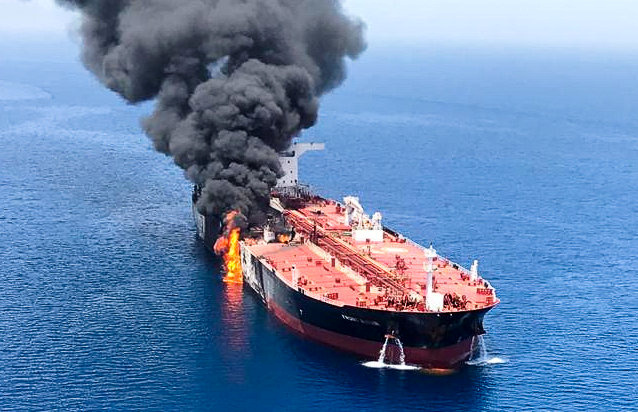
“In just one week we have seen crude move from about $69 to $78 per barrel. If the tensions continue, prices could move towards $85 to $87 per barrel in the coming days,” Bharti said.
Such increases add what analysts describe as a “war premium” to energy markets, reflecting not only supply risks but also rising insurance costs, freight rates and logistical disruptions.
“It is not simply about closing the Strait of Hormuz,” Bharti said. “The real issue is that insurance premiums and freight charges are rising, and shipments are being rerouted. All these factors add a war premium to crude oil prices and create uncertainty in the market.”
India’s exposure to the region is particularly high. Bharti noted that “India imports nearly 50 per cent of its crude oil from the Middle East, and many Indian refineries are designed to process Middle Eastern crude.”
Strategic vulnerability of Hormuz
The Strait of Hormuz remains at the centre of global concern. Roughly 20–25 per cent of global oil shipments pass through the narrow waterway connecting the Persian Gulf to international markets.
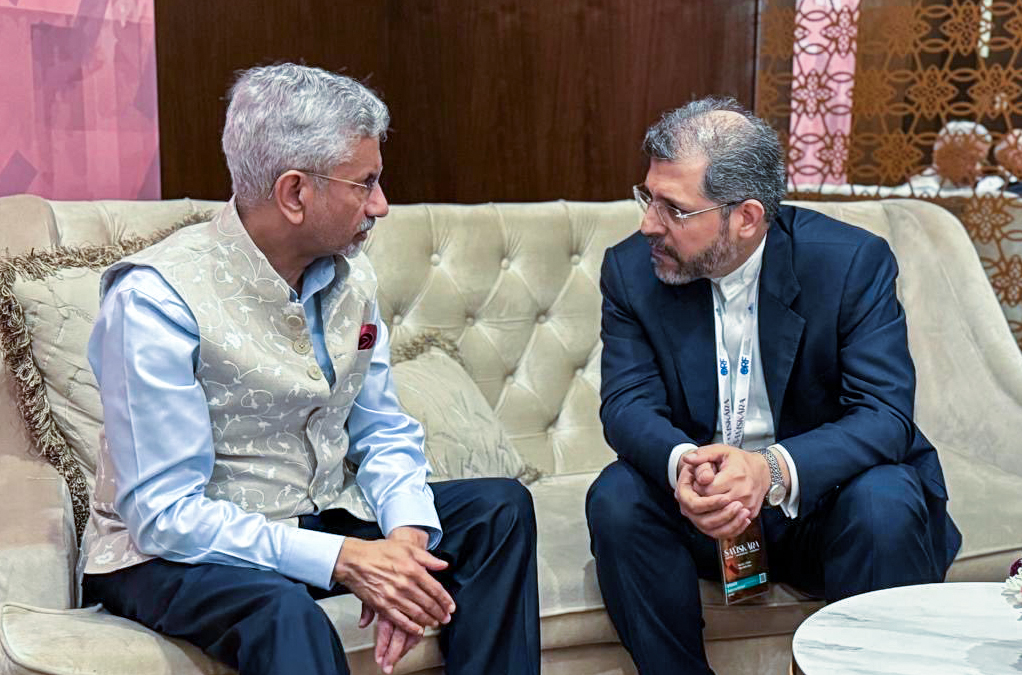
Iranian Deputy Foreign Minister Saeed Khatibzadeh has sought to reassure global markets that Tehran has not blocked the route despite the escalating conflict.
“Iran is an anchor of stability in the Strait of Hormuz. We will announce if we close the Strait of Hormuz. We have not closed it,” he said at the Raisina Dialogue in New Delhi.
“We have not yet closed the Strait of Hormuz. We have no intention to do that until further notice,” he added, describing Iran as a “responsible power” committed to freedom of navigation.
Nevertheless, the possibility of disruptions — even temporary ones — continues to worry energy-importing countries across Asia.
India maintains strategic petroleum reserves that can help cushion short-term supply shocks. But Bharti warned that the buffer may be limited in the face of prolonged disruptions.
“We have reserves for about 25–30 days for emergency situations,” she said, adding that even a two-week supply disruption could trigger volatility in Asian economies.
Markets react to geopolitical risk
Financial markets have already begun reacting to the escalating tensions. Indian equity markets ended the week sharply lower as investors grew cautious amid rising oil prices and geopolitical uncertainty.
The BSE Sensex closed at 78,918.90 points, down 1,097 points, while the Nifty ended at 24,450.45, falling 315 points.
Analysts say the conflict has weakened investor confidence and increased volatility in global markets.
“Investor sentiment remained guarded amid lingering geopolitical uncertainties and elevated crude oil prices, which continue to influence global risk appetite,” said Ajit Mishra, Senior Vice President for Research at Religare Broking.
Vinod Nair, Head of Research at Geojit Investments Limited, said the tensions were affecting India’s macroeconomic outlook.
“A sustained rise in oil prices could weigh on investor sentiment and adversely affect India’s twin deficits, inflation trajectory, and the RBI’s monetary stance,” he said.
Market volatility has also surged, with India VIX rising more than 11 per cent in a single session — a sign that investors are preparing for heightened uncertainty.
Ponmudi R, CEO of Enrich Money, said escalating rhetoric and retaliatory actions in the region have kept market participants defensive.
“The heightened uncertainty and rising headline risk kept market participants defensive, resulting in subdued risk appetite throughout the session,” he said.
Diaspora concerns in the Gulf
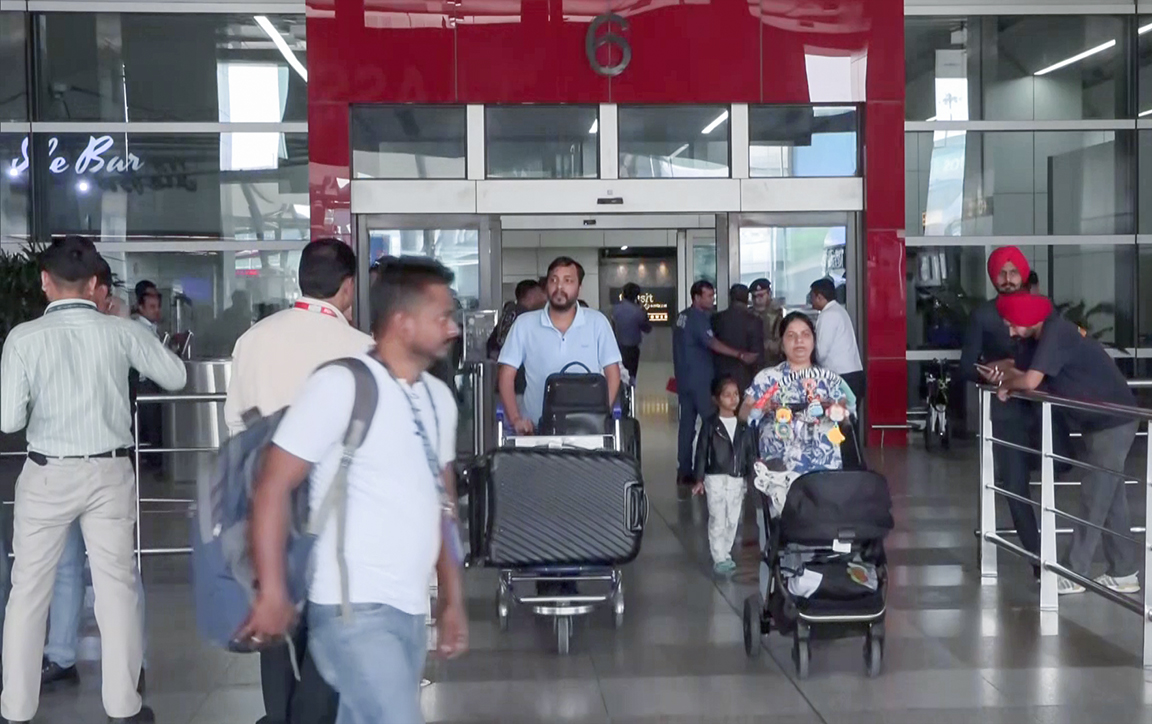
The crisis has also raised concerns about the safety and mobility of the large Indian diaspora in the Gulf region.
Millions of Indian workers live across West Asia, particularly in Gulf Cooperation Council countries such as Qatar, Saudi Arabia and the United Arab Emirates. The region is critical not only for remittances but also for India’s labour exports and economic ties.
In response to the deteriorating security situation, the Indian Embassy in Doha has issued advisories to Indian nationals in Qatar.
Residents have been urged to remain in safe locations, avoid unnecessary travel and follow the instructions of local authorities.
The embassy also opened a registration link to assist Indian nationals stranded in Qatar while transiting through the region.
“Embassy of India, Doha, is opening a registration link to facilitate in obtaining temporary transit visa for Saudi Arabia only for those Indian nationals who are currently stranded in Qatar on transit,” the advisory said.
Travel disruptions have intensified after Qatar closed its airspace and temporarily suspended flight operations due to the evolving situation.
The embassy said passengers should remain in touch with their airlines as updates are issued.
Political and strategic implications
The conflict is also triggering political debate in India over energy security and foreign policy autonomy.
Opposition leaders have criticised the United States after Washington announced a temporary waiver allowing Indian refiners to purchase Russian oil during the crisis.
Congress leader Rahul Gandhi described India’s foreign policy as “exploitation of a compromised individual,” arguing that the country’s strategic decisions should reflect its own interests and traditions.
Meanwhile, Congress MP Manish Tewari questioned whether India should require approval from Washington to secure energy supplies.
“Are we a banana republic that we need the permission of the US to secure our energy security imperatives?” he asked.
The controversy followed a statement from US Treasury Secretary Scott Bessent announcing a short-term waiver allowing Indian refiners to purchase Russian crude to maintain global supply stability during the conflict.
Strategic balancing act
For India, the unfolding crisis highlights the delicate balance it must maintain in West Asia — a region central to its energy security, diaspora welfare and geopolitical interests.
While diversified energy sourcing and strategic reserves provide some protection against immediate shocks, prolonged instability in the region could still exert significant pressure on India’s economy.
The conflict also underscores the urgency of accelerating long-term energy transitions.
Bharti said the crisis should serve as a wake-up call for countries heavily dependent on fossil fuel imports.
“Such geopolitical disruptions are an eye-opener,” she said. “Governments may increasingly focus on renewable energy like solar power so that dependence on volatile fossil fuel supply routes can be reduced.”
For India, the outcome of the Iran conflict will shape not only energy markets but also the broader stability of a region that remains deeply intertwined with its economic future.