


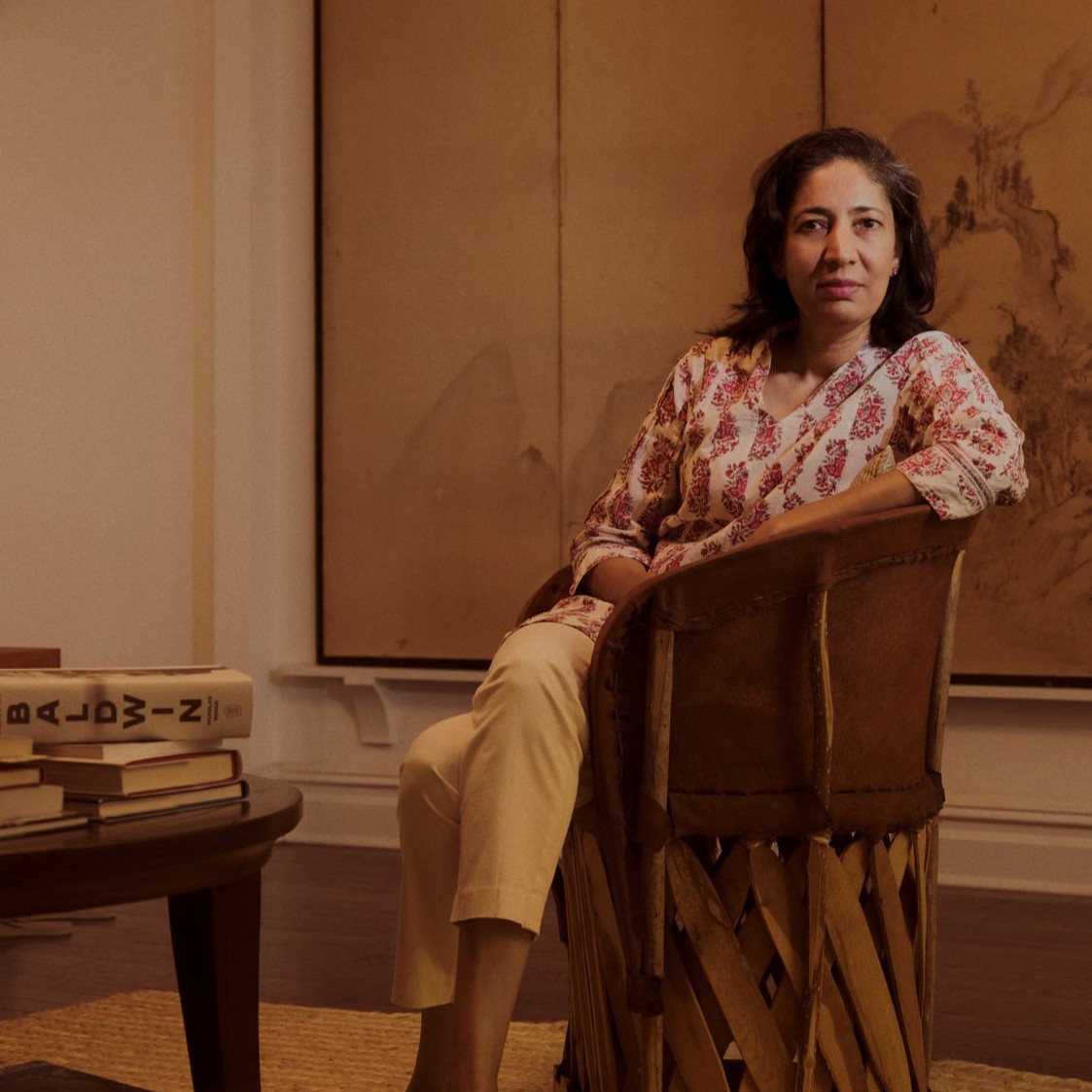
With a long-awaited novel and global acclaim, Kiran Desai reclaimed the center of Indian writing in 2025.
In a year crowded with political noise and cultural churn, Indian literature in 2025 found its defining moment in a quieter, rarer event: the return of Kiran Desai. With the publication of The Loneliness of Sonia and Sunny in September, nearly two decades after her Booker Prize–winning The Inheritance of Loss, Desai did more than release a new novel. She reasserted the power of serious literary fiction, and in doing so emerged as the leading Indian writer of the year.
The anticipation alone set her apart. For almost twenty years, Desai had remained largely absent from the publishing world, her silence becoming part of her mystique. Few contemporary writers could afford such an interval without fading from relevance. Desai returned not with a modest or cautious book, but with an ambitious, expansive novel that demanded time, attention, and emotional investment from its readers. In an era dominated by speed and spectacle, that choice itself felt significant.
The Loneliness of Sonia and Sunny is set largely among Indian immigrants in the United States and explores love, family, class, race, and the persistent ache of non-belonging. At its core, it is a novel about displacement—geographical, emotional, and cultural—and about the quiet negotiations people make to survive between worlds. Desai treats the Indian diaspora not as a sociological category but as a lived condition, shaped by longing, memory, and unresolved contradictions.
Critics responded with unusual unanimity. Booker Prize judges described the novel as “vast and immersive,” praising its scale and emotional reach. The New York Times called it a major literary event, noting how it reignited conversations around migration, identity, and inheritance at a moment when these questions are once again politically and morally charged. For many readers, the novel felt both timely and timeless, speaking to the present while refusing the shortcuts of topical fiction.
The Booker Prize shortlist in 2025 sealed Desai’s return to the global literary stage. Nearly twenty years after winning the prize in 2006, she became one of the rare writers to re-enter that elite space not through steady output, but through a single, commanding work. The nomination was not just recognition of one book, but an acknowledgment of endurance—the ability to remain relevant by depth rather than frequency.
Kiran Desai’s literary reputation was firmly established well before her 2025 return. Her debut novel, Hullabaloo in the Guava Orchard (1998), announced a distinctive voice marked by wit, irony, and a sharp eye for social absurdity in small-town India. She achieved international acclaim with her second novel, The Inheritance of Loss (2006), which won the Booker Prize. Set between the eastern Himalayas and New York, the novel examined globalization, migration, and fractured identities with emotional precision, cementing Desai as one of the most significant Indian writers of her generation.
What distinguished Desai in 2025 was not merely acclaim, but authority. Indian writing in English has grown broader and louder in recent years, often driven by immediacy, commentary, or market appeal. Desai offered something different: a reminder that the novel can still be a serious instrument of moral and emotional inquiry. Her prose is patient, attentive to detail, and deeply interior, resisting easy conclusions. In doing so, she stood apart from trends without rejecting the contemporary world she depicts.
Her treatment of the Indian immigrant experience also avoided familiar tropes. Rather than celebrating success or rehearsing trauma, Desai focused on ambivalence—the sense of being perpetually unfinished. Sonia and Sunny, her central figures, are not symbols but complex individuals, shaped as much by desire and misunderstanding as by history. This refusal to simplify identity gave the novel its resonance across borders.
Equally important was the way Desai’s return reshaped expectations. In a publishing culture that often rewards constant visibility, she demonstrated the value of artistic patience. The long gestation of The Loneliness of Sonia and Sunny became part of its meaning. It suggested that some stories require time not only to be written, but to ripen in the writer’s imagination.
For younger Indian writers, Desai’s 2025 moment carried a quiet lesson: that literary significance is not measured only by productivity or presence, but by seriousness of purpose. Her success re-centered attention on craft, structure, and emotional truth at a time when these are often overshadowed by urgency and opinion.
By the end of 2025, it was clear that Kiran Desai had not simply returned to literature—she had recalibrated it. Her novel stood as the year’s most consequential work by an Indian writer, not because it chased the moment, but because it illuminated the enduring questions beneath it. In a crowded literary landscape, Desai led by reminding readers why the novel still matters.