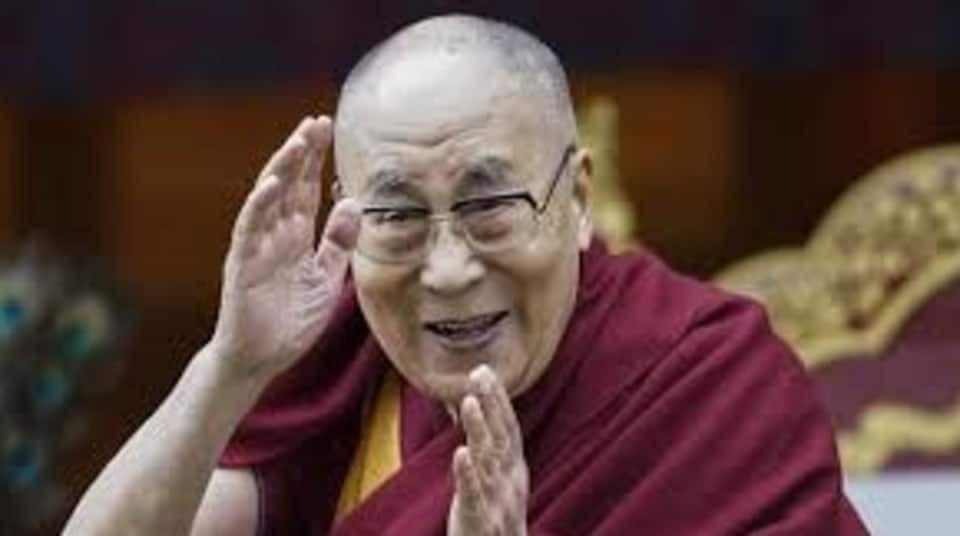


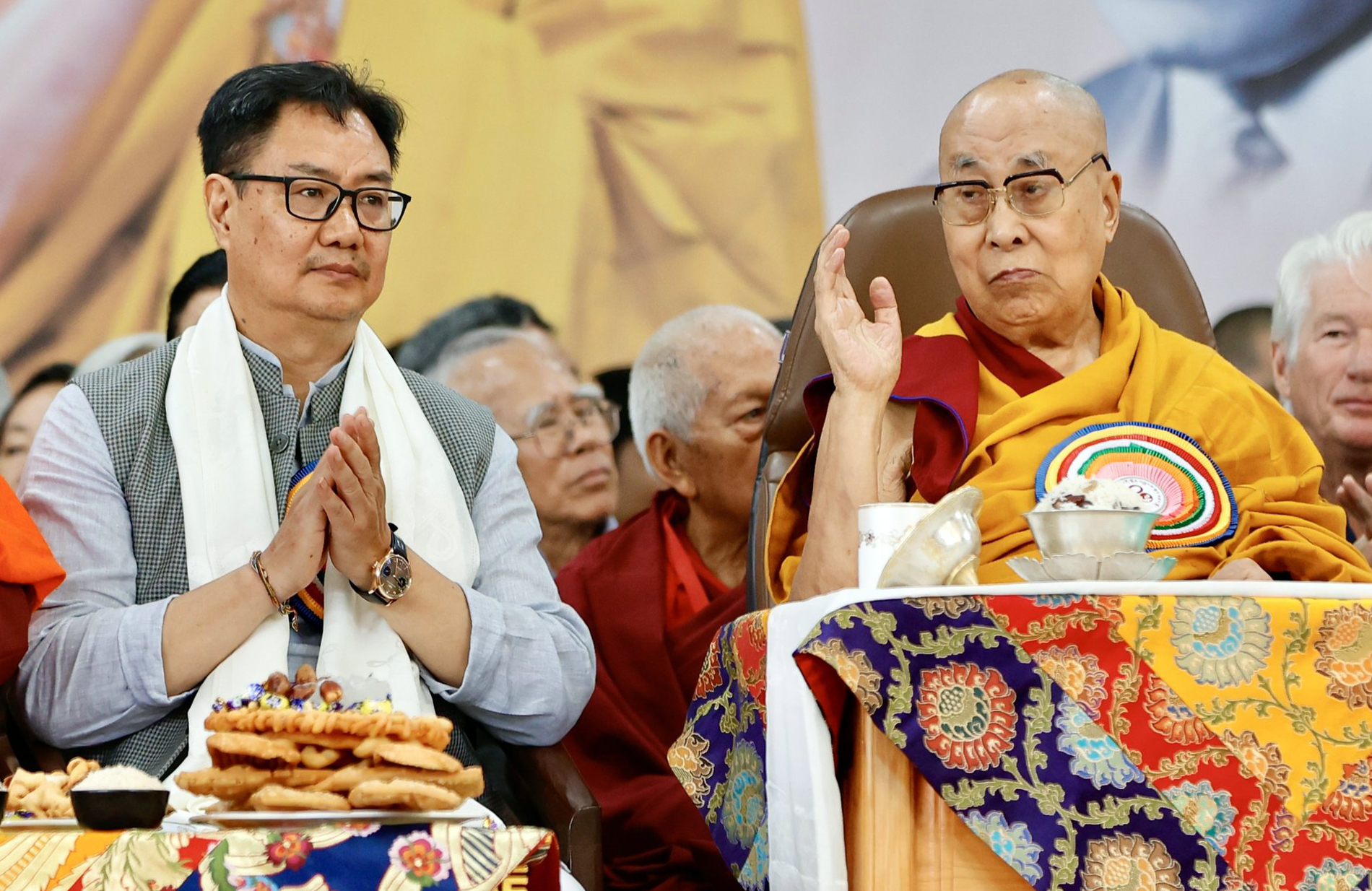
As the Dalai Lama turned 90 in 2025, his life’s milestone becomes a global referendum on religious freedom, moral authority, and the future of a threatened civilization.
The 90th birthday of the 14th Dalai Lama on July 6, 2025, was not merely a personal milestone for one of the world’s most recognizable spiritual figures. It marked a critical juncture for Tibetans and a moment of consequence for the international community, touching questions of religious freedom, cultural survival, and the resilience of moral authority in an unsettled global order.
This significance was underlined by the Dalai Lama’s latest reaffirmation of his 2011 statement on succession. Speaking during a three-day gathering of senior Tibetan Buddhist leaders in Dharamsala, he made it unequivocally clear that only his Gaden Phodrang Trust—the Office of His Holiness the Dalai Lama—will have exclusive authority over the recognition of his reincarnation. Emphasizing the spiritual foundations of the process, he said the search and recognition must follow centuries-old tradition, in consultation with the heads of Tibetan Buddhist schools and oath-bound Dharma Protectors linked to the Dalai Lama lineage.
The clarity of this declaration was deliberate. In recent years, China’s officially atheist government has asserted that the reincarnation of the Dalai Lama must comply with Chinese Communist Party laws. Beijing’s claim to authority over a deeply spiritual and religious process not only disregards Tibetan Buddhist tradition but also violates the universal principle of religious freedom. The Dalai Lama’s statement makes clear that any successor identified outside the prescribed religious process would be illegitimate.
This issue has already drawn sustained international concern. Governments and institutions including the United Nations, the European Union, and the United States have repeatedly rejected Chinese interference. UN human rights experts have objected to Beijing’s claims, the US State Department has described China’s plans as “meritless,” and the US Congress has passed legislation providing for sanctions against Chinese officials who interfere in the process. The European Union has similarly reaffirmed that the selection of the Dalai Lama must occur without government interference and in accordance with religious norms.
The stakes are global because Tibetan Buddhism is global. Once largely confined to Tibet, Mongolia, Bhutan, the Himalayan regions of India and Nepal, and parts of Russia, Tibetan Buddhist communities today live across Europe, North America, and much of Asia. China’s attempt to control the succession is therefore not an internal matter, but an assault on the religious freedom of believers worldwide.
The background to this confrontation is long and painful. The tradition of recognizing reincarnate lamas evolved over centuries. The 14th Dalai Lama himself was identified through traditional means during a period when Tibet was independent. Since annexing Tibet, Chinese authorities have alternated between banning, ignoring, and tightly controlling religious practices, causing lasting damage to Tibetan Buddhism. The abduction in 1995 of the 11th Panchen Lama, then a six-year-old child, made unmistakably clear that Beijing was willing to intervene directly in the heart of Tibetan religious life.
Against this backdrop, the Dalai Lama’s 90th birthday assumes historic importance. He had indicated as early as 2011 that he would consult senior lamas, the Tibetan public, and other concerned individuals around this milestone to offer clear guidance on succession. That moment has now arrived, even as China frames control over the reincarnation process as a “protracted war,” central to maintaining its grip over Tibet, a region of deep strategic value.
For Tibetans, this birthday coincides with a broader existential struggle. As they prepare to observe a ‘Year of Compassion’ in his honor, Beijing continues a systematic campaign to diminish the Dalai Lama’s influence and to bring Buddhist institutions under state control, even beyond China’s borders. These efforts intersect with a wider global environment marked by expanding techno-authoritarianism, geopolitical rivalry, and growing pressures on democratic norms.
Over 65 years of exile, the Dalai Lama has safeguarded Tibet’s national, cultural, and religious identity during the most perilous period in its two-millennia history. He transformed Tibetan Buddhist values into a force that speaks both spiritually and secularly, and became the first Dalai Lama to relinquish political power in favor of democratic governance in exile. Despite sustained attempts to isolate Tibet, his moral authority continues to inspire Tibetans inside Tibet and new generations across the world.
The challenge ahead is unprecedented. Traditional Tibetan governance and succession are deeply tied to sacred landscapes—mountain pilgrimage sites and oracle lakes—now inaccessible to Tibetans in exile. Succession planning must therefore be reimagined under conditions of displacement, geopolitical competition, and sustained pressure from a powerful state intent on imposing its own candidate.
As the Dalai Lama turns 90, the moment tests the international community’s resolve. It asks whether pluralism can be defended against transnational authoritarian strategies that employ coercion, disinformation, and control over belief itself. In that sense, his birthday is not only a celebration of a remarkable life, but a reminder that the struggle for freedom of conscience remains unfinished—and profoundly global.