

Our Bureau
New York, NY
The Global Organization of People of Indian Origin (GOPIO) hosted its December 2025 webinar, “Coping with Technological Changes and Challenges,” on December 13, 2025. Held virtually, the webinar brought together distinguished speakers from diplomacy, academia, industry, and technology to examine emerging technologies and their far-reaching implications for society, development planning, and the global workforce.
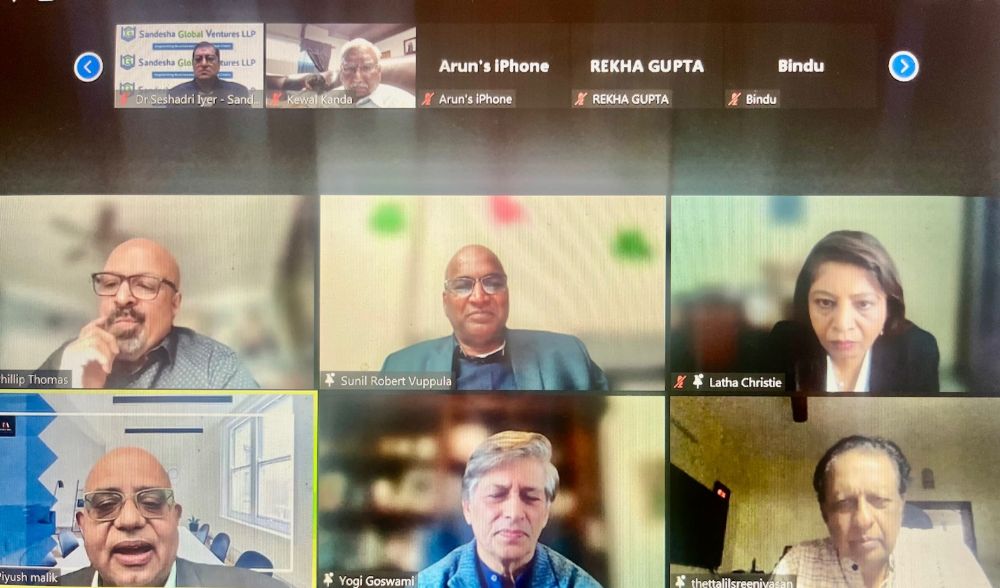
The webinar focused on both the challenges and opportunities posed by rapid technological transformation. Former Indian Ambassador T. P. Sreenivasan delivered the keynote address, while the panel featured Professor D. Yogi Goswami, Mr. Piyush Malik, Dr. Latha Christie, and Mr. Phillip Thomas. Discussions covered artificial intelligence (AI), quantum computing, clean energy technologies, and their societal, ethical, and geopolitical impacts.
Speakers explored critical issues such as the affordability of new technologies for disadvantaged populations, the geopolitical risks associated with technological dominance, and the urgent need for ethical guardrails in AI development. Throughout the session, panelists emphasized balancing innovation with human values and adopting policies that ensure technological benefits reach all segments of society. The discussion was skillfully moderated by Mr. Sunil Roberts Vuppula, GOPIO Associate Secretary, who posed thought-provoking questions and facilitated active engagement among panelists.
The program began with a welcome address by Dr. Thomas Abraham, Chairman of GOPIO, who briefly outlined GOPIO’s founding in 1989 in New York and underscored the relevance of the webinar topic.
“We are living through an unprecedented acceleration of technology, with artificial intelligence, automation, robotics, data systems, and biotechnology transforming economies and societies at a pace never seen before,” Dr. Abraham said. “These advances bring immense opportunities for innovation, productivity, and improved quality of life.”
Dr. Abraham added, “The transformation is no longer a future possibility—it is already here. The key question is how we prepare our societies to adapt, retrain, and ensure that technological progress remains inclusive and humane.”
GOPIO International President Mr. Prakash Shah spoke about the rapid and consequential changes expected from technologies such as driverless cars, AI, and robotics. He highlighted the likelihood of large-scale job displacement and the exponential increase in demand for electricity and water needed to sustain emerging technologies.
“Many will gain windfall profits, but many more may lose their livelihoods. Shouldn’t we develop plans now to address the coming unemployment?” Mr. Shah asked at the outset of the session.
Ambassador T. P. Sreenivasan, diplomat, author, television commentator, former Governor for India at the International Atomic Energy Agency (IAEA), and currently Adjunct Professor of Eminence at Somaiya Vidyavihar University, Mumbai, delivered the keynote address as Chief Guest.
He noted that technological change is reshaping every vocation, including diplomacy, and that no profession can remain indifferent to these “tectonic tremors.” Quoting historian and philosopher Yuval Noah Harari, Ambassador Sreenivasan emphasized that the unprecedented speed of technological change poses a greater challenge than the evolutionary pace of humankind.
He also referred to concerns raised at the United Nations Security Council regarding AI-related risks to global stability and conflict prevention, highlighting the principle that: “Humans must retain full control over life-and-death decisions.”
Concluding his address, Ambassador Sreenivasan said: “I am confident that this webinar will lead to further initiatives to ensure that technology is humanized—even if that requires a certain loss of speed.”
Panel Presentations
Professor D. Yogi Goswami, Director of the Clean Energy Research Center at the University of South Florida, Tampa, spoke about opportunities and challenges in clean energy innovation. He discussed cutting-edge approaches to climate change mitigation, including radiative cooling using deep space as a heat sink, advanced cooling paints for buildings, color-changing coatings, nanoscale antennas for improved solar energy conversion, and the Goswami Cycle for converting low-temperature heat into power and cooling.
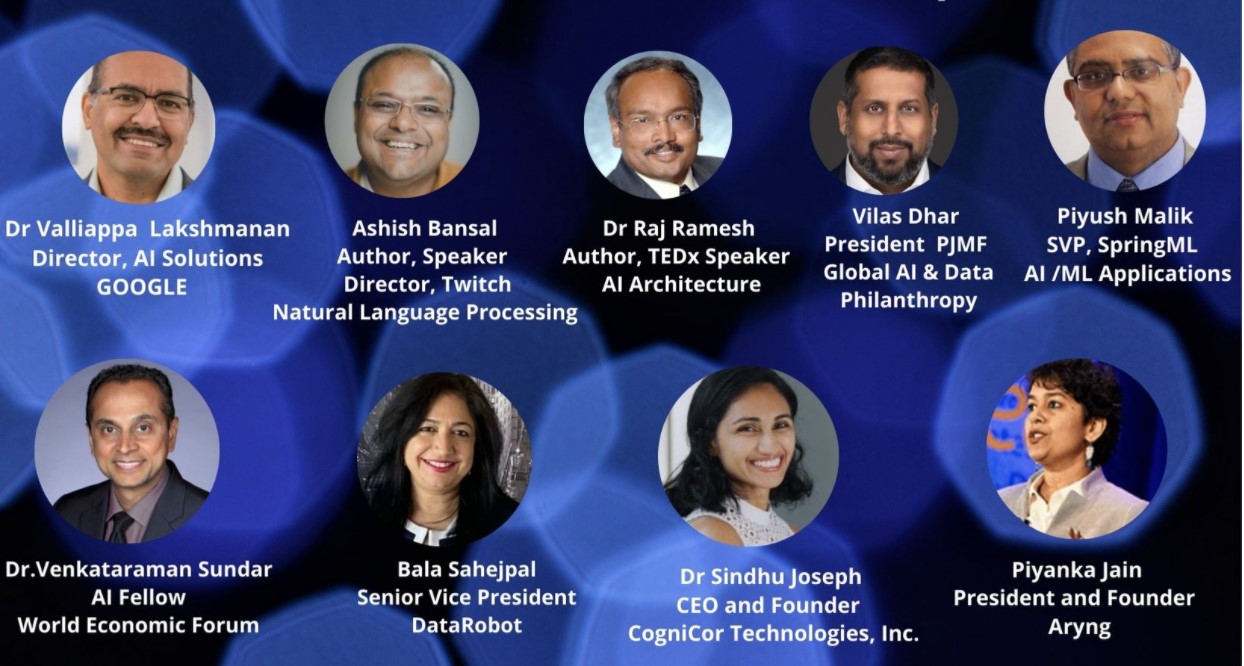
Mr. Piyush Malik, a seasoned executive, angel investor, and thought leader in digital transformation, AI, and IoT, addressed how corporations are leveraging AI to transform customer experiences. He highlighted the rapid disruption AI is causing across economies, cultures, and daily life, as well as the geopolitical implications of AI leadership among nations. Mr. Malik stressed that the main challenge in AI adoption is not technological capability but preparing the workforce and society to integrate effectively with AI systems.
“AI is not replacing humans—it is assisting and augmenting human capabilities,” he said.
He further emphasized the need to address skill shortages through self-initiative, education, and government incentives to promote AI literacy.
Dr. Latha Christie, former scientist at India’s Defense Research and Development Organization (DRDO), examined the convergence of AI and quantum technologies. She highlighted their dual-use nature and the urgent need for trust infrastructure in an AI-driven world. Dr. Christie discussed risks such as encryption disruption, governance lag, and hyper-offense, noting that AI is rapidly evolving from systems that “answer” to agents that “act,” plan, decide, and execute tasks across platforms.
“Innovation needs rails—clear guardrails—so that powerful technologies grow with safety, accountability, and non-negotiable human responsibility,” she concluded.
Mr. Phillip Thomas, a serial entrepreneur and digital transformation executive, discussed the dual nature of technology as both a force for progress and potential harm. He emphasized ethical AI implementation and shared examples of AI applications in customer service, entertainment, and creative industries. He underscored the importance of emotional intelligence in navigating technological change and encouraged participants to leverage technology to pursue personal passions while balancing individual benefits with the greater good of humanity.
Panel Discussion
The webinar concluded with an interactive panel discussion. Mr. Malik reflected on his 30-year career in data and AI, noting the unprecedented pace of innovation and the importance of collaborative ecosystems. Moderator Sunil Vuppula raised concerns about whether AI benefits would be accessible to economically disadvantaged populations, particularly in India. Ambassador Sreenivasan addressed the broader geopolitical risks of emerging technologies, pointing to uncertainties in the current global order and the possible need for new international frameworks beyond existing institutions.
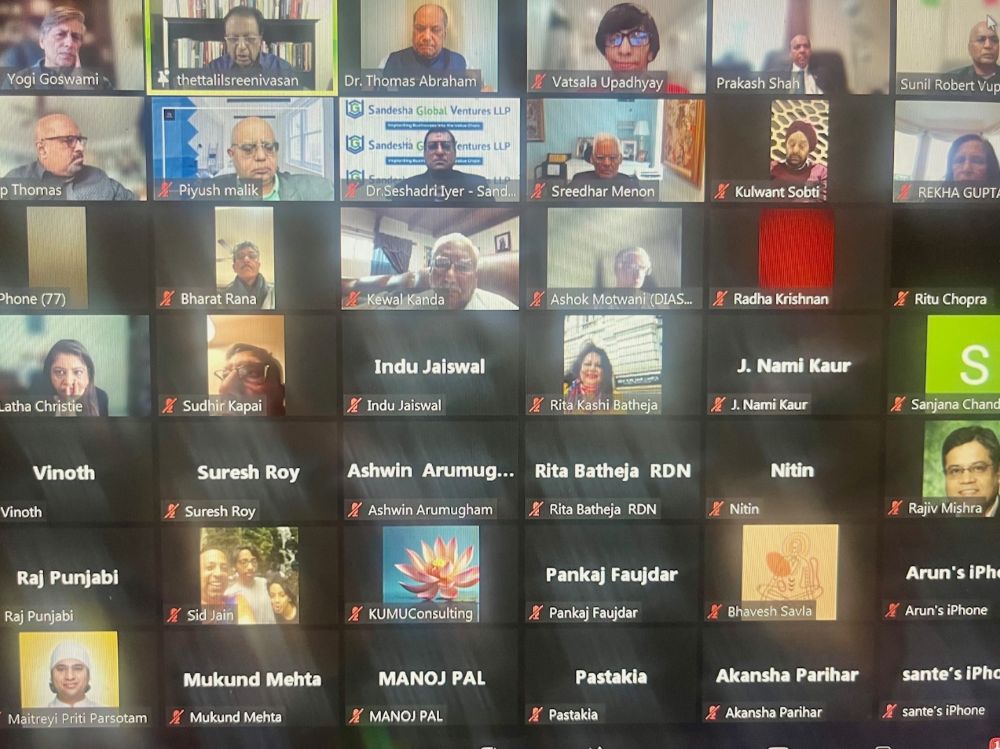
The program ended with a vote of thanks by GOPIO Secretary Siddarth Jain. Technical support for the Zoom meeting was provided by GOPIO Associate Secretary Vatsala Upadhyay.
About GOPIO – Founded in 1989, GOPIO is a non-partisan, not-for-profit, secular organization with Individual Life Members and chapter delegates from over 100 chapters in 36 countries. GOPIO’s volunteers are committed to enhancing cooperation and communication between NRIs/PIOs and the local communities, building networks, bonds, friendships, alliances, and the camaraderie of citizens and colleagues alike. GOPIO volunteers believe that when they help network the global Indian community, they facilitate making tomorrow a better world for the Indian Diaspora, the countries they live in and India.