

The Winter Session of Parliament became a battleground where culture, democracy and public health collided, as the ruling BJP and the opposition clashed sharply over Vande Mataram, elections and pollution
Our Bureau
New Delhi
The Winter Session of Parliament, which began on December 1 and runs till December 19, has unfolded as one of the most acrimonious in recent memory. Instead of legislative consensus or policy breakthroughs, the session has been dominated by sharp ideological clashes, procedural disruptions and walkouts. At its heart lie three issues that reveal the deeper anxieties of Indian politics today: the meaning of nationalism through Vande Mataram, the integrity of elections, and the crisis of air pollution.
Taken together, these debates reflect not isolated disagreements but a broader struggle over narrative control, institutional trust and governance priorities as India heads into an election-heavy political cycle.
History as political weapon
The nearly 12-hour debate in the Lok Sabha on the 150th anniversary of Vande Mataram set the tone for the session. What could have been a moment of collective reflection on a shared symbol of the freedom struggle instead turned into a fierce ideological contest.
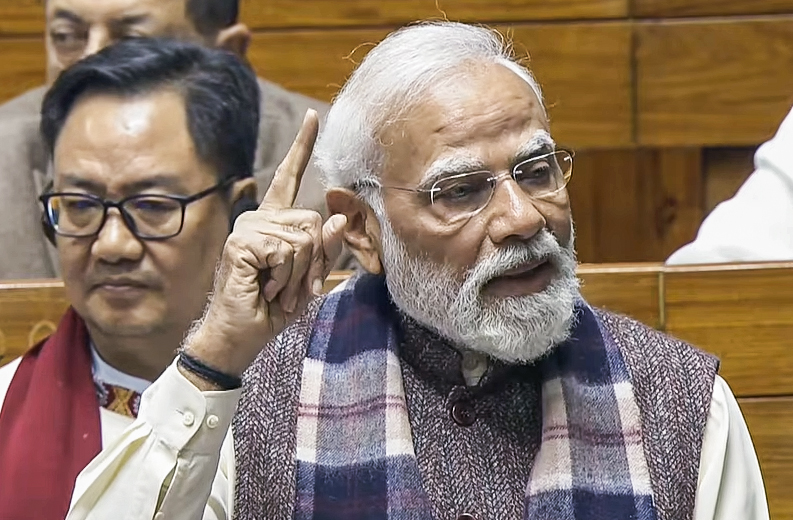
Prime Minister Narendra Modi opened the debate by framing Vande Mataram as the spiritual and cultural force that energized India’s freedom movement. He described it as a mantra embodying sacrifice, resilience and national unity. But the speech quickly moved beyond celebration into accusation. Modi alleged that the Congress, particularly during the 1930s, had compromised the song under pressure from the Muslim League, fragmenting it in the name of appeasement.
By citing Jawaharlal Nehru’s 1937 correspondence with Subhas Chandra Bose and linking it to later decisions, Modi constructed a historical narrative in which Congress’s handling of Vande Mataram symbolized a larger moral failure that, in his telling, culminated in the partition of India. Union Home Minister Amit Shah and Defense Minister Rajnath Singh reinforced this line, accusing Congress governments of marginalizing the national song, especially during the Emergency.
For the BJP, the debate served a strategic purpose. It reinforced cultural nationalism, questioned the Congress’s moral authority over the freedom struggle, and signaled ideological clarity to its core base. It also carried electoral overtones, particularly with West Bengal in mind — Bankim Chandra Chatterjee’s home state and a key political battleground.
The opposition pushed back strongly. Priyanka Gandhi Vadra accused Modi of selective history and political opportunism. She reminded the House that Vande Mataram is sung at every Congress session and questioned why the BJP sought exclusive ownership of a song rooted in the collective freedom movement. Other opposition leaders, including Akhilesh Yadav and Jairam Ramesh, warned against turning a unifying symbol into a partisan tool.
The result was a debate less about history and more about legitimacy — who gets to define nationalism, and who speaks for India’s past. Rather than closure, it deepened ideological trench lines.
Elections: democracy in dispute
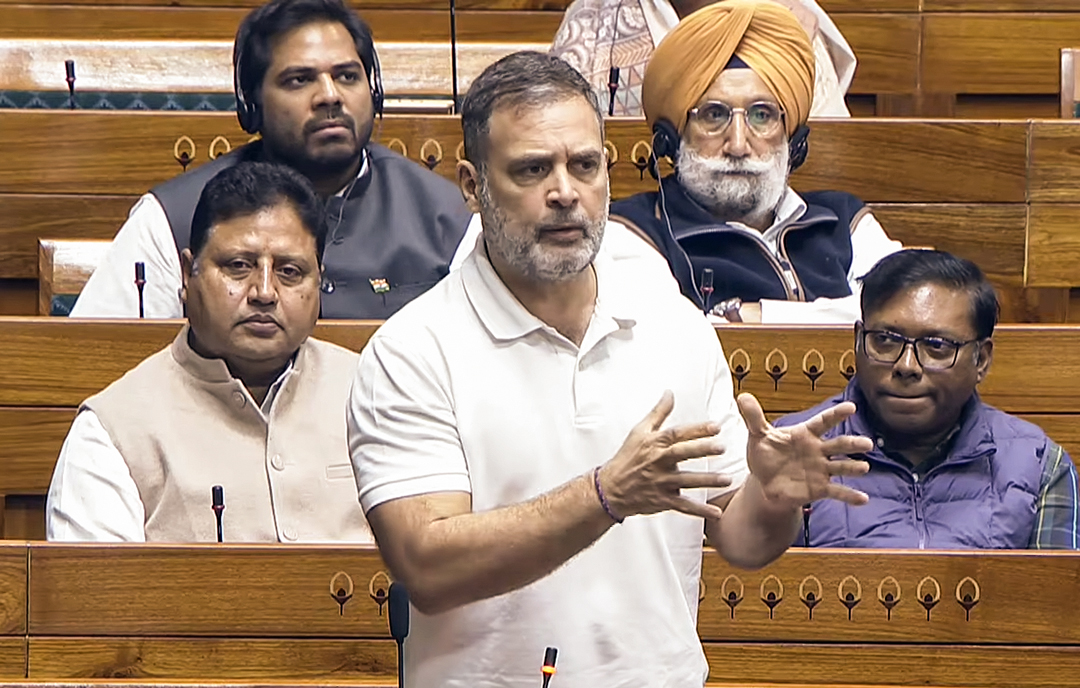
If the Vande Mataram debate was emotional, the discussion on electoral reforms was incendiary. Leader of Opposition Rahul Gandhi used the floor of Parliament to reiterate his allegation of “vote chori,” accusing the Election Commission of colluding with the ruling party to shape electoral outcomes.
Gandhi’s central charge focused on recent changes to the law governing the appointment of Election Commissioners — specifically the removal of the Chief Justice of India from the selection committee and the granting of immunity to commissioners for actions taken during their tenure. He argued that these changes hollowed out institutional independence and concentrated power in the hands of the executive.
Home Minister Amit Shah rejected the allegations outright, defending the Special Intensive Revision (SIR) of electoral rolls as a necessary exercise to sanitize voter lists. He accused the opposition of double standards, arguing that Congress had directly appointed Election Commissioners during its own years in power without consulting the opposition or judiciary.
What followed was one of the session’s most heated exchanges. Gandhi repeatedly challenged Shah to debate his press conference allegations point by point, while Shah insisted that Parliament would not function on the opposition’s terms. Walkouts, interruptions and sharp personal remarks followed, forcing adjournments.
The confrontation revealed a deeper problem: a growing crisis of trust in democratic institutions. For the opposition, electoral integrity has become the central rallying cry, framing elections as the last line of defense for democracy. For the ruling party, these allegations are seen as an attempt to delegitimize its electoral dominance and undermine institutions when outcomes are unfavorable.
Neither side appears willing to concede ground. The result is paralysis — not just of proceedings, but of public confidence.
Pollution: rare consensus, limited space
In contrast to the ideological and institutional battles, the debate on air pollution briefly offered a glimpse of cooperation. Rahul Gandhi’s intervention on pollution struck a markedly different tone. Describing India’s major cities as living under “a blanket of poisonous air,” he framed pollution as a national emergency rather than a political issue.
He warned of long-term damage to children’s health, rising cases of respiratory illness and cancer, and urged Parliament to hold a detailed, solution-oriented discussion. Notably, Gandhi explicitly called for an end to blame games, offering cooperation from the opposition and suggesting expert-driven, city-specific action plans.
The government responded cautiously but positively. Parliamentary Affairs Minister Kiren Rijiju assured the House that the government was open to discussion and solutions under existing parliamentary rules. Other opposition MPs echoed the need to prioritize pollution alongside issues like unemployment and public safety.
Yet the pollution debate struggled to sustain momentum. Overshadowed by louder confrontations on nationalism and elections, it highlighted a recurring pattern in Parliament: consensus issues often receive less time and political energy than polarizing ones.
The larger pattern
Viewed together, the three debates reveal the political dynamics shaping this, Parliament. Cultural symbolism energizes bases but hardens divisions. Electoral disputes reflect deep mistrust and raise existential questions about democratic credibility. Governance challenges like pollution generate agreement but struggle to command sustained attention.
The Winter Session has also exposed Parliament’s diminishing ability to act as a space for resolution. Walkouts and adjournments have become routine, reducing opportunities for substantive legislation. Political communication increasingly happens through speeches aimed outside the House — at voters, social media and television audiences — rather than through negotiation within it.
There is also a strategic asymmetry at play. The ruling party, buoyed by electoral success, frames debates around identity, history and institutional confidence. The opposition, fragmented but vocal, focuses on institutional capture, procedural fairness and accountability. Both speak past each other.
The Winter Session may not be remembered for laws passed or policies refined. Instead, it will be seen as a snapshot of Indian democracy at a moment of intense contestation — loud, adversarial, deeply polarized, yet still vibrantly engaged.
The unresolved question is whether Parliament can move beyond symbolic warfare toward functional governance. Pollution offers a test case: an issue where consensus exists but political will must follow. Elections remain the fault line where trust must somehow be rebuilt. And Vande Mataram reminds us how powerfully history can be mobilized — or weaponized — in contemporary politics.
As the session draws to a close, the message is clear: Parliament is not short of passion or participation. What it lacks, increasingly, is common ground.