

India confronts a chilling new reality as educated professionals from Kashmir and other parts of the country emerge at the center of terror attacks.
Our Bureau
New Delhi / Srinagar
The November 10 suicide blast outside Delhi’s Red Fort — a fiery explosion inside a moving Hyundai i20 that killed 15 people and injured more than two dozen — has become a defining moment for India’s internal security establishment. It wasn’t merely the scale of the attack, nor the location, nor even the ruthlessness of its execution. It was the identity of those behind it. For years, security agencies warned of a shifting trend in homegrown extremism. Now, with the Red Fort attack, that shift has arrived with terrifying clarity.
The men at the center of the bombing are not faceless infiltrators crossing mountain passes under cover of darkness. They are doctors, scholars, clerics, and professionals who studied, taught, healed, and worked within India’s mainstream social fabric. The suicide bomber himself — later identified through forensic analysis — was not a hardened militant hiding for years in the shadows. He was an Assistant Professor of General Medicine at a private university in Haryana.
This is the new face of terror in India.
This is the enemy within.
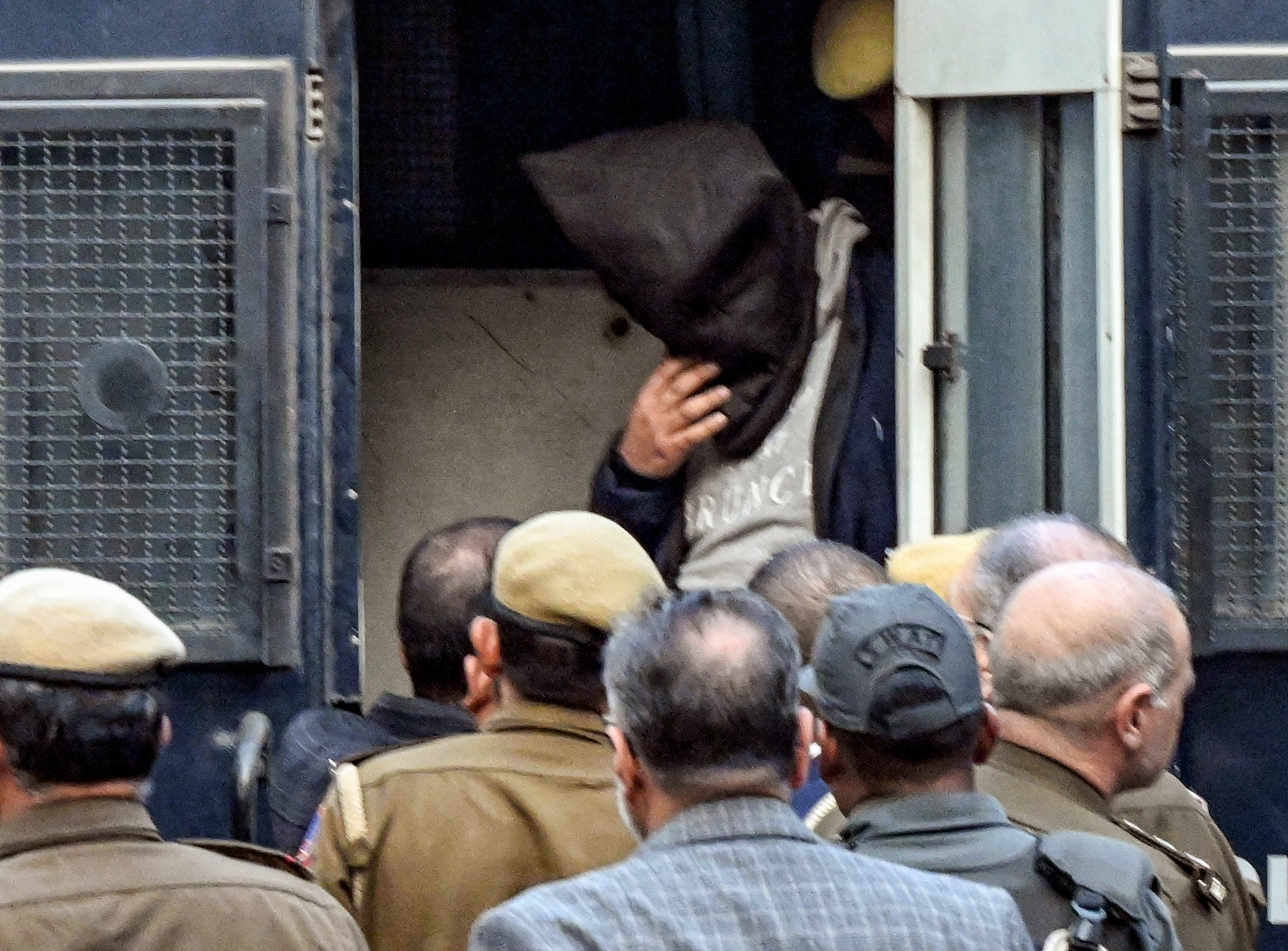
The National Investigation Agency (NIA), which took over the case a day after the blast, has made six arrests so far. The first two included the man in whose name the car was purchased and a technical facilitator. But it was the next set of arrests that jolted the nation: Dr. Muzammil Shakeel Ganai of Pulwama, Dr. Adeel Ahmed Rather of Anantnag, Dr. Shaheen Saeed of Lucknow, and cleric Mufti Irfan Ahmad Wagay of Shopian.
All four were arrested in Srinagar and produced before the Special NIA Court in Patiala House, where they were remanded to ten days of custody. For investigators, the implications of these profiles — physicians, academics, a mufti — pointed to a new and more deeply embedded pattern of radicalization, one that no longer fits the old images of militancy.
As NIA teams worked across Delhi, Jammu and Kashmir, Uttar Pradesh, and Haryana, they encountered an ecosystem of encrypted channels, carefully coordinated movements, and personal networks built over years. This was not an impulsive act carried out by impressionable youth. It was a structured, ideologically driven operation — its members educated, mobile, and socially integrated.
This is the unsettling truth that India now confronts.
Hidden in Plain Sight
With the arrests came a wave of scrutiny over the institutions and environments that shaped the accused. One name surfaced repeatedly: Al-Falah University in Faridabad. The suicide bomber, Dr. Umar Un Nabi, had worked there as an Assistant Professor. This was not the first time the university found itself mentioned in the same breath as terrorism.
Intelligence inputs revealed that years earlier, another alumnus, Mirza Shadab Beg, had become a key figure in the Indian Mujahideen. An engineering graduate from the same institution, he was linked to the 2008 Ahmedabad and Jaipur bombings, the Udupi explosives procurement, and the Gorakhpur serial blasts. He remains absconding, believed to be somewhere in Afghanistan.
As the Red Fort blast brought Al-Falah back under the scanner, a parallel investigation by the Enforcement Directorate unearthed a web of alleged accreditation fraud and money laundering linked to the university’s administration. The arrest of the chairman in a separate case added another layer of suspicion, even though no direct connection to the blast has been officially asserted.
For security agencies, these overlaps raise troubling questions. Why are multiple individuals associated with reputable educational institutions turning toward violent extremism?
What ideological networks are operating unseen within academic environments?
And most importantly, why are highly educated professionals — people who should be insulated by opportunity and social mobility — embracing the path of terror?
The Red Fort blast has forced agencies to re-examine long-held assumptions about radicalization. Earlier waves often involved young men driven by conflict exposure, lack of opportunities, or targeted recruitment. The current trend seems powered by something different: ideological conviction incubated in environments that appear, outwardly, to be modern and aspirational.
When a doctor becomes a suicide bomber, the nation is forced to ask not only who radicalized him — but how he lived in plain sight for so long.
Some Hard Questions
As news of the accused professionals filtered out, the political reactions grew sharp and predictable. Congress MP Imran Masood called Umar Un Nabi a “misguided youth,” sparking a storm of criticism. BJP leaders accused the opposition of offering “intellectual cover” to extremists, linking the statement to past controversies and what they called an “appeasement culture.”
But amid the political jousting, the core issue was largely ignored.
Is it accurate to call a trained medical professor — a man who consciously planned, sourced, and delivered an explosive device into a crowded public space — “misguided”? Can someone with years of education, professional stability, and access to information fit into that category?
Or does the label serve as a convenient shield that avoids engaging with the deeper, more uncomfortable reality — that radicalization in India today cuts across class, education, and professional success?
As the political rhetoric escalated, Mehbooba Mufti visited the family of a Kashmiri victim of the blast and urged that national anger not be turned against ordinary Kashmiris. Her message reflected the emotional fault lines that these attacks trigger: the grief of victims, the fear of reprisals, and the difficulty in separating individual acts from an entire region’s identity.
Yet the debate also highlighted something else — the widening gap between political narratives and the security challenges unfolding on the ground.
While politicians traded accusations, NIA teams were examining 73 witnesses, coordinating with Delhi, J&K, Uttar Pradesh and Haryana Police, and pursuing every lead to uncover a wider conspiracy.
The investigators saw the case as a systematic internal threat. The political class saw it as a moment for positioning. The two perspectives rarely met.
Architecture of Terror
What makes the Red Fort attack particularly alarming is the emerging architecture behind it. Investigators now believe that this module operated through personal networks rather than mass recruitment. It was tight-knit, disciplined, and ideologically aligned. It did not require large camps, foreign handlers, or cross-border infiltration. It required belief — shared by a small group of highly educated individuals who built a lethal trust ecosystem among themselves.
This marks a significant shift from earlier generations of militancy.
Today’s radicalization model is quieter, more insular and more difficult to detect. It can take root not in remote hideouts but in hostels, WhatsApp groups, university libraries, private apartments, and encrypted channels.
The suicide bomber’s own trajectory reflects this evolution. A doctor and professor, he moved between campuses and cities, blending into academic life while harboring extremist motivations. His second vehicle — recovered and now being examined for evidence — may provide more clues about his activities in the months before the attack.
The sophistication of the module is reflected in the precision of the operation: vehicle procurement, reconnaissance, IED assembly, coordinated support roles, and the timing of the blast. This was not amateur radicalization. This was professional execution.
Even the legal system felt the pressure. When co-accused Jasir Bilal Wani sought special access to meet his lawyer at the NIA headquarters, the Delhi High Court firmly refused. “This is not a special case,” the judge said, underscoring the importance of procedural integrity even amid public pressure.
Meanwhile, NIA’s multi-state search operation continues, with officers convinced that the arrests so far represent only part of a larger network.
A Real Threat
The Red Fort blast has shattered a dangerous illusion — that terrorism emerges only from the margins of society, from remote terrains or from foreign soil. The new reality is stark: extremism can emerge from college classrooms, medical labs, professional corridors and urban neighborhoods.
The nation must confront this new profile: educated, articulate, professionally accomplished, ideologically committed, and embedded within society.
This shift demands new thinking. It demands new strategies. And most of all, it demands that India recognize the contours of a threat that is no longer distant. The idea that a healer could turn into a suicide bomber or that a professor could transform into a radical bomber handler forces a painful question — What are we missing?
India must now decide how it will face this threat — with clarity, political maturity, institutional courage and a willingness to look beyond old assumptions. Because the danger is no longer at the border. It is already here, living and working among us, waiting for the moment to ignite.