

Islamabad’s heavy-handed tactics in Balochistan and fractured policy toward Kabul expose deepening political and military turmoil.
Our Bureau
New Delhi
Pakistan is facing one of its most serious internal and external crises in recent years, simultaneously battling growing unrest in Balochistan and escalating border tensions with Afghanistan. Both flashpoints—rooted in historical mistrust, military overreach, and policy incoherence—have exposed Islamabad’s inability to manage dissent at home or diplomacy abroad. As the twin crises deepen, Pakistan’s image as a regional powerbroker is rapidly eroding, replaced by perceptions of a state in turmoil, trapped in its own contradictions.
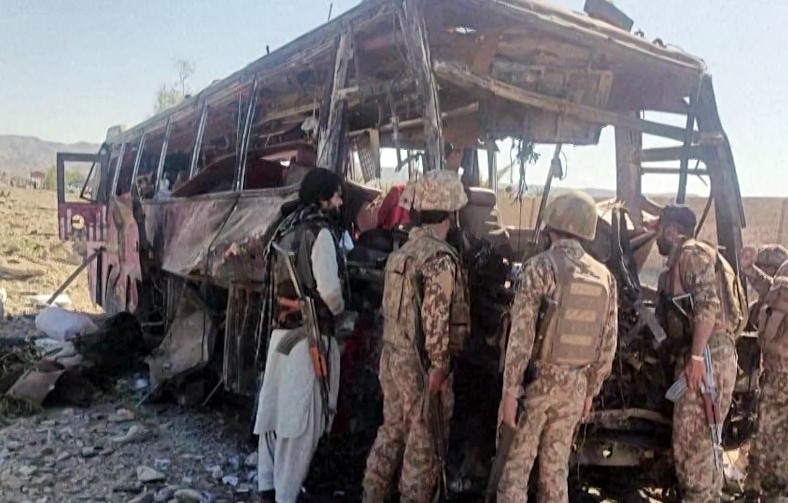
In Balochistan, the military has intensified operations under the pretext of countering insurgents, but reports from local and international media paint a far darker picture. The Balochistan Post recently reported that the Pakistani army has seized civilian land in Zehri, Khuzdar district, forcing locals into hard labour and converting public spaces into military outposts. Large tracts of land have reportedly been taken over for new camps, with checkpoints choking civilian movement. Residents describe being compelled to work for the army—taken from their homes at dawn and released only after sunset. The takeover of Zehri’s only hospital and its conversion into a military base has worsened the humanitarian crisis, leaving residents without access to basic healthcare. A pregnant woman’s death due to lack of treatment earlier this month has become a grim symbol of the ongoing suffering.
These operations, marked by air and drone strikes, began in September following an armed uprising by Baloch fighters who briefly took control of the town. While Pakistan’s Inter-Services Public Relations (ISPR) has framed the campaign as an anti-insurgency drive, locals allege widespread civilian casualties. Human rights groups including Amnesty International and the Human Rights Commission of Pakistan have condemned the army’s actions, urging Islamabad to halt its “excessive use of force” and restore essential services. For decades, Balochistan’s people have demanded autonomy and control over local resources, but Islamabad’s response has largely been militarised. The latest crackdown further alienates an already resentful population and deepens the province’s sense of occupation rather than belonging.
Even as Pakistan faces international criticism for its conduct in Balochistan, it is entangled in a deteriorating standoff with the Taliban regime in Afghanistan. The failure of four-day peace talks in Istanbul—mediated by Turkey and Qatar—underscored the lack of trust between Islamabad and Kabul. What began as a dispute over alleged cross-border airstrikes in Afghanistan’s Paktika province has evolved into a full-blown diplomatic crisis. Pakistan accuses the Taliban of harbouring militants from the Tehreek-e-Taliban Pakistan (TTP), responsible for a wave of deadly attacks inside its borders. Kabul denies these allegations, claiming that Pakistan violates Afghan sovereignty under the pretext of counter-terrorism. The Taliban’s retaliation across the Durand Line and subsequent threats from Pakistan’s Defence Minister Khawaja Asif have only worsened tensions.
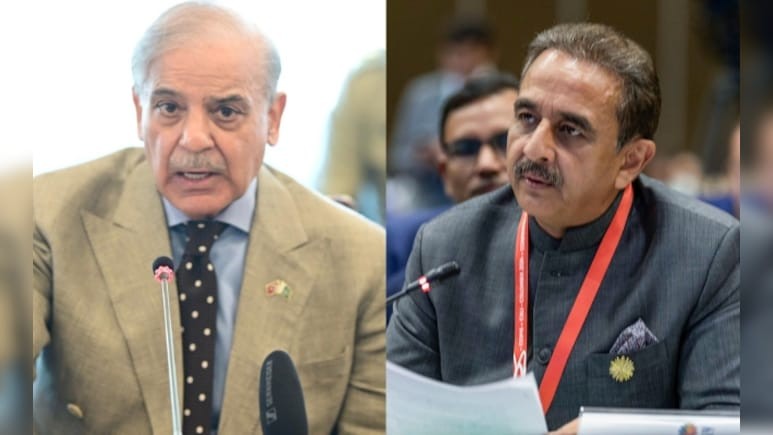
Asif’s blunt warning—that Pakistan “will not hesitate to strike deep into Afghan territory” if attacks continue—has drawn sharp global criticism. His remarks contradicted the conciliatory tone of Interior Minister Mohsin Naqvi, who just days earlier advocated dialogue, describing disputes as “differences that can be resolved peacefully.” This glaring policy incoherence has highlighted deep divisions within Pakistan’s leadership over how to handle the Taliban regime. The mixed messaging from Islamabad—part diplomacy, part intimidation—reflects an absence of strategic direction, leaving Pakistan isolated even among its traditional allies.
The crises in Balochistan and Afghanistan are more than isolated security issues—they are symptoms of Pakistan’s deep structural malaise. At home, decades of suppressing ethnic movements through military means have eroded public trust. In its neighbourhood, a reliance on militant proxies and coercive diplomacy has backfired, producing a hostile Afghanistan and strained relations across South and Central Asia. Islamabad’s internal fractures—between its civilian leaders, the powerful army, and competing security agencies—have further paralyzed coherent policymaking.
For years, Pakistan’s military establishment has projected itself as the guardian of national unity and regional influence. Yet its heavy-handedness in Balochistan and its failure to manage Afghanistan show the limits of that control. The reliance on force has not quelled dissent—it has deepened it. The inability to reconcile domestic oppression with international diplomacy has left Pakistan fighting on two fronts it can no longer fully control.
Caught between rebellion at home and confrontation abroad, Pakistan finds itself increasingly isolated, its credibility eroding in both regional and global arenas. The crises in Balochistan and Afghanistan are converging into a single truth: Islamabad’s decades-old playbook of coercion, denial, and division is collapsing under its own weight. Without a shift toward genuine dialogue, political reform, and accountability, Pakistan’s twin fires may soon become an uncontrollable blaze—one that threatens to consume the very foundations of the state itself.