

As New Delhi and Washington edge closer to a long-awaited trade deal, deep-seated issues — from tariffs and visas to energy policy — continue to test the resilience of the world’s most consequential economic partnership.
Our Bureau
New Delhi
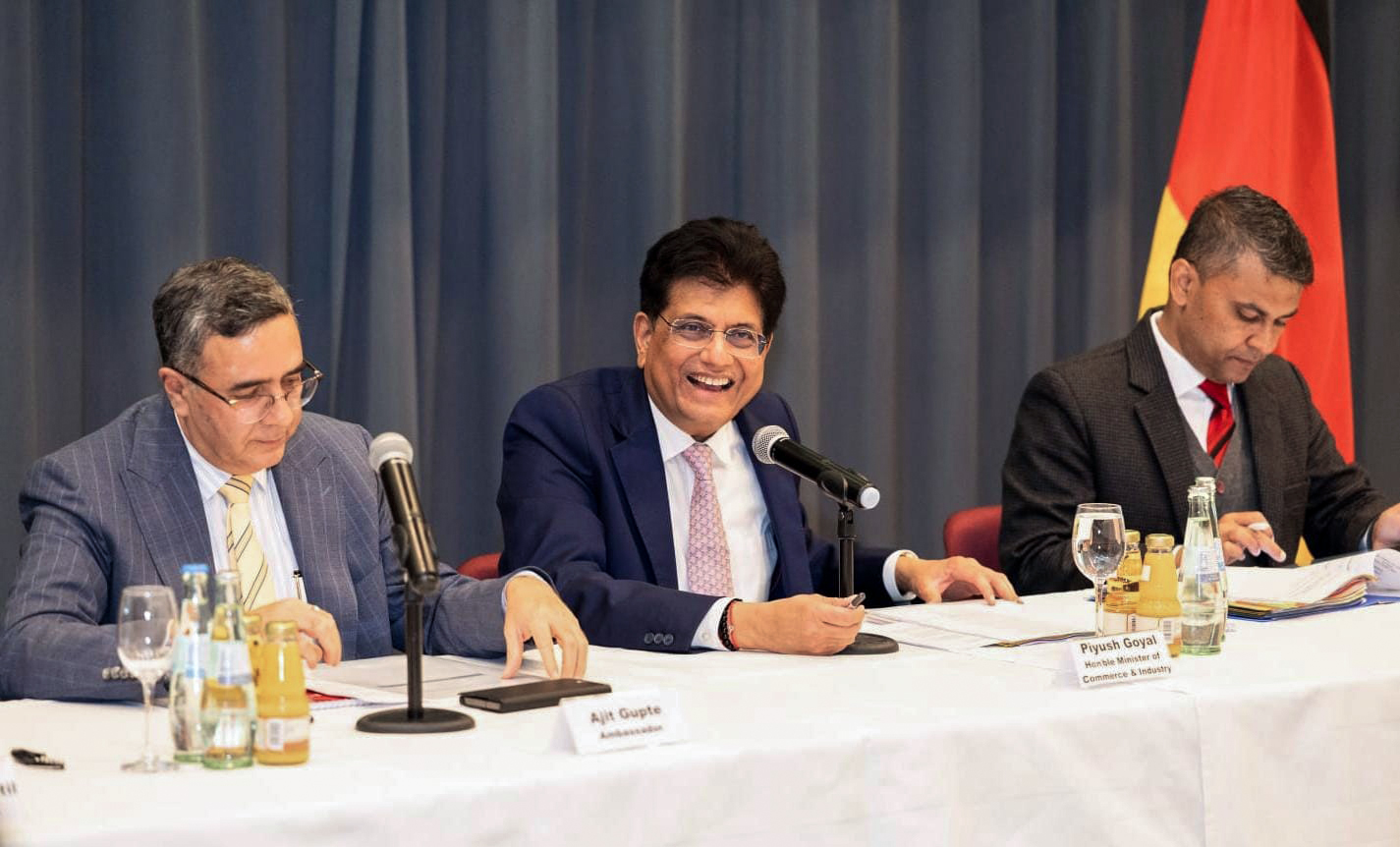
When Union Commerce Minister Piyush Goyal declared in Berlin this week that India and the United States were making “steady progress” on trade negotiations, it signaled a cautious optimism that the two democracies might finally be closing in on a long-delayed economic breakthrough. The talks, Goyal said, are “moving toward a fair and equitable agreement,” with both sides aiming to push bilateral trade to $500 billion by 2030.
But even as optimism grows, the relationship remains clouded by tariff disputes, visa restrictions, and divergent policy priorities, particularly under the Trump administration’s renewed push for economic nationalism.
Trade ties between the two nations have often mirrored the broader contours of their strategic relationship — marked by cooperation, but also contention. Since 2019, several rounds of talks have stalled over US tariffs on Indian steel, aluminum, and manufactured goods, and India’s retaliatory duties on American agricultural and technology products.
According to officials, recent discussions led by India’s Commerce Secretary Rajesh Agarwal and US counterparts have revived hope for a “mini trade deal”, which could pave the way for a more comprehensive pact later. The proposed agreement reportedly includes the reduction of US tariffs on Indian goods from 50% and increased access for American farm and energy exports to India.
The presence of newly appointed US Ambassador Sergio Gor has added diplomatic momentum. His meetings with Prime Minister Narendra Modi and top Indian officials underscored Washington’s intent to reset the tone. “Our relationship with India will only strengthen over the months ahead,” Gor posted on X (formerly Twitter), following his first official visit.
At the strategic level, both countries view deeper trade ties as critical to countering China’s economic influence in the Indo-Pacific. Yet, progress remains slow because of fundamental differences in their trade philosophies.
India’s focus remains on domestic manufacturing, export diversification, and digital sovereignty, while the US seeks greater market access and stronger intellectual property protections. The divergence is stark in sectors such as e-commerce, agriculture, and pharmaceuticals — areas where Washington wants liberalization and New Delhi demands regulatory autonomy.
Despite this, bilateral trade has already surpassed $190 billion in 2024–25, making the US India’s largest trading partner. Technology, defense, and energy cooperation continue to expand, reflecting the strategic depth of the partnership.
However, the Trump administration’s new H-1B visa policy has emerged as a major irritant. The recent imposition of a $100,000 fee per visa application — now facing multiple court challenges — threatens to upend the very foundation of India’s tech-driven exports.
The US Chamber of Commerce and several industry groups have called the fee “unlawful and economically self-defeating.” Indian IT professionals, who make up over 70% of H-1B recipients, are expected to bear the brunt of the policy.
Energy cooperation — once a bright spot in bilateral relations — has also come under strain. The US push for energy diversification aligns with its strategic vision but poses challenges for India, which relies on Russian crude for nearly 35% of its imports. Officials in New Delhi argue that the country cannot afford to let geopolitics dictate energy security.
Despite these tensions, both sides recognize the enormous potential of closer economic ties. The United States views India as a critical growth partner and alternative manufacturing hub, while India sees the US as a key source of investment, technology, and advanced supply chains.
The two countries are already collaborating on semiconductors, clean energy, and defense co-production — sectors that could define the next phase of their trade engagement. However, experts warn that without structural reforms and predictability in policy, trade will remain secondary to the political and defense dimensions of the relationship.
Dr. Anupama Menon, a Delhi-based trade analyst, notes, “India and the US have achieved strategic convergence, but not yet economic convergence. For trade to grow meaningfully, both sides must move past short-term politics — whether it’s US visa fees or India’s tariff walls.”
For now, the mood is cautiously hopeful. With both governments signaling intent, the upcoming months could determine whether this renewed momentum translates into tangible progress.
Minister Goyal’s optimism from Berlin reflects a broader sentiment in New Delhi — that despite friction, India–US trade ties are too important to derail. Yet, analysts point out that negotiations will remain complex as long as both sides continue to prioritize domestic politics over long-term partnership.
If New Delhi and Washington can finally align their economic ambitions with their geopolitical partnership, the next decade could well belong to the India–US economic alliance — a partnership tested by tariffs but driven by trust.