


Amid global uncertainties, India is emerging as a robust economic force, driven by domestic reforms, global investor trust, and a visionary roadmap for self-reliance and innovation
Our Bureau
New York / New Delhi
Union Minister Piyush Goyal’s recent high-profile engagements in the United States underscore a critical truth: India has not only entered the global economic stage — it is commanding attention and confidence. In meetings with top executives of global giants like Blackstone, FedEx, IBM, DP World, Carlyle Group, and Warburg Pincus, Goyal painted a clear picture of an India that is open for business, ripe for innovation, and rooted in economic resilience.
From logistics to technology, and from infrastructure to financial services, global leaders are doubling down on India’s growth story. Blackstone reaffirmed its investment plans, while FedEx explored deeper logistics collaborations. IBM’s discussions centered on emerging technologies and India’s young talent pool — a major competitive advantage. This isn’t mere diplomacy — it’s a clear signal of long-term investor trust in India’s fundamentals.
This sentiment was echoed in Goyal’s interactions with World Bank President Ajay Banga and US-India Strategic Partnership Forum (USISPF), where themes of sustainable growth, inclusive innovation, and energy transition took center stage. At an energy security session co-hosted by ReNew Power, Goyal reiterated India’s commitment to clean energy leadership under Prime Minister Modi’s “One Sun, One World, One Grid” vision.
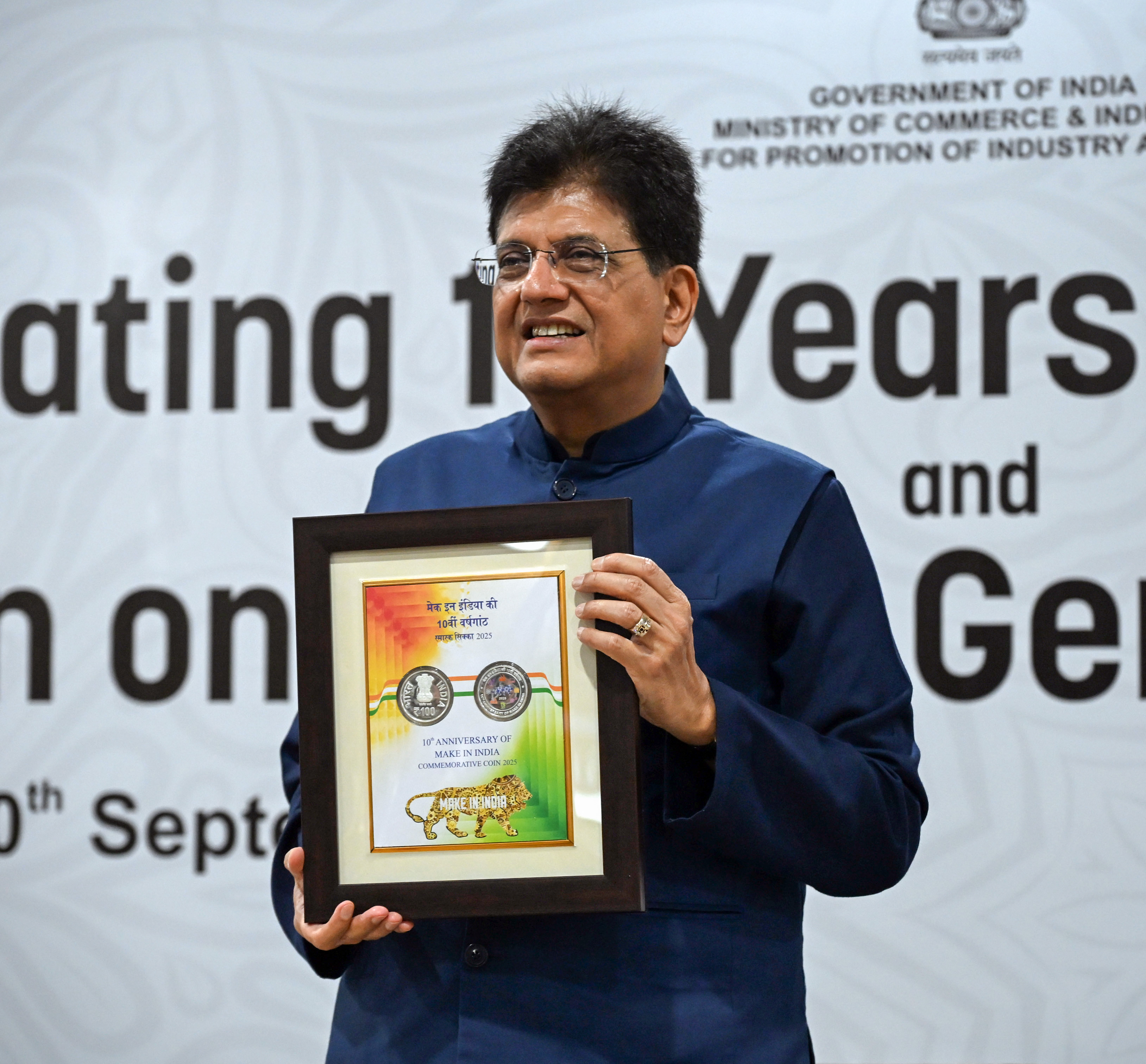
These meetings aren’t happening in isolation. They are a continuation of the strategic narrative India has been building since the inception of the Make in India initiative in 2014. Now in its 11th year, Make in India has matured from a campaign into a movement — one that has fundamentally restructured India’s manufacturing, innovation, and investment ecosystem. From record FDI inflows and a flourishing startup scene to becoming the world’s second-largest mobile manufacturer, India’s industrial resurgence is undeniable.
The Production Linked Incentive (PLI) schemes have played a pivotal role in this transformation, attracting massive investments across sectors. With “Make in India 2.0” targeting 27 key sectors, the government is not just riding momentum but expanding its vision. This comprehensive push is preparing India to move from being the factory of the world to a global hub for innovation, sustainability, and technological excellence.
Strength of Domestic Engine
While geopolitical tensions, inflation concerns, and fiscal pressures weigh on major economies, India’s economic performance stands out — a fact reinforced by the Reserve Bank of India’s (RBI) latest September 2025 bulletin.
In the first quarter of FY25-26, India recorded a five-quarter high in GDP growth, propelled by strong domestic demand and ongoing structural reforms. Unlike advanced economies struggling with fiscal tightening, India has benefited from its steady policy direction and reform-driven growth. GST reforms are beginning to yield long-term gains, reducing the cost of doing business and catalyzing consumption.
Even inflation — a persistent concern globally — remains well below target for the seventh consecutive month, a testament to balanced macroeconomic management. Financial flows to the commercial sector have also remained healthy. While bank credit growth moderated due to regulatory tightening on unsecured lending, non-bank financial channels stepped up. Equity issuances, NBFC credit, and external borrowings ensured overall funding to businesses remained robust.
The role of Non-Banking Financial Companies (NBFCs) has become increasingly critical, with strong fundamentals reported at the end of 2024 — including improved asset quality and capital adequacy. Borrowings, their main source of funds, have grown at a faster pace, reflecting confidence in their stability and intermediation capabilities.
Digital transformation continues to be a standout. Unified Payments Interface (UPI) adoption has triggered a structural shift in the payments ecosystem, reducing cash dependency and promoting financial inclusion. The RBI’s empirical study confirmed that states with higher UPI penetration showed lower cash usage, marking a crucial leap towards formalisation.
Perhaps most importantly, the RBI reported a decline in household consumption inequality and a convergence in per capita spending across states. Poorer states are catching up, and poverty incidence is falling — evidence that growth is not just high but also inclusive.
Infrastructure investment — spanning physical, social, and digital domains — has significantly contributed to India’s upward trajectory. This capital formation is laying the foundation for long-term GDP growth and socio-economic mobility.
India’s economic story is not one of momentary performance but of systemic strength. From international boardrooms to rural Bharat, the country’s economy is demonstrating a rare blend of scale, stability, and inclusivity. Supported by robust reforms, strategic global partnerships, and an unwavering commitment to self-reliance, India is not merely navigating global uncertainty — it is thriving through it.
As the world looks for engines of growth, India stands tall — resilient, reformed, and ready.