

Allegations of “vote theft” have intensified political rhetoric in India, with Congress accusing the BJP of electoral irregularities while the ruling alliance and Shiv Sena dismiss the claims as politically motivated.
Our Bureau
New Delhi
The debate over alleged “vote chori” (vote theft) has once again heated up Indian politics, with opposition leaders, the ruling BJP, and allies exchanging sharp accusations over the integrity of electoral rolls and the Special Intensive Revision (SIR) process.
Shiv Sena MP Milind Deora slammed the Congress for questioning the electoral system, urging the party to first address its internal democratic deficits. In an interview with ANI, Deora said, “If a party doesn’t have inner-party democracy, if the party doesn’t conduct elections, the party doesn’t allow people to rise on merit; instead, mediocrity is rewarded. Nobody will trust that party to fight for strengthening India’s democracy. The first thing you have to do is fix democracy within.”
Deora, who left Congress in January 2024, also alleged that merit was suppressed in his former party, allowing mediocrity to flourish while sidelining capable leaders. “In your place, someone who’s mediocre at best is elevated. These are systems which, if you want to fix India’s democracy, start by fixing democracy in your own organisation,” he added.
The controversy gained momentum after Congress MP Rahul Gandhi claimed “vote chori” in 48 Lok Sabha constituencies, including Bengaluru Central, asserting that the BJP had allegedly manipulated electoral rolls. Gandhi spearheaded a 16-day-long ‘Voter Adhikar Yatra’ in Bihar, alongside Rashtriya Janata Dal (RJD) leader Tejashwi Yadav, to draw attention to alleged vote theft and irregularities by the Election Commission. The yatra, spanning 25 districts, culminated in Patna on Monday with participation from leaders of the Congress, TMC, Shiv Sena UBT, CPI(ML), and other INDIA bloc members.
RJD MP Manoj Jha emphasized the importance of voter rights, saying, “A person votes for employment, better health facilities and if this process becomes suspicious, the efforts for bringing a change also go in vain. This is not just a yatra of Rahul Gandhi; the slogan ‘Vote chor, gaddi chhodd’ is echoing everywhere.”
Union Minister Annapurna Devi, however, criticised the opposition for its slogans and claims, stating that the INDIA alliance could not provide proof when summoned by the Election Commission. “The issue is not SIR, but the INDIA alliance can clearly see that their defeat is certain. The people of Bihar have decided to form an NDA government,” she said.
Adding fuel to the controversy, the Electoral Registration Officer (ERO) of New Delhi issued a notice to Congress leader Pawan Khera for being registered as a voter in two constituencies, a penal offence under the Representation of the People Act, 1950. Khera hit back at the Election Commission, accusing it of bias in favour of the ruling party. “While our complaints of vote chori are disregarded, the EC rushes to act against opposition members,” he said, pointing to alleged fake voters in Mahadevapura, Karnataka.
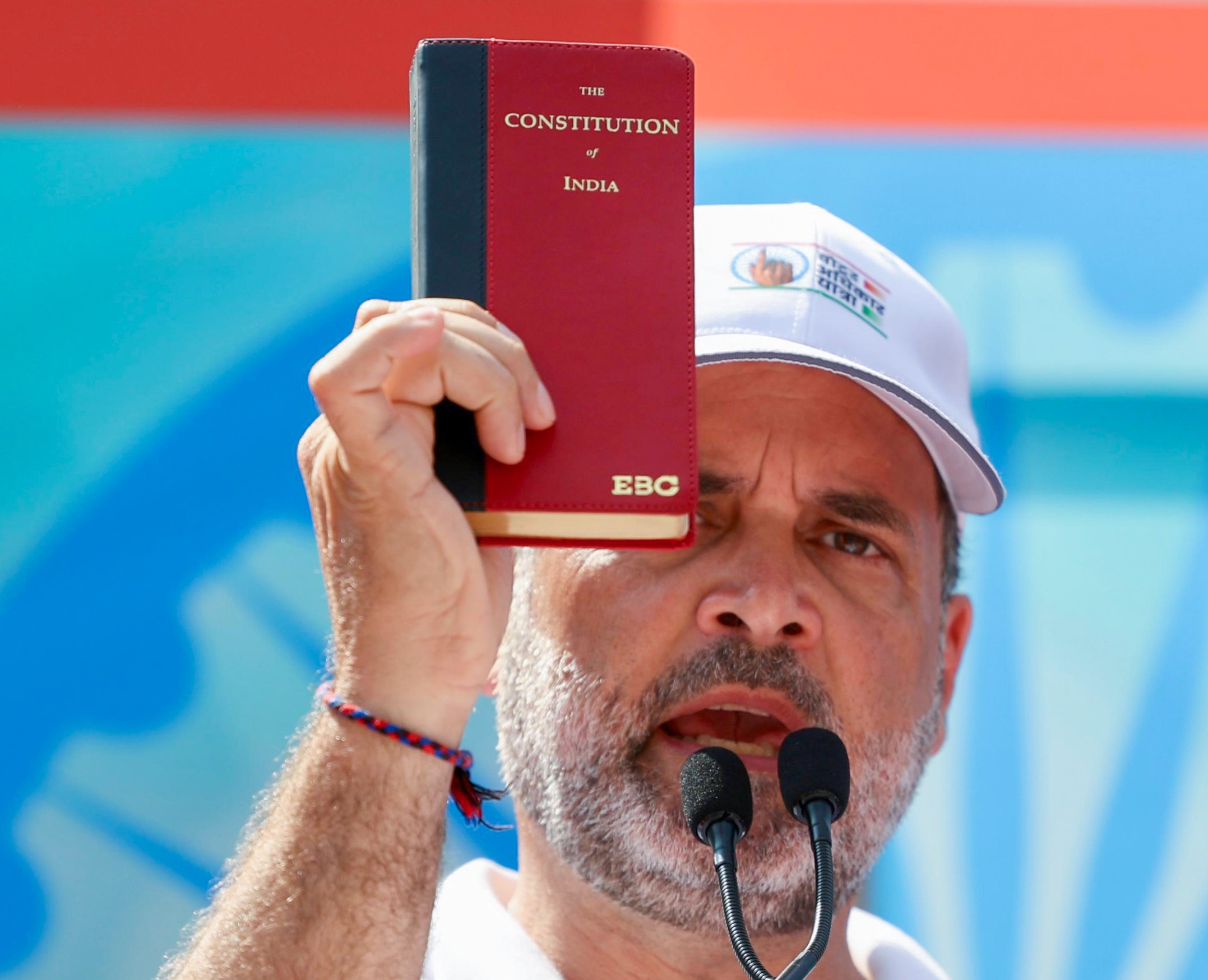
The Election Commission has rejected allegations of vote manipulation, asking Rahul Gandhi to file an affidavit supporting his claims, which he refused, citing his oath to the Constitution. Meanwhile, Congress has said it will release constituency-wise details of alleged vote theft in phases.
The row has revived debates over electoral integrity, internal party democracy, and the role of the Election Commission in ensuring transparent polls. As political parties gear up for the Bihar Assembly elections, the “vote chori” allegations are likely to remain a central theme in both campaign rhetoric and public discourse.