

Our Bureau
New Delhi
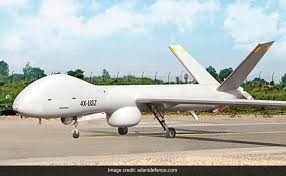
The new reforms of the Goods and Services Tax have changed the structure of several different products that have been shifted to different slabs as per the new guidelines. The GST Council in order to simplify the tax structure has made several changes to the Unmanned Aerial Vehicles (UAVs).
Commercial drones will now be available with 5% GST, while military drones, flight motion simulators, high-performance batteries and communication equipment, such as software-defined radios have now been fully exempted from GST as per new reforms. However, the aircrafts which are used for personal use will see a raise in GST from 28% to 40%.
The President of the Drone Federation of India, Smit Shah stated that previously due to the multiple slabs there were a lot of disputes but with this new structure it will be simplified. He also noted that the sector is getting ready for sharp growth after heavy investments in over 600 startups.
“Earlier, the lack of clarity on whether drones with cameras attracted 5%, 18%, or even 28% GST often led to disputes and compliance risks. The new structure removes harassment, eliminates cost arbitrage between firms, and levels the field. With revenues of around Rs 2,500 crore in FY25 and about $500 million invested in over 600 startups, the sector is positioned for sharper growth,” said Mr Shah.
The founder and CEO of Garuda Aerospace, Agnishwar Jayaprakash was ecstatic to announce that the company has recently moved to defence and thus will be in the 0% GST slab. He highlighted that the exemption of taxes on batteries will help them lower the costs for the customers.
“Since Garuda recently entered defence sales, the 0% GST is very welcome. But more important is batteries, main consumable for agri drones, are now exempt. We have our own BIScertified battery unit, and this allows us to pass on cost benefits to customers, while strengthening profitability,” said Mr Jayaprakash.