

As Trump’s tariffs squeeze India, New Delhi deepens ties with China, strengthens economic bonds with Japan, and champions the Global South
Our Bureau
New Delhi / Tokyo
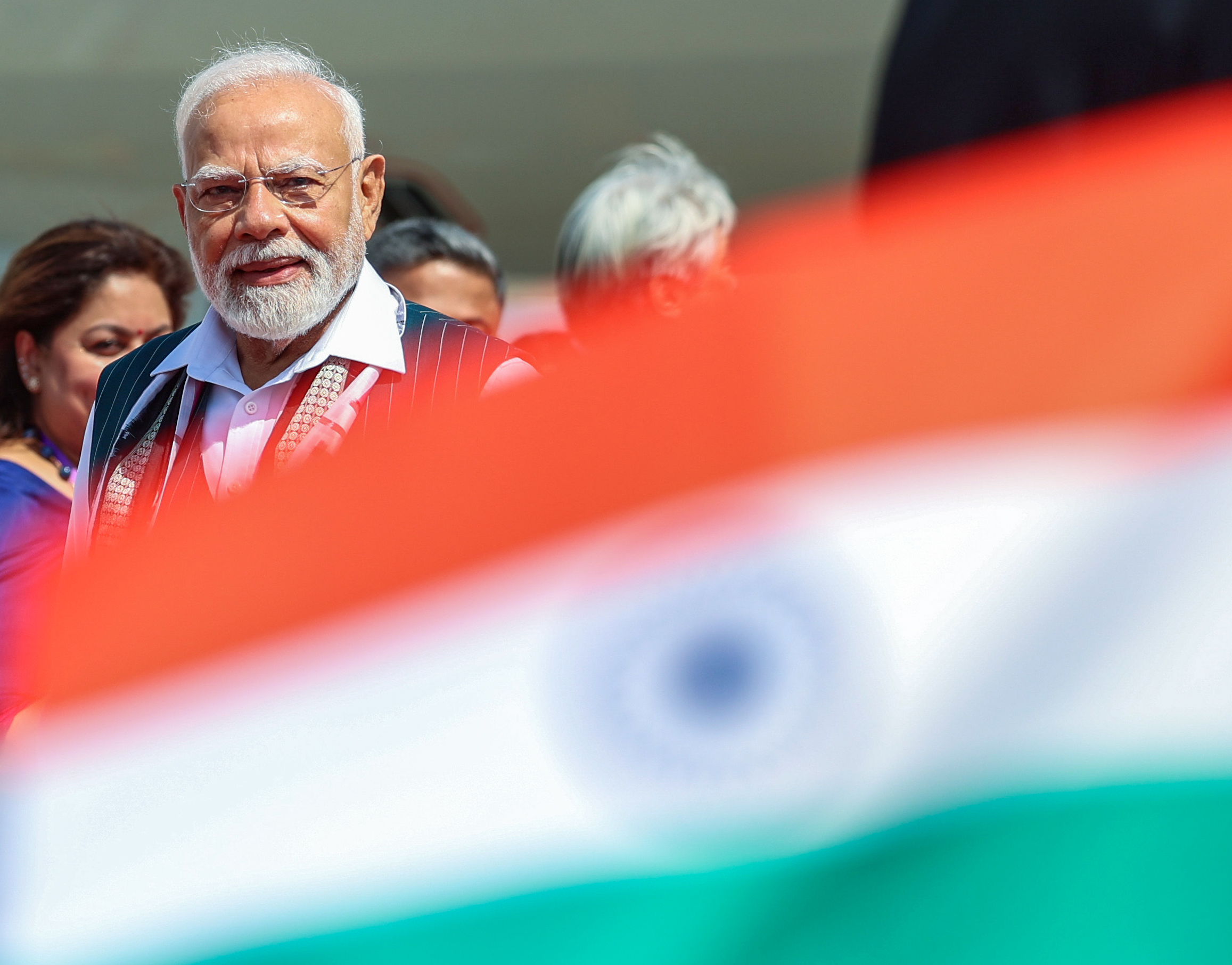
Prime Minister Narendra Modi’s visit to China for the Shanghai Cooperation Organization (SCO) Summit in Tianjin marks a subtle but important recalibration in India-China relations. While recent years have witnessed tension along the Himalayan frontier, Modi’s statement before departure emphasized the need for “stable, predictable, and amicable bilateral relations” with Beijing. He argued that two of the world’s largest economies and most populous nations cannot afford volatility, especially in an already fragile global order.
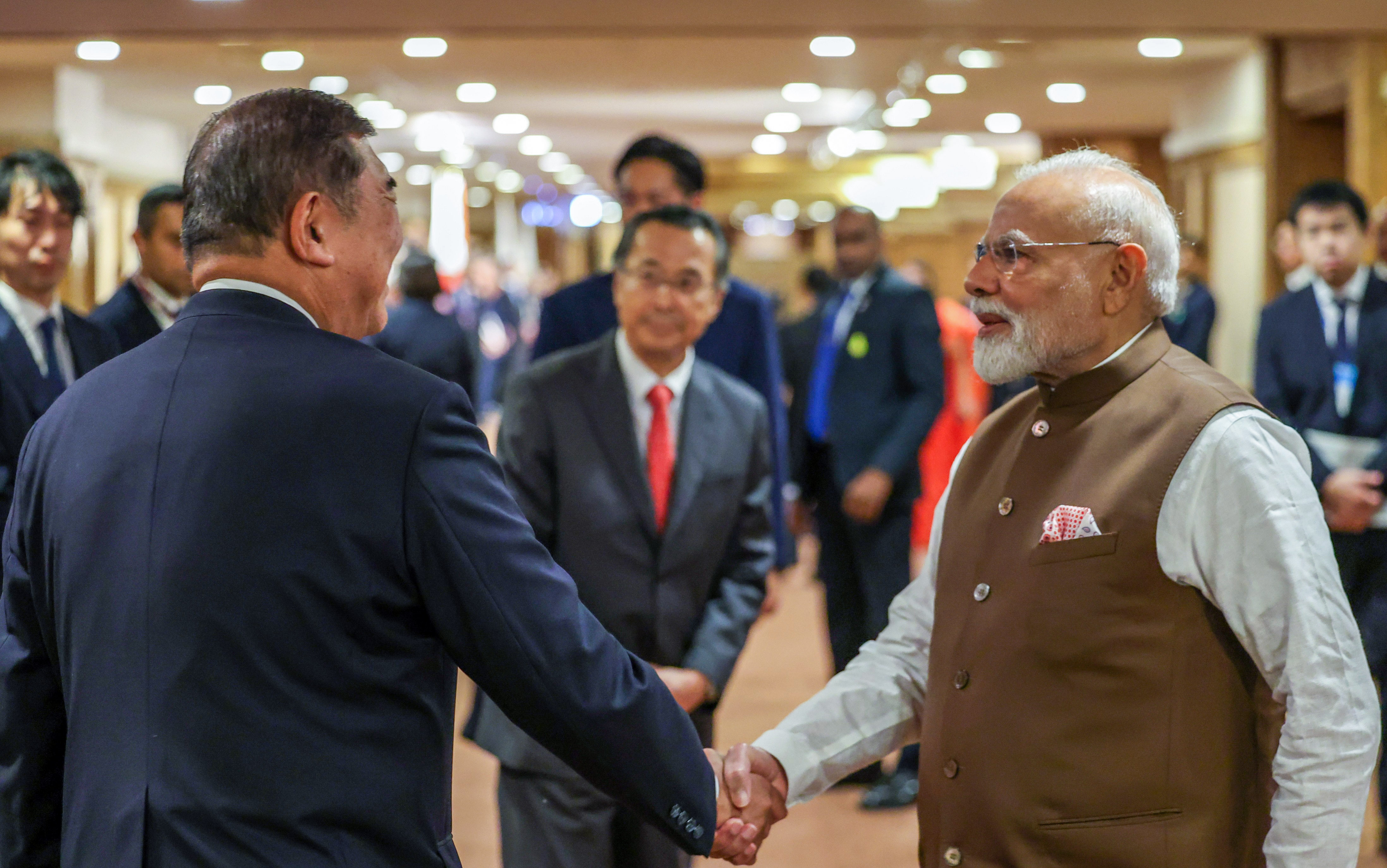
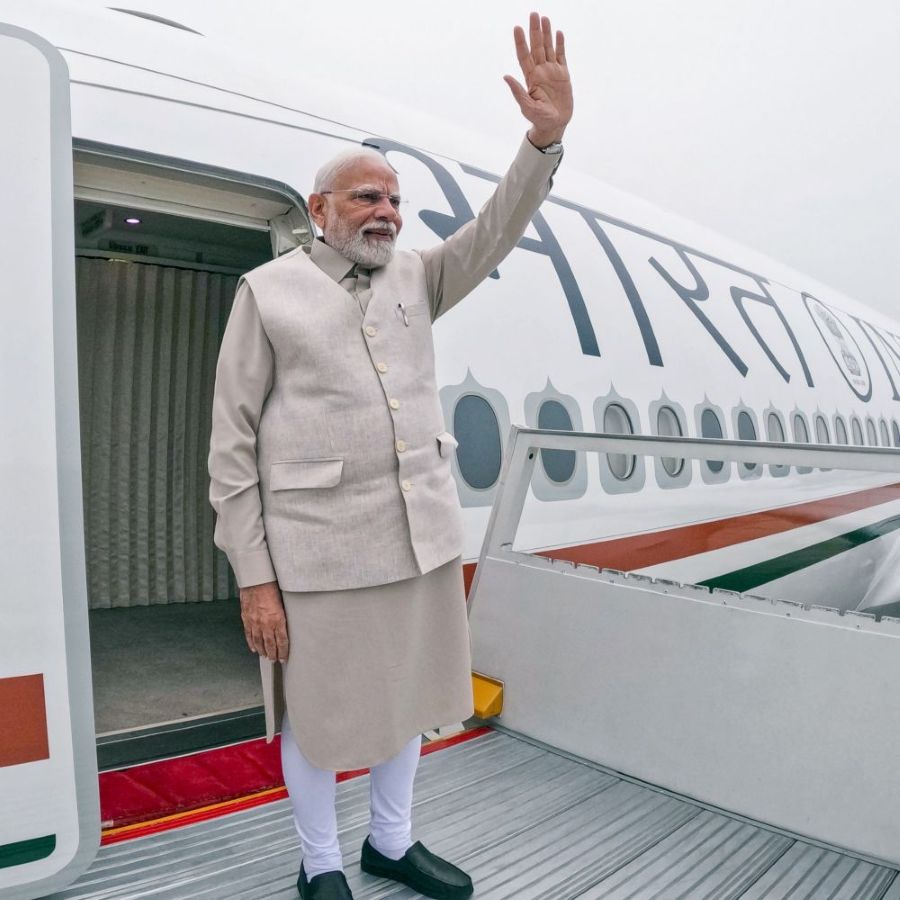
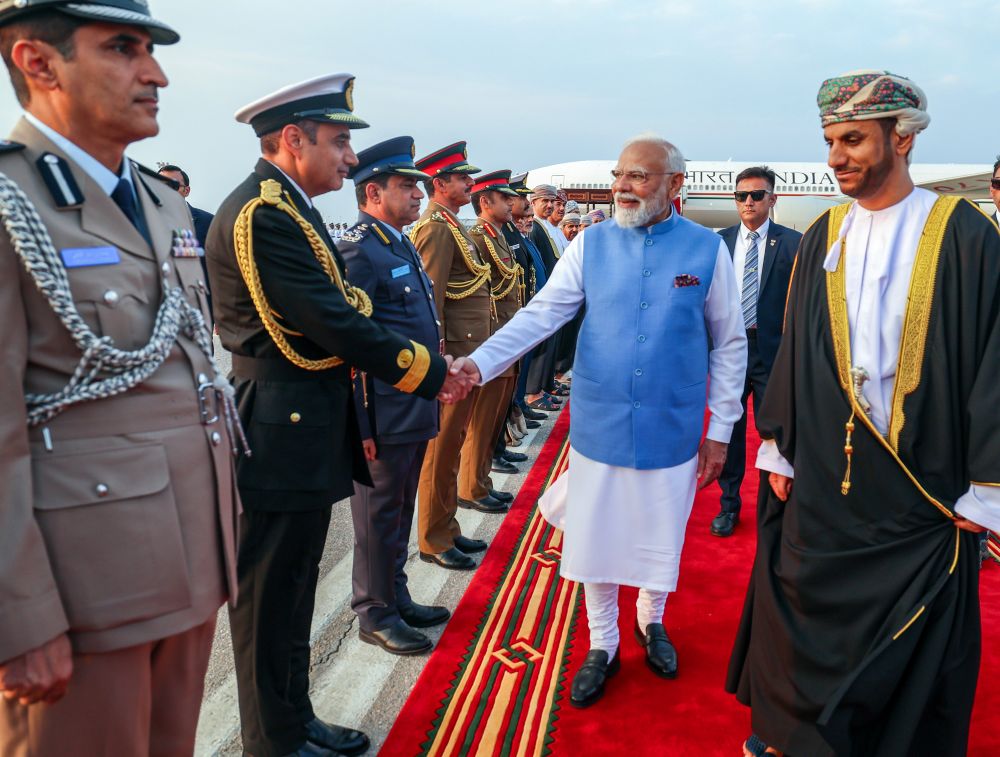
PM Modi landed in Tokyo on Friday morning on a two-day visit. From Japan, he goes to China for the SCO summit meeting in Tianjin.
The emphasis on stability signals a recognition that outright rivalry with China is unsustainable. Instead, India appears to be pushing for compartmentalization—contesting Beijing on border issues but cooperating on global platforms like the SCO, BRICS, and climate negotiations. For India, engaging China is less about concession and more about positioning itself as a responsible power in a multipolar Asia.
This pragmatism also stems from economic imperatives. With Trump’s tariff war threatening Indian exports to the U.S., New Delhi needs to diversify trade partnerships. China, despite being a competitor, remains an essential player in supply chains and regional growth. By strengthening channels of dialogue, India seeks to prevent disputes from derailing broader cooperation in energy, infrastructure, and technology. In essence, Modi’s China outreach is a calculated attempt to balance confrontation with cautious engagement.
All eyes will be on Tianjin this Sunday, where the Shanghai Cooperation Organization (SCO) Summit will host a series of crucial bilateral meetings. Prime Minister Narendra Modi is expected to meet both Chinese President Xi Jinping and Russian President Vladimir Putin on the sidelines of the gathering. With Xi, the focus will likely be on stabilizing a relationship strained by border tensions, while also seeking avenues for cooperation in trade, energy, and multilateral frameworks. With Putin, the agenda is expected to cover defense ties, energy cooperation, and India’s role in balancing Russia’s growing tilt toward Beijing.
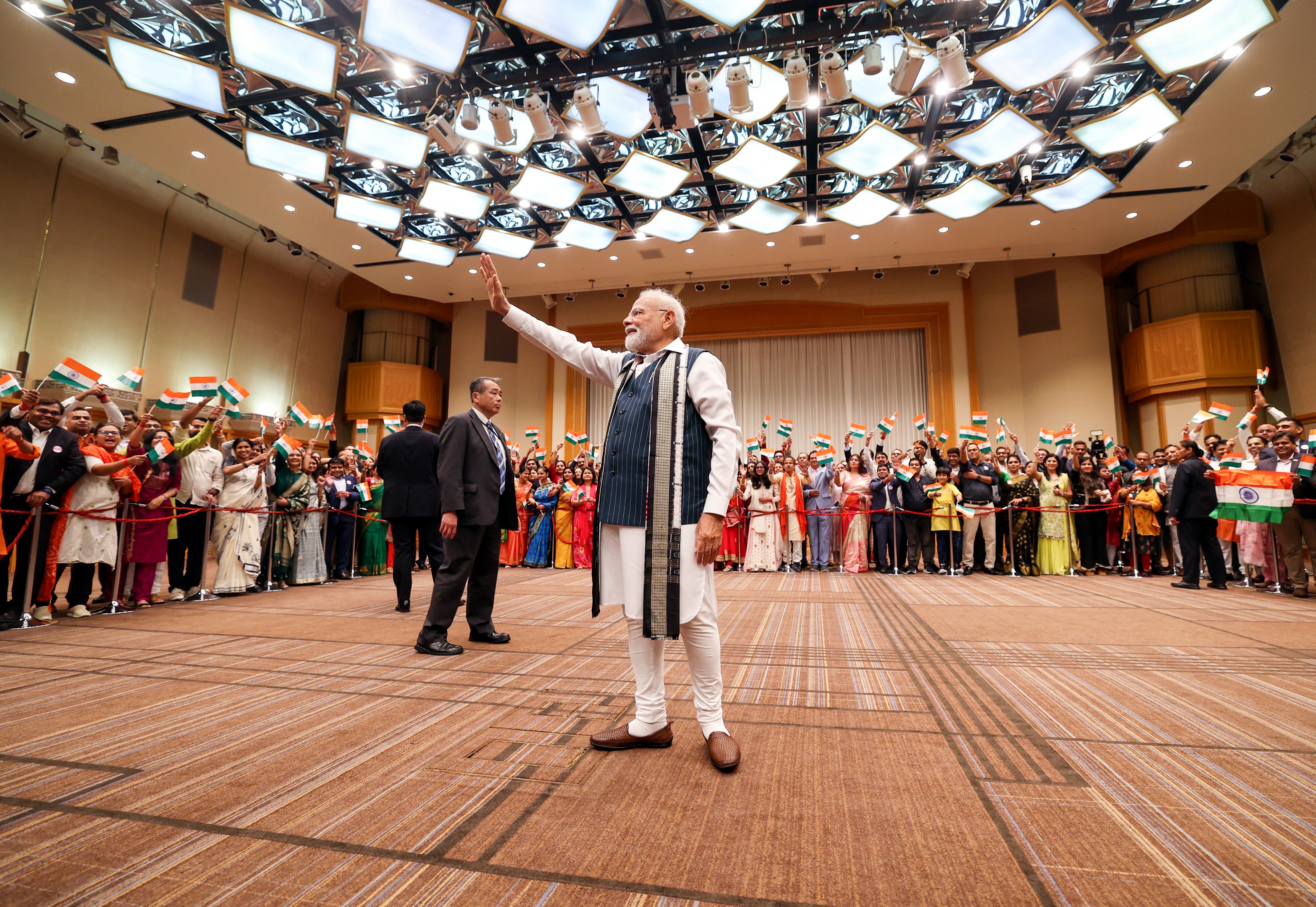
For India, the SCO platform provides an opportunity not only to shape collective responses to regional security challenges—such as terrorism and supply-chain vulnerabilities—but also to reinforce its position as a strategic actor in a multipolar Asia. Sunday’s engagements could set the tone for India’s diplomacy in the months ahead.
India’s Economic Strategy
If China embodies competition and caution, Japan represents trust and long-term partnership. Modi’s visit to Tokyo for the 15th India-Japan Annual Summit underscored this reality. Standing alongside Prime Minister Shigeru Ishiba, Modi declared a goal of ¥10 trillion in Japanese investments into India over the next decade, with focus areas ranging from semiconductors and robotics to green hydrogen and space exploration.
India and Japan’s relationship is not just about economics—it is about values. Both democracies see themselves as guardians of an open Indo-Pacific, where connectivity, innovation, and stability must prevail over coercion. The partnership is not new—Japan has long supported India’s infrastructure projects, including the Mumbai-Ahmedabad bullet train—but the current momentum suggests an even deeper alignment.
Space cooperation, symbolized by the LUPEX lunar exploration mission between ISRO and JAXA, adds a futuristic dimension. So does the emphasis on clean energy and digital innovation. Japan’s technology and India’s scale, Modi argued, can power not just bilateral ties but also wider development across the Global South. This dovetails with India’s ambition to position itself as both an investment hub and a talent powerhouse.
Importantly, Japan also provides India a cushion against U.S. unpredictability. As Trump’s tariffs remind New Delhi of Washington’s transactional tendencies, Tokyo offers consistency and trust. This reliability explains why Modi described India-Japan ties as “a golden chapter” in a partnership essential not only for the two nations but for global stability.
India and the Global South
Beyond China and Japan, Modi’s messaging consistently returned to one theme: India as the voice of the Global South. At the India-Japan Economic Forum, he highlighted how Japan’s capital and technology, paired with India’s market and manpower, could serve not only their own economies but also Africa, Latin America, and Southeast Asia.
This vision resonates with India’s recent diplomatic activism, from hosting the Global South Summit to championing African Union’s membership in the G20 during its presidency. For New Delhi, projecting itself as the natural leader of emerging economies allows it to carve out influence distinct from both Washington and Beijing.
By pitching India as a springboard for Japanese businesses into the Global South, Modi also reframed India’s role in supply chains. Rather than just a manufacturing hub, India is positioning itself as a gateway for investments, technologies, and ideas flowing toward developing nations. This approach enhances India’s bargaining power with both the U.S. and China, showing that its influence extends far beyond South Asia.
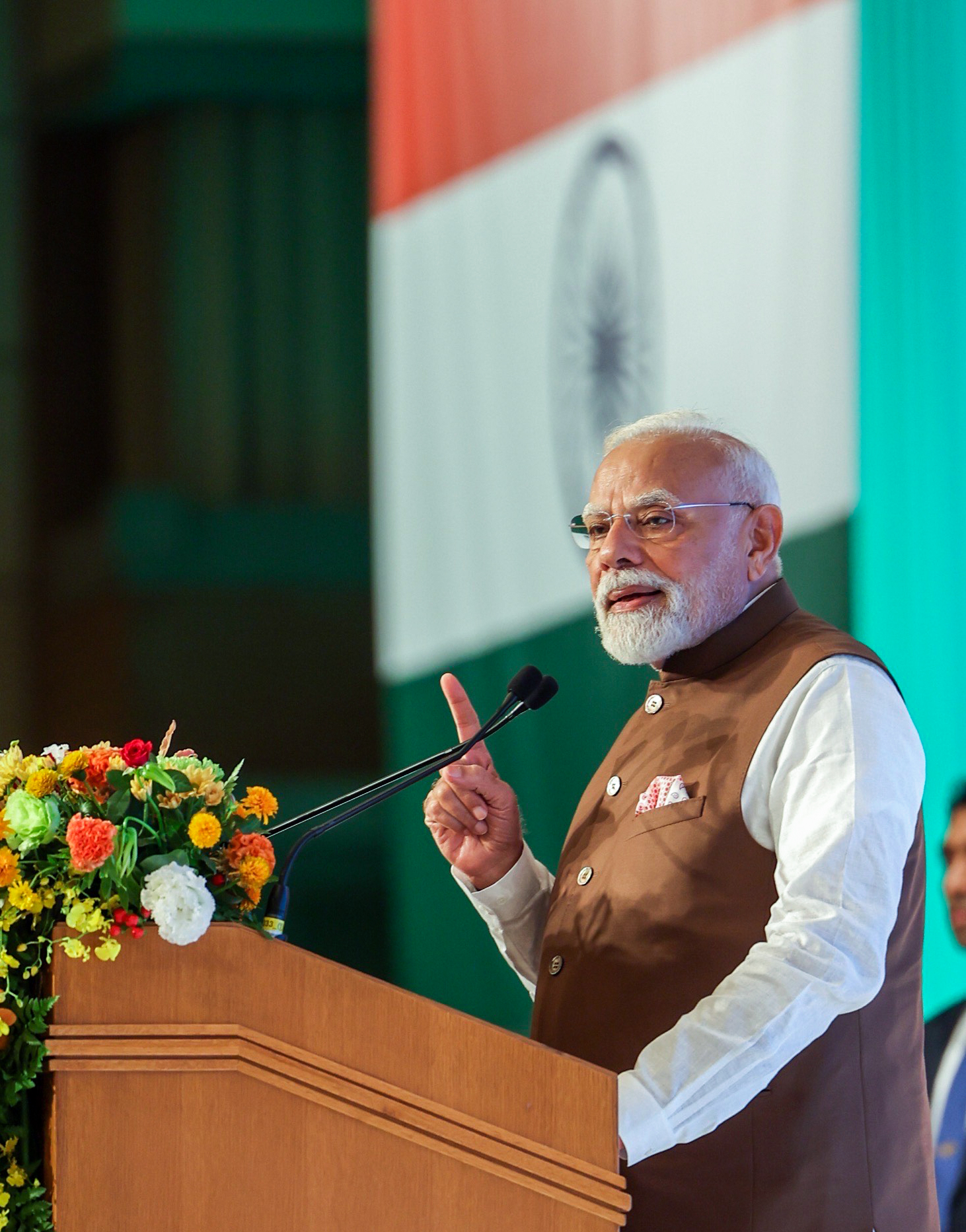
The Global South angle also plays well domestically. It allows Modi to portray India not as a passive player but as a global agenda-setter—one that ensures the concerns of the developing world are not sidelined by Western or Chinese dominance. In the context of Trump’s tariffs, this positioning signals resilience: India is not beholden to one market, but rather is expanding its role in shaping global trade and development narratives.
Trump’s Tariffs
The backdrop to all these moves is unmistakable: U.S. tariffs under President Donald Trump’s “America First” policy. By targeting Indian exports—ranging from steel to textiles—Trump forced New Delhi to reassess its economic dependencies. While the U.S. remains a critical partner in technology, defense, and diaspora links, the unpredictability of Washington’s trade policy has underscored the need for diversification.
Modi’s outreach to Japan and China should be read as part of this strategy. By cultivating multiple poles of partnership, India reduces vulnerability to any single country’s protectionist turn. In effect, Trump’s tariffs acted as a wake-up call, accelerating India’s shift toward multi-alignment. Rather than choosing sides, India is choosing opportunities—whether in Tokyo’s boardrooms, Beijing’s summits, or African marketplaces.
This does not mean India is turning away from the U.S. Instead, it means New Delhi is hedging its bets. By showing Washington that it has other options, India strengthens its bargaining position. At the same time, by deepening ties with Japan, China, and the Global South, India positions itself as a bridge between developed and developing economies—a role few others can credibly claim.
The Road Ahead
India’s twin engagements in Tokyo and Tianjin highlight a broader strategic trajectory: embracing multipolarity as both a regional necessity and a national opportunity. With Japan, India is co-authoring a technology-driven growth story. With China, it is managing rivalry through dialogue and multilateral frameworks. With the Global South, it is projecting leadership that aligns with its own development aspirations. And with the U.S.—despite Trump’s tariffs—India continues to nurture defense and diaspora-driven ties while reducing economic overdependence.
The road ahead will not be without turbulence. Border frictions with China could flare up, Japan’s own domestic politics could influence its foreign policy, and Trump—or any successor—could bring new waves of protectionism. But India’s current strategy shows resilience: by weaving together partnerships across competing poles, it is constructing a safety net against external shocks.
For Modi, the message is clear: India cannot be a pawn in someone else’s game. It must be a player in its own right, shaping rules rather than just following them. As Trump’s tariffs inadvertently reminded New Delhi, dependency is risk. Diversification is power. And in the Asian century, India is determined to be not just a participant but a protagonist.