Slide
Slide

‘The Bengal Files’ Firestorm: Vivek Agnihotri’s Film Caught in Political and Legal Crosshairs

Chalo-1-2.jpg

The upcoming film The Bengal Files, slated for a September 5 release, has ignited a storm of political tussles, legal disputes, and censorship debates even before its premiere. Our Bureau Mumbai / Kolkata When filmmaker Vivek Ranjan Agnihotri announced The Bengal Files, he positioned it as his boldest work yet — a cinematic attempt to revisit the horrors of Direct Action Day and the communal riots of 1946 Bengal. But instead of smooth promotions, the film has found itself entangled in political backlash, FIRs, and accusations of historical distortion, turning it into one of the most controversial releases of the year. The controversy erupted on August 16, when the trailer launch in Kolkata descended into chaos. Agnihotri and the cast — including Mithun Chakraborty, Anupam Kher, Darshan Kumar, and Pallavi Joshi — had gathered at ITC Royal Bengal to unveil the film. But midway through the event, the visuals were abruptly cut. The filmmaker claimed the police and ruling party workers intervened, with hotel authorities suddenly refusing permission despite prior clearances. “If this is not dictatorship, then what is?” Agnihotri asked, calling it an “unconstitutional attack” on free expression. The disruption didn’t end there. Multiplexes in Kolkata allegedly backed out under political pressure, forcing the team to relocate the event to a hotel. Even then, Agnihotri alleged, “people came and cut the wires,” preventing the trailer from being screened. FIRs, reportedly filed by members of the ruling Trinamool Congress, further complicated matters. For the director, this was not merely about a film but “a threat to democracy.” Adding fuel to the fire, Shantanu Mukherjee, grandson of Gopal Mukherjee — a historical figure portrayed in the film — filed a police complaint. He accused the filmmakers of misrepresenting his grandfather’s legacy. Agnihotri responded cautiously, saying the matter would be handled legally. “No one has even seen the film yet,” he argued, insisting that Gopal Mukherjee had been presented as a hero, and that the movie would in fact bring his story to national prominence. Actor Mithun Chakraborty, who plays a key role in the film, also lashed out at critics. “Everything was planned,” he said, expressing disbelief at the backlash against a film unseen by the public. In characteristic candor, he compared the spate of FIRs to kurmura (puffed rice), claiming they were casually distributed in Bengal. “Everybody is scared of the truth,” he said, adding that young Indians deserved to know about forgotten chapters of history. The controversy reflects deeper tensions around cinematic portrayals of sensitive historical episodes. Agnihotri’s earlier work, The Kashmir Files (2022), courted similar storms while emerging as a box-office hit. With The Bengal Files, he has again chosen a subject loaded with communal and political sensitivities. The film revisits the Calcutta killings of 1946 and the Noakhali riots, which he terms a “Hindu genocide.” Critics argue that such framing risks stoking fresh divisions, while supporters hail it as overdue truth-telling. The West Bengal government, though not issuing an official ban, has been accused of tacitly suppressing the trailer launch. Agnihotri insists the chain of disruptions — multiplex cancellations, hotel refusals, police intervention — could not have happened without “top-level involvement.” For him, it demonstrates how state power can be used to curb dissenting narratives. Yet the pushback has also generated publicity. The film’s trailer was reportedly well received during private screenings in the US, even earning an invitation to Capitol Hill. Supporters believe the controversies will only fuel curiosity, much like with The Kashmir Files. Still, legal hurdles loom. The FIRs and the complaint over Gopal Mukherjee’s portrayal could delay or complicate the film’s release in Bengal. Agnihotri, however, remains defiant. “I have faith in the Constitution of India and the law of India,” he declared, vowing to fight any attempts to block the film. For now, The Bengal Files stands at the crossroads of cinema and politics. Its September 5 release will test not only audience appetite for politically charged history but also the resilience of free expression in India’s polarized landscape. Whether it becomes another box-office phenomenon or a flashpoint of further controversy, one thing is certain: the battle over The Bengal Files has already begun.


The upcoming film The Bengal Files, slated for a September 5 release, has ignited a storm of political tussles, legal disputes, and censorship debates even before its premiere.

Our Bureau
Mumbai / Kolkata

When filmmaker Vivek Ranjan Agnihotri announced The Bengal Files, he positioned it as his boldest work yet — a cinematic attempt to revisit the horrors of Direct Action Day and the communal riots of 1946 Bengal. But instead of smooth promotions, the film has found itself entangled in political backlash, FIRs, and accusations of historical distortion, turning it into one of the most controversial releases of the year.

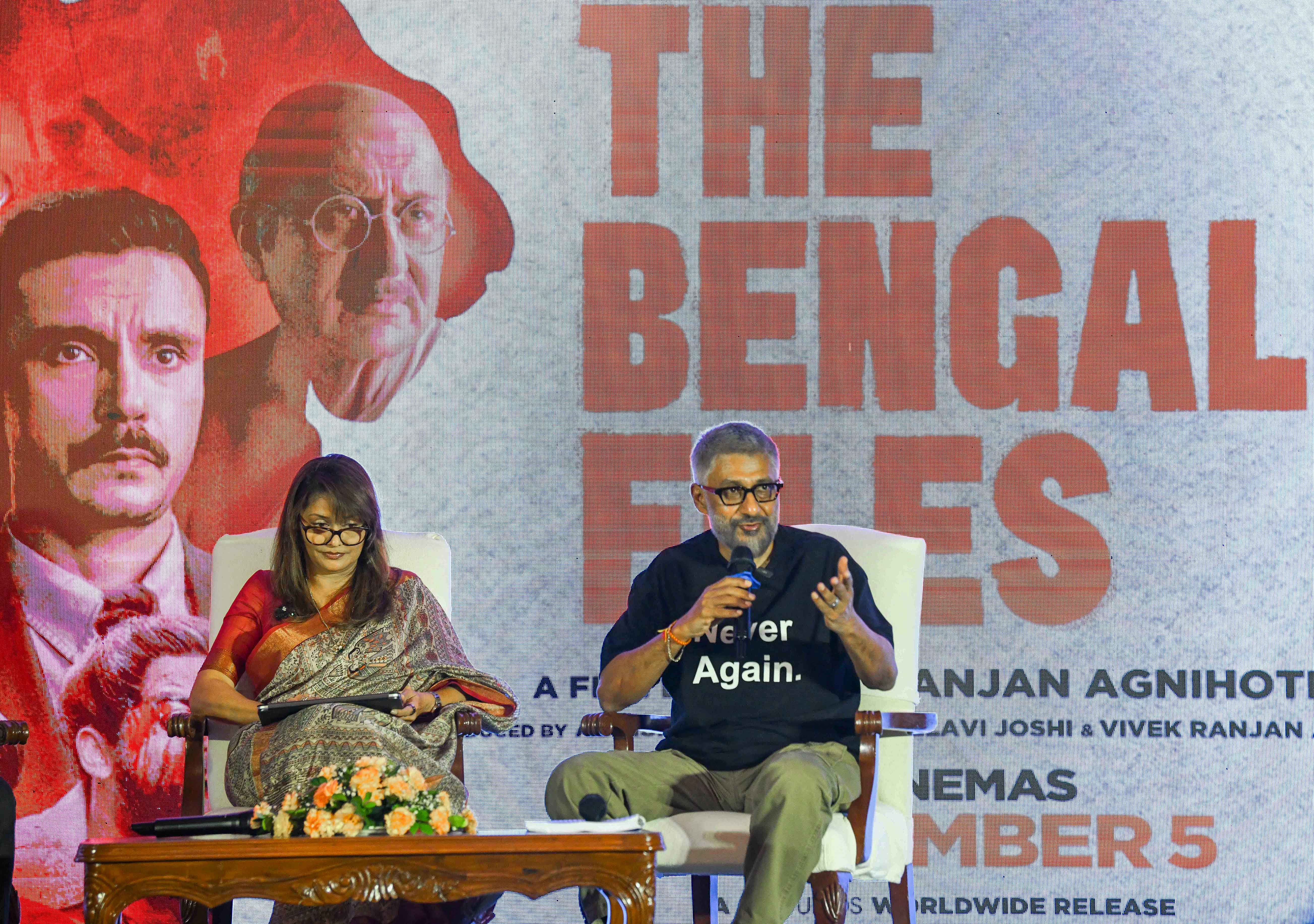
The controversy erupted on August 16, when the trailer launch in Kolkata descended into chaos. Agnihotri and the cast — including Mithun Chakraborty, Anupam Kher, Darshan Kumar, and Pallavi Joshi — had gathered at ITC Royal Bengal to unveil the film. But midway through the event, the visuals were abruptly cut. The filmmaker claimed the police and ruling party workers intervened, with hotel authorities suddenly refusing permission despite prior clearances. “If this is not dictatorship, then what is?” Agnihotri asked, calling it an “unconstitutional attack” on free expression.

The disruption didn’t end there. Multiplexes in Kolkata allegedly backed out under political pressure, forcing the team to relocate the event to a hotel. Even then, Agnihotri alleged, “people came and cut the wires,” preventing the trailer from being screened. FIRs, reportedly filed by members of the ruling Trinamool Congress, further complicated matters. For the director, this was not merely about a film but “a threat to democracy.”

Adding fuel to the fire, Shantanu Mukherjee, grandson of Gopal Mukherjee — a historical figure portrayed in the film — filed a police complaint. He accused the filmmakers of misrepresenting his grandfather’s legacy. Agnihotri responded cautiously, saying the matter would be handled legally. “No one has even seen the film yet,” he argued, insisting that Gopal Mukherjee had been presented as a hero, and that the movie would in fact bring his story to national prominence.

Actor Mithun Chakraborty, who plays a key role in the film, also lashed out at critics. “Everything was planned,” he said, expressing disbelief at the backlash against a film unseen by the public. In characteristic candor, he compared the spate of FIRs to kurmura (puffed rice), claiming they were casually distributed in Bengal. “Everybody is scared of the truth,” he said, adding that young Indians deserved to know about forgotten chapters of history.

The controversy reflects deeper tensions around cinematic portrayals of sensitive historical episodes. Agnihotri’s earlier work, The Kashmir Files (2022), courted similar storms while emerging as a box-office hit. With The Bengal Files, he has again chosen a subject loaded with communal and political sensitivities. The film revisits the Calcutta killings of 1946 and the Noakhali riots, which he terms a “Hindu genocide.” Critics argue that such framing risks stoking fresh divisions, while supporters hail it as overdue truth-telling.

The West Bengal government, though not issuing an official ban, has been accused of tacitly suppressing the trailer launch. Agnihotri insists the chain of disruptions — multiplex cancellations, hotel refusals, police intervention — could not have happened without “top-level involvement.” For him, it demonstrates how state power can be used to curb dissenting narratives.

Yet the pushback has also generated publicity. The film’s trailer was reportedly well received during private screenings in the US, even earning an invitation to Capitol Hill. Supporters believe the controversies will only fuel curiosity, much like with The Kashmir Files.

Still, legal hurdles loom. The FIRs and the complaint over Gopal Mukherjee’s portrayal could delay or complicate the film’s release in Bengal. Agnihotri, however, remains defiant. “I have faith in the Constitution of India and the law of India,” he declared, vowing to fight any attempts to block the film.

For now, The Bengal Files stands at the crossroads of cinema and politics. Its September 5 release will test not only audience appetite for politically charged history but also the resilience of free expression in India’s polarized landscape. Whether it becomes another box-office phenomenon or a flashpoint of further controversy, one thing is certain: the battle over The Bengal Files has already begun.
Leave a Reply

Your email address will not be published. Required fields are marked *

scroll to top