

Our Bureau
London
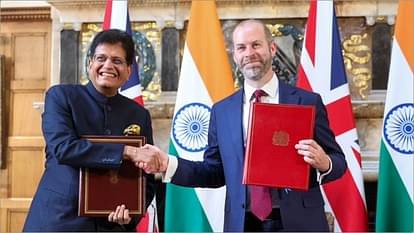
After a long wait, India and the United Kingdom have finally signed and finalised the Free Trade Agreement (FTA) on Thursday, 24 July. The agreement was signed by Commerce and Industry Minister – Piyush Goyal and UK’s Secretary of State for Business and Trade – Jonathan Reynolds.
Prime Minister Narendra Modi was on his visit to the UK where he met with PM Keir Starmer and in presence of them both the agreement was signed. The agreement would come into effect in a few months as reported by Minister Goyal. He has stated that the businesses and industries should start their planning for the changes.
“The cabinet approval in India has already happened the day before. In the UK, it goes through the Parliament. So, I think it will take a few months. But with this certainty, now the industries and businesses can begin their planning and ready their supply chains, work on approvals and ordering… Due to bipartisan support between both sides, I think it will be approved soon and implemented too,” he said.
The India-UK FTA is set to bring many new opportunities for many different industries that require intensive labour like textiles, marine products, leather, footwear, sports goods, toys, and gems and jewellery. They will also benefit sectors like engineering goods, auto components, and organic chemicals, that are rapidly growing in the country.
The Comprehensive Economic and Trade Agreement (CETA) will secure access for 99 per cent of India’s exports to the UK without any duty fee for the first time. The agreement nearly covers the entire trade basket and will help out majorly all sectors.
The service sector will also be on the receiving end of the benefits from this agreement as it will make sure that different sectors get a greater market than earlier. These include services like IT and IT-enabled services, financial and legal services, professional and educational services, and digital trade.