Our Bureau
London
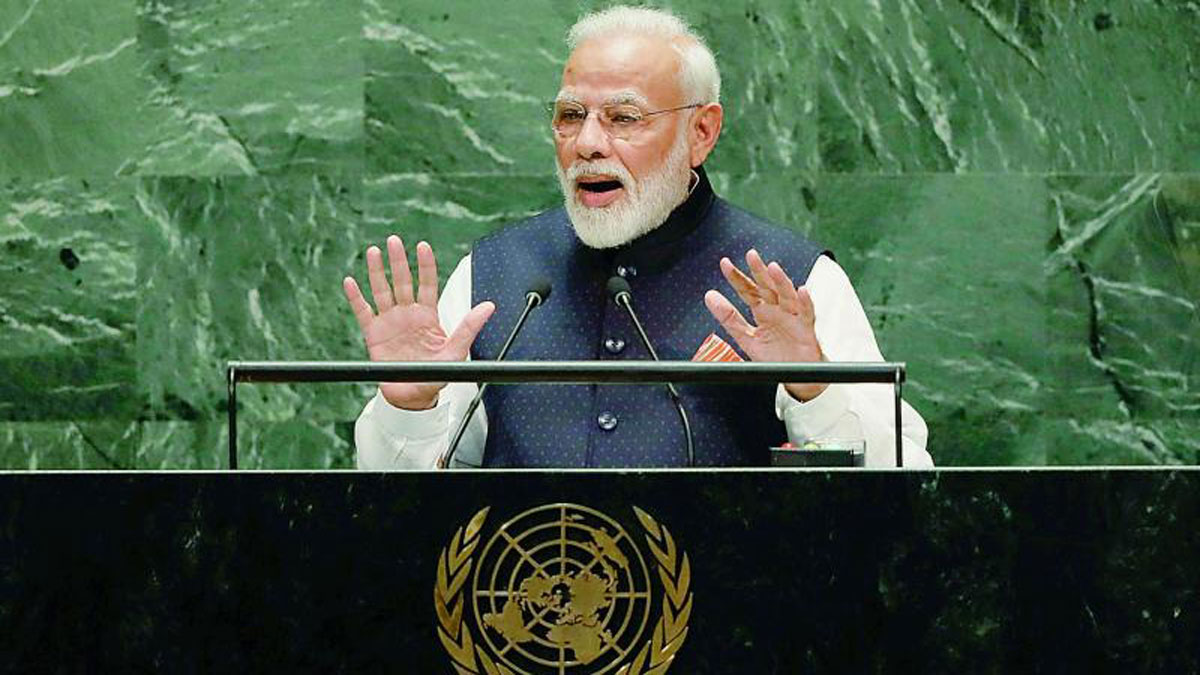
This Thursday, on July 24th, the Free Trade Agreement (FTA) between India and the United Kingdom has finally been signed and formalised. Prime Minister Narendra Modi is currently visiting the UK and has met UK’s PM Keir Starmer.
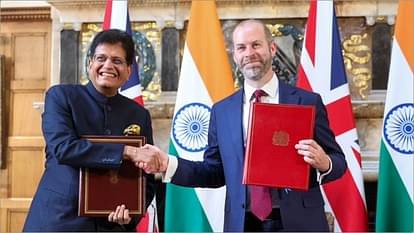
The FTA deal has been under negotiations for over three years now and this Thursday it was signed by India’s Commerce Minister Piyush Goyal and his British counterpart Jonathan Reynold. The trade deal is one of the biggest deals for India and the UK and is expected to boost the bilateral trade between two nations by $34 billion every year.
The agreement is set to bring huge benefits to India as it looks to provide new opportunities through which the country can show growth, skill development, and employment opportunities for Indians across multiple sectors. It is being reported that the agreement will benefit the youth who are looking to build careers in information technology, financial services, professional services, management consultancy, architectural and engineering, and more.
Through this trade Indian industries and citizens will be able to get medical devices, aerospace parts made and imported from the UK at a much cheaper cost. Even products like soft drinks, cosmetics, chocolates, biscuits and cars will be easily available to India as the tariffs on them will drop from 15% to 3% because of the trade agreement.
The agreement has dismissed 95% of agricultural and processed food from tariff lines and has opened premium UK markets for Indian products. The UK is a very high-value market for Indian agriculture products like tea, mangoes, grapes, spices, and marine products, among other things. Britain accounts for 1.7%t of India’s coffee exports, 5.6% of tea exports, and 2.9%t of spices and with the tariffs being removed these sectors are expected to grow significantly.
With this trade deal, agricultural products including fruits, vegetables, cereals, pickles, spice mixes, fruit pulps, ready-to-eat meals and processed foods will now have zero duties on entry into force. This will allow farmers to cut the landing cost of these goods and help them fetch premium prices for these products in the UK market.